
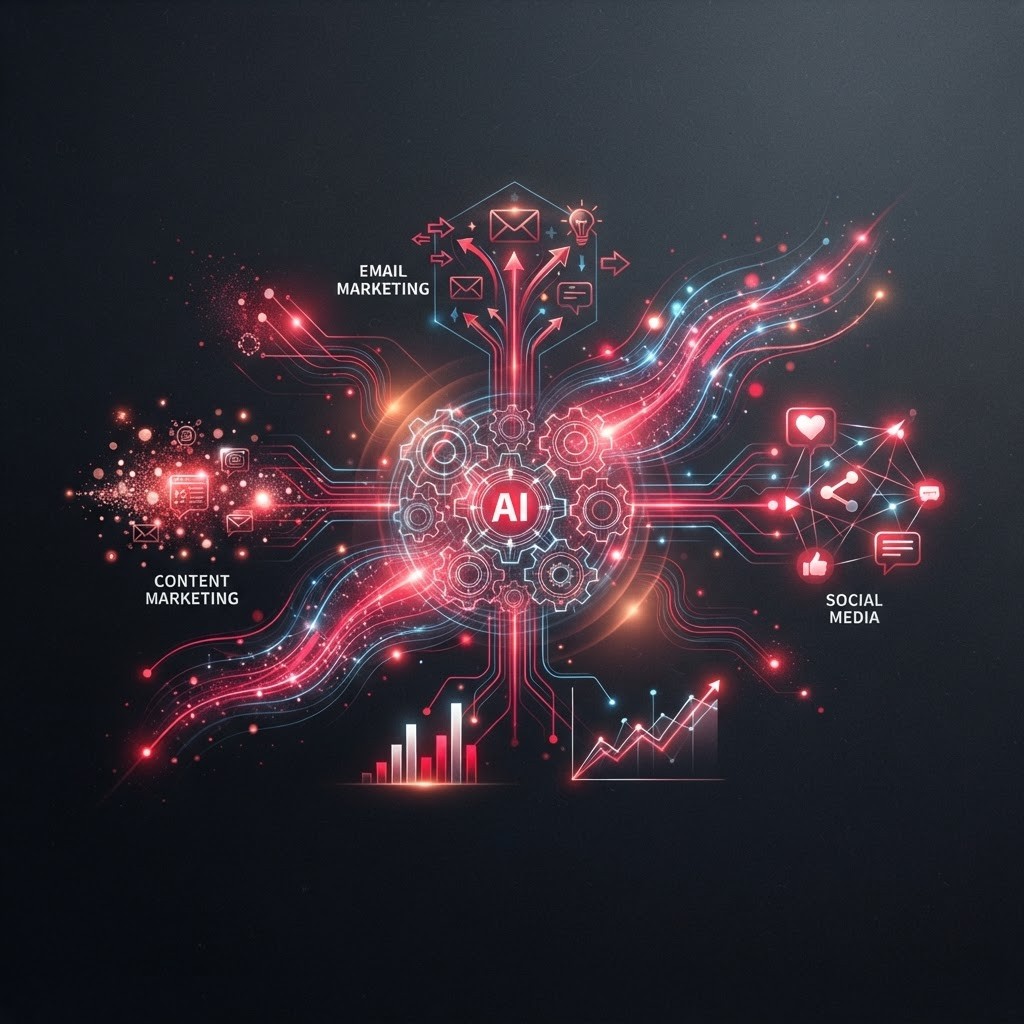
Artificial intelligence has become a practical, everyday part of modern marketing. It is no longer a distant concept reserved for tech giants; businesses of all sizes now use AI to work smarter and connect with customers more effectively. From analyzing data to generating content and automating campaigns, AI is embedded across the marketing process. Understanding how AI is being used in marketing helps businesses identify where it can deliver the most value.
How AAMAX.CO Puts AI to Work for Marketing Teams
Implementing AI across marketing operations can feel overwhelming without the right guidance. AAMAX.CO is a full-service digital marketing company that helps businesses worldwide put AI to practical use. Their team integrates intelligent tools into digital marketing campaigns, from audience targeting to automation, so brands see real results rather than isolated experiments. For businesses that want to move quickly and confidently, they provide the expertise to apply AI where it matters most.
Predictive Analytics for Smarter Decisions
One of the most powerful uses of AI in marketing is predictive analytics. By analyzing historical data, AI models forecast future behavior, such as which customers are likely to buy, which are at risk of leaving, and which products will trend. These predictions allow marketers to act proactively rather than reactively.
With predictive insight, businesses focus their resources on the highest-value opportunities. Budgets are allocated more efficiently, campaigns are timed more effectively, and customer needs are anticipated before they arise. This data-driven foresight is a major competitive advantage.
Personalized Customer Experiences
AI enables personalization at a scale that was previously impossible. Recommendation engines suggest relevant products based on individual behavior, while dynamic websites adjust their content to match each visitor's interests. Email campaigns adapt automatically based on how recipients engage.
This personalization makes customers feel understood, which increases engagement and loyalty. Instead of sending the same message to everyone, businesses deliver tailored experiences that resonate with each individual. The result is higher conversion rates and stronger customer relationships.
Chatbots and Conversational Marketing
AI-powered chatbots have transformed customer interaction. Available around the clock, they answer questions, guide users, recommend products, and resolve common issues instantly. This immediate responsiveness improves customer satisfaction while freeing human teams to handle more complex needs.
Conversational marketing goes beyond support. Chatbots can qualify leads, collect information, and guide prospects through the buying journey. By engaging visitors at the right moment, they help turn interest into action.
Content Creation and Optimization
AI tools now assist with many aspects of content. They help generate ideas, draft copy, create variations for testing, and adapt messages for different platforms. This accelerates production and allows creative teams to focus on strategy and storytelling.
AI also improves how content performs in search. By analyzing user intent and competition, it guides search engine optimization efforts and helps content reach the right audiences. As search engines increasingly surface AI-generated answers, businesses are also adopting generative engine optimization to remain visible in these new formats.
Automated Advertising and Bidding
AI has become central to digital advertising. Automated bidding systems adjust ad spend in real time to maximize results, while machine learning identifies the best audiences and placements. Ads are continuously optimized based on performance, reducing waste and improving return on investment.
This automation allows marketers to manage complex campaigns across multiple platforms without constant manual adjustment. The system handles the tactical execution, while marketers focus on strategy and creative direction.
Customer Segmentation and Targeting
AI transforms how businesses segment their audiences. Instead of relying on broad demographic categories, machine learning creates detailed, dynamic segments based on behavior and preferences. These segments update automatically as customer behavior changes.
Precise segmentation ensures that the right message reaches the right person at the right time. This relevance improves engagement and makes marketing spend far more efficient. It also enables more sophisticated campaigns that speak directly to each group's needs.
Marketing Automation and Workflows
Beyond individual tasks, AI powers entire marketing workflows. Automated systems nurture leads, send timely follow-ups, and trigger actions based on customer behavior. These workflows run continuously, ensuring no opportunity is missed.
Automation not only saves time but also creates consistent, timely experiences for customers. Combined with strong website development, these systems create seamless journeys from first contact to conversion and beyond.
Measuring and Improving Performance
Finally, AI strengthens measurement. Advanced analytics reveal which channels and messages drive results, while attribution models clarify complex customer journeys. This insight allows marketers to refine their strategies continuously and invest in what works.
With better measurement, marketing becomes a demonstrable driver of growth rather than a guessing game. Businesses can prove the value of their efforts and make confident decisions.
Conclusion
AI is being used in marketing across predictive analytics, personalization, chatbots, content creation, automated advertising, segmentation, workflows, and measurement. These applications make marketing more efficient, relevant, and effective. Businesses that adopt AI thoughtfully gain a significant advantage in attracting and retaining customers. For those seeking expert help putting AI to work, a full-service partner such as AAMAX.CO offers the strategy and execution needed to succeed.
