
The Speed of the Ocean's Apex Predator
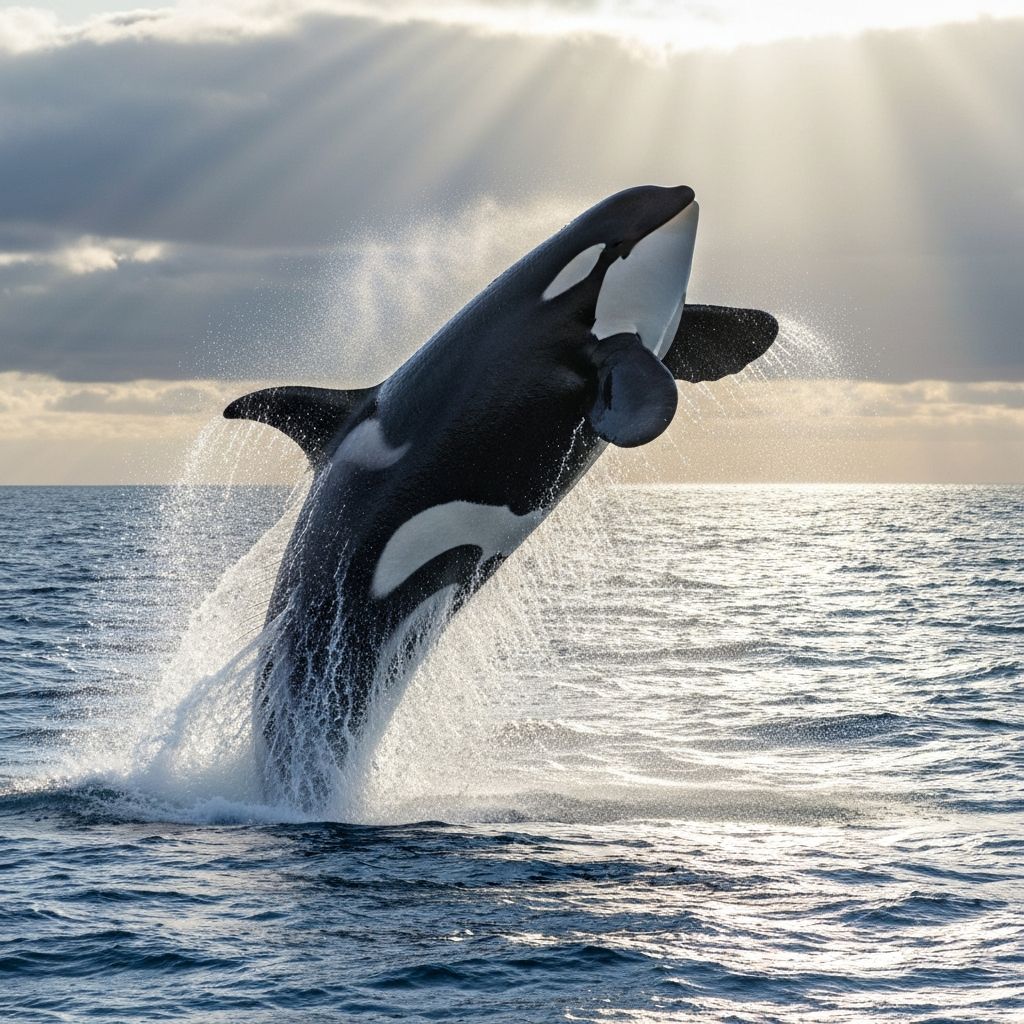
Killer whales, also known as orcas, are widely regarded as the ocean's most formidable predators. They sit at the very top of the marine food chain, with no natural predators of their own. Among their many remarkable attributes — intelligence, social complexity, hunting strategy, and adaptability — their swimming speed is one of the most impressive. Orcas are among the fastest marine mammals on Earth, capable of bursts of speed that allow them to chase down prey, outmaneuver threats, and cover vast distances across the world's oceans.
So just how fast can a killer whale swim? The answer depends on the context — whether we are talking about sustained cruising speed, short bursts during a hunt, or the playful sprints that orcas engage in during social interactions. But by any measure, the speed of a killer whale is nothing short of extraordinary for an animal that can weigh up to 12,000 pounds and stretch 30 feet in length.
Top Speed: Bursts During Hunting
During active hunting, killer whales can reach top speeds of approximately 34.5 miles per hour (55.5 kilometers per hour). This burst speed is typically sustained for only short distances — enough to close the gap on fast-swimming prey like salmon, tuna, or seals trying to escape across open water.
To put this in perspective, the fastest human swimmer, even at elite Olympic levels, reaches roughly 5 to 6 miles per hour. An orca's top speed is nearly six times faster. Even a speedboat idling along at a comfortable cruising pace would have difficulty keeping up with an orca in full pursuit.
These burst speeds are not used casually. Orcas are intelligent energy managers and understand that top-speed swimming burns enormous amounts of calories. They reserve their fastest sprints for critical moments — closing in on a fleeing prey animal, breaching to stun fish with the shockwave of their body hitting the water, or executing the cooperative hunting maneuvers for which they are famous.
Cruising Speed: Efficient Long-Distance Travel
When not actively hunting, killer whales typically cruise at speeds of 3 to 8 miles per hour (5 to 13 kilometers per hour). At this pace, they are highly energy-efficient, using their powerful tail flukes in a steady, rhythmic motion to propel themselves through the water with minimal effort.
This cruising speed allows orca pods to cover enormous distances during their daily movements and seasonal migrations. Some orca populations travel over 100 miles in a single day, and migratory pods have been tracked covering thousands of miles between their summer feeding grounds and winter habitats. Their ability to maintain a moderate, efficient speed for hours on end is as impressive as their burst capabilities.
Orcas are also known to surf the bow waves created by boats and large waves, effectively hitchhiking on the energy of moving water to travel even more efficiently. This behavior, often observed with playful curiosity, demonstrates their keen understanding of hydrodynamics and energy conservation.
The Biomechanics Behind Orca Speed
The speed of a killer whale is the product of millions of years of evolutionary refinement. Every aspect of an orca's body is engineered for powerful, efficient movement through water.
Body Shape: Orcas have a streamlined, torpedo-shaped body that minimizes drag as they move through the water. Their smooth, rubbery skin reduces friction, and their body tapers at both ends to create an efficient hydrodynamic profile. Despite their massive size, their shape allows water to flow over their bodies with minimal resistance.
Tail Flukes: The primary propulsion mechanism is the tail fluke — a broad, flat, horizontal structure made of dense connective tissue (not bone). Orcas swim by moving their tail flukes up and down in a powerful, undulating motion. The fluke acts like an oscillating propeller, pushing water backward and driving the animal forward. A large adult orca's tail fluke can span five to six feet and generate tremendous thrust with each stroke.
Muscle Mass: Orcas are extraordinarily muscular animals. Their bodies are packed with dense, oxygen-rich muscle tissue — particularly in the peduncle, the narrowed section of the body just before the tail fluke. This muscle mass generates the explosive force needed for burst swimming and the sustained power required for long-distance cruising.
Blubber: A thick layer of blubber beneath the skin serves multiple purposes. It provides insulation in cold ocean waters, stores energy for long migrations, and — importantly for speed — contributes to the smooth, rounded body contour that aids hydrodynamic efficiency.
Dorsal Fin and Pectoral Flippers: While the tail flukes provide propulsion, the dorsal fin and pectoral flippers serve as stabilizers and steering mechanisms. The tall dorsal fin of a male orca — which can reach six feet in height — acts like a keel, preventing the body from rolling during high-speed swimming. The pectoral flippers control direction and help with braking and maneuvering.
How Speed Aids in Hunting
Speed is an essential component of the orca's hunting strategy, but it is rarely the only factor. Orcas are among the most intelligent predators on the planet, and they combine speed with sophisticated cooperative tactics that make them devastating hunters.
When hunting fast-moving fish like salmon, orcas use their speed to herd schools of fish into tight bait balls near the surface, then take turns swimming through the concentrated mass to feed. When hunting marine mammals like seals or sea lions, orcas may use burst speed to ram into ice floes, knocking their prey into the water, or to chase down fleeing animals across open water.
One of the most dramatic displays of orca speed occurs during intentional beaching — a hunting technique used by some orca populations to catch seals resting on shorelines. The orca launches itself out of the water and onto the beach at high speed, grabs the seal, and then wriggles back into the surf. This behavior requires incredible speed, precise timing, and enormous courage, and it is taught from mother to calf over years of patient practice.
Speed Comparisons with Other Marine Animals
How does the orca's speed compare to other fast swimmers in the ocean? Here is how killer whales stack up against some of the ocean's speediest creatures.
The sailfish holds the record as the fastest fish in the ocean, clocking speeds of up to 68 miles per hour. The shortfin mako shark can reach 45 miles per hour, and the bluefin tuna tops out at around 44 miles per hour. Among marine mammals, the common dolphin can reach about 37 miles per hour — slightly faster than the orca's top burst speed — but dolphins are much smaller and lighter.
What makes the orca's speed remarkable is not just the raw number but the combination of speed and size. An animal weighing six to twelve thousand pounds moving at 34.5 miles per hour represents an enormous amount of kinetic energy. When an orca strikes prey at full speed, the impact force is devastating — equivalent to a small car hitting a wall at highway speed.
Orca Speed in Captivity vs. the Wild
It is worth noting that orcas in captivity do not reach the speeds they achieve in the wild. Captive orcas are confined to tanks that, while large by human standards, are a tiny fraction of the open ocean environment these animals are built for. Studies have shown that captive orcas swim at significantly reduced speeds and cover far less daily distance than their wild counterparts, which some researchers link to the physical and psychological health issues observed in captive populations.
In the wild, orcas have the freedom to sprint, cruise, dive, and play across an effectively limitless ocean environment. Their speed is not just a biological capability — it is an expression of their fundamental nature as wide-ranging, active, and socially dynamic predators. Understanding and appreciating the speed of a killer whale is one more reason to support the conservation of healthy ocean ecosystems where these magnificent animals can thrive.
