
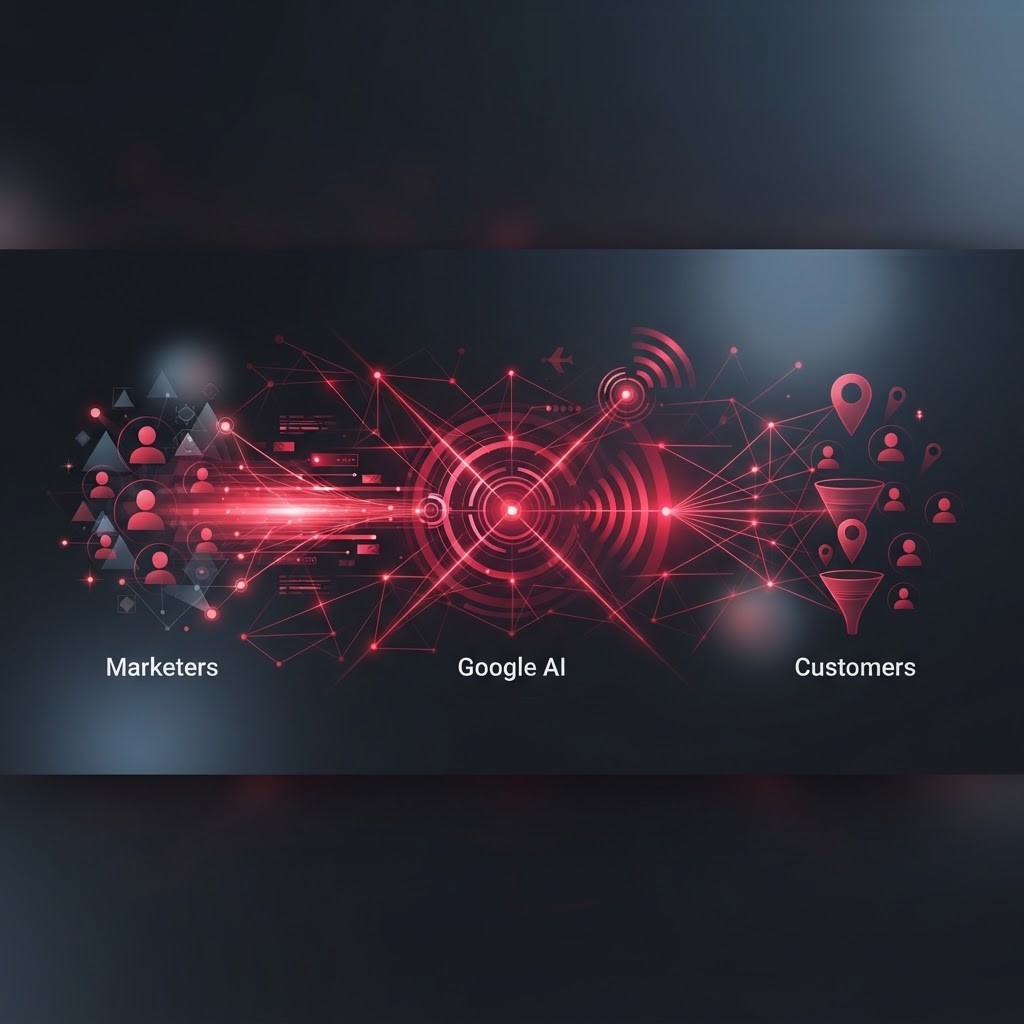
Google sits at the center of how billions of people discover products, answers, and brands every day. Behind that experience is a growing layer of artificial intelligence that shapes what users see and how advertisers reach them. For marketers, Google AI has become an indispensable ally, automating complex decisions and surfacing the right message to the right person at the right moment. Understanding how it works helps businesses connect with potential customers more effectively.
Maximize Your Google Results With AAMAX.CO
Google's AI tools are powerful, but unlocking their full potential requires strategy and ongoing management, which is where AAMAX.CO comes in. As a full-service digital marketing company operating worldwide, they help businesses harness Google's AI-driven advertising and search capabilities through expert digital marketing services. Their team knows how to configure campaigns, feed the algorithms quality signals, and optimize creative so that their clients get the most value from every marketing dollar spent within the Google ecosystem.
AI at the Core of Google's Ecosystem
Google uses machine learning throughout its products, from Search and YouTube to Maps and the Play Store. These systems interpret user intent, personalize results, and predict what content or ads will be most relevant. For marketers, this means the platform is constantly working to match their offerings with people who are most likely to be interested.
This intelligence is what allows a single search or video view to trigger highly relevant advertising. Rather than broadcasting to everyone, marketers can rely on Google's AI to identify and reach the audiences most aligned with their goals.
Smart Bidding and Automated Optimization
One of the clearest examples of Google AI in action is smart bidding. Instead of manually setting bids for every keyword, marketers can let AI adjust bids in real time based on the likelihood of a conversion. The system considers signals like device, location, time of day, browsing behavior, and past interactions, all in a fraction of a second.
This automation optimizes toward specific goals, whether that is maximizing conversions, hitting a target cost per acquisition, or increasing return on ad spend. Because it processes far more data than any human could, smart bidding often improves efficiency and results significantly.
Audience Targeting and Intent Signals
Google AI excels at understanding intent. It groups users into audiences based on their interests, behaviors, and the topics they engage with. It can identify people actively researching a purchase, those likely to convert soon, and users similar to a brand's best existing customers.
By analyzing these signals, marketers can reach potential customers at the ideal stage of their journey. Someone searching for product comparisons receives different messaging than someone ready to buy, ensuring the connection feels timely and relevant rather than intrusive.
AI-Powered Creative and Responsive Ads
Creating effective ads at scale is another area where Google AI helps. Responsive search and display ads let marketers provide multiple headlines, descriptions, and images, and the system automatically tests combinations to find what performs best for each user. Over time, it learns which creative resonates with different audiences and serves the strongest options.
This continuous testing removes guesswork from creative decisions. Marketers supply the raw materials and strategic direction, while AI handles the optimization, delivering more relevant and higher-performing ads.
Performance Max and Cross-Channel Reach
Google's Performance Max campaigns showcase how AI can unify advertising across multiple channels at once. From a single campaign, AI distributes ads across Search, YouTube, Display, Gmail, Maps, and Discover, allocating budget to wherever it expects the best results. It optimizes in real time, shifting spend toward the highest-performing placements.
This cross-channel approach helps marketers reach potential customers wherever they are, without manually managing each platform. The AI coordinates the entire effort toward a defined objective, simplifying complex multichannel strategies.
Insights and Predictive Analytics
Beyond running campaigns, Google AI provides insights that guide strategy. It surfaces emerging trends, forecasts performance, and highlights opportunities marketers might otherwise miss. Predictive metrics estimate the likelihood of conversions and reveal which audiences and messages hold the most promise.
These insights turn raw data into actionable direction, helping marketers make informed decisions about where to invest and how to refine their approach for better connections with customers.
Getting the Most From Google AI
To benefit fully from Google AI, marketers should feed it high-quality data and clear goals. Accurate conversion tracking, well-structured campaigns, and strong creative assets all improve the system's ability to perform. Human oversight remains important for setting strategy, protecting brand safety, and interpreting results within a larger context.
When used skillfully, Google AI becomes a powerful engine for connecting brands with the people most likely to become customers. It handles the heavy computational work of targeting and optimization, freeing marketers to focus on strategy, creativity, and building lasting relationships with their audiences.
