
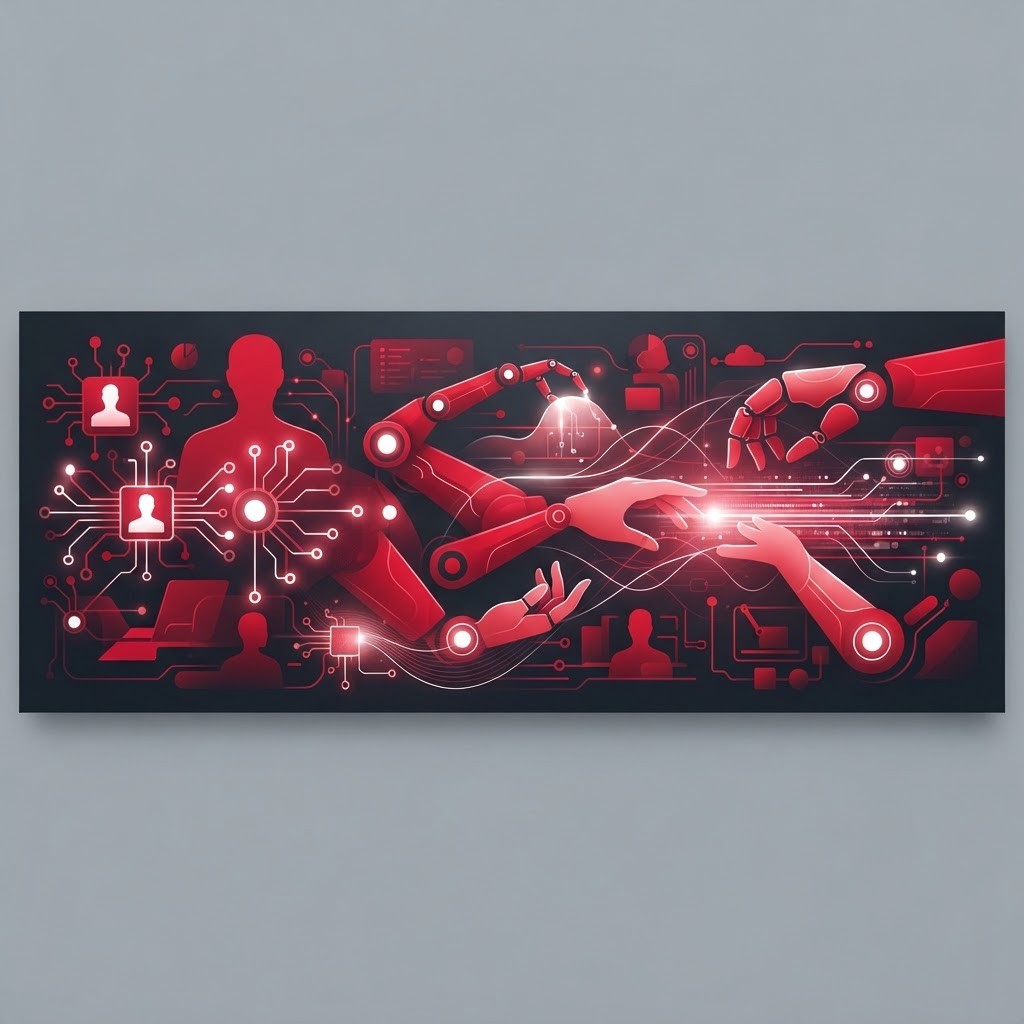
Artificial Intelligence and the Changing World of Work
Few topics generate as much debate as the impact of artificial intelligence on the job market. On one hand, AI promises extraordinary gains in productivity and efficiency. On the other, it raises legitimate concerns about displacement, automation, and the future of human labor. The reality, as with most technological revolutions, is more nuanced than headlines suggest. AI is not simply eliminating jobs; it is reshaping them, shifting the balance of tasks, and creating entirely new categories of work that did not exist a decade ago.
Understanding this transformation requires looking beyond fear and hype. History shows that major technologies tend to change the composition of employment rather than erase it altogether. AI follows a similar pattern, automating routine and repetitive tasks while amplifying the value of uniquely human skills such as creativity, judgment, empathy, and complex problem-solving.
How AAMAX.CO Helps Businesses Adapt to an AI-Driven Workforce
As AI reshapes roles and workflows, businesses need guidance to adapt their operations and their market positioning. AAMAX.CO is a full-service digital marketing company operating worldwide, and they help organizations navigate this shift by integrating intelligent tools into their marketing, content, and customer engagement strategies. Their team understands that adopting AI is not about replacing people but about empowering them to work smarter. Through services like digital marketing, they show companies how to use AI to automate the mundane while freeing human talent to focus on strategy, relationships, and innovation.
Which Jobs Are Most Affected
The jobs most exposed to AI automation tend to involve predictable, rule-based tasks. Data entry, basic bookkeeping, routine customer service, and certain manufacturing roles are increasingly handled by intelligent systems. However, exposure to automation does not always mean elimination. In many cases, AI takes over specific tasks within a job rather than the entire role, allowing workers to focus on higher-value activities.
Meanwhile, roles that require emotional intelligence, nuanced communication, or creative reasoning remain difficult to automate. Teachers, therapists, skilled tradespeople, and strategic leaders continue to be in strong demand. Interestingly, even highly technical fields are affected in complex ways: while AI can generate code or draft reports, it still requires human oversight, refinement, and accountability.
The New Jobs AI Is Creating
One of the most overlooked aspects of the AI revolution is its capacity to generate new employment. The demand for machine learning engineers, data scientists, AI ethicists, prompt engineers, and automation specialists has surged. Beyond these obvious roles, AI creates ripple effects across the economy. Companies need professionals to manage, interpret, and govern AI systems, as well as marketers, designers, and product managers who can build offerings around intelligent technology.
Entire industries are emerging to support AI adoption, from data labeling and model auditing to AI-focused consulting and training. This dynamic mirrors previous technological shifts, where new tools sparked demand for skills and services no one had anticipated.
The Growing Importance of Reskilling
Perhaps the most significant effect of AI on the job market is the premium it places on continuous learning. As tasks evolve, workers who adapt their skills will thrive, while those who resist change may struggle. Reskilling and upskilling have become central themes for governments, educational institutions, and employers alike.
Skills in data literacy, critical thinking, and human-AI collaboration are increasingly valuable. Rather than competing with machines, the most successful professionals learn to work alongside them, using AI as a tool to enhance their own capabilities. Organizations that invest in training their workforce not only retain talent but also unlock greater productivity from the technology they adopt.
Balancing Disruption and Opportunity
It would be naive to ignore the disruption AI causes. Transitions can be painful, and not every displaced worker easily moves into a new role. Policymakers face real challenges in ensuring that the benefits of AI are broadly shared and that support systems help those affected by change. Thoughtful approaches to education, social safety nets, and lifelong learning will play a crucial role in shaping outcomes.
At the same time, the opportunity is immense. AI has the potential to eliminate tedious work, reduce human error, and create wealth that can be reinvested into new industries and higher-quality jobs. The net effect depends largely on how societies and businesses choose to manage the transition.
Preparing for the Future of Work
For individuals, the path forward involves embracing adaptability and viewing AI as a collaborator rather than a threat. For businesses, success lies in thoughtfully integrating AI while investing in their people. The organizations that strike this balance will enjoy a powerful competitive advantage, combining the efficiency of automation with the irreplaceable value of human insight.
Ultimately, artificial intelligence is neither a job destroyer nor a magic solution. It is a transformative force that rewards preparation, flexibility, and strategic thinking. Those who understand its effects and act accordingly, whether workers advancing their skills or companies modernizing their operations, will be well positioned to prosper in the evolving job market.
