
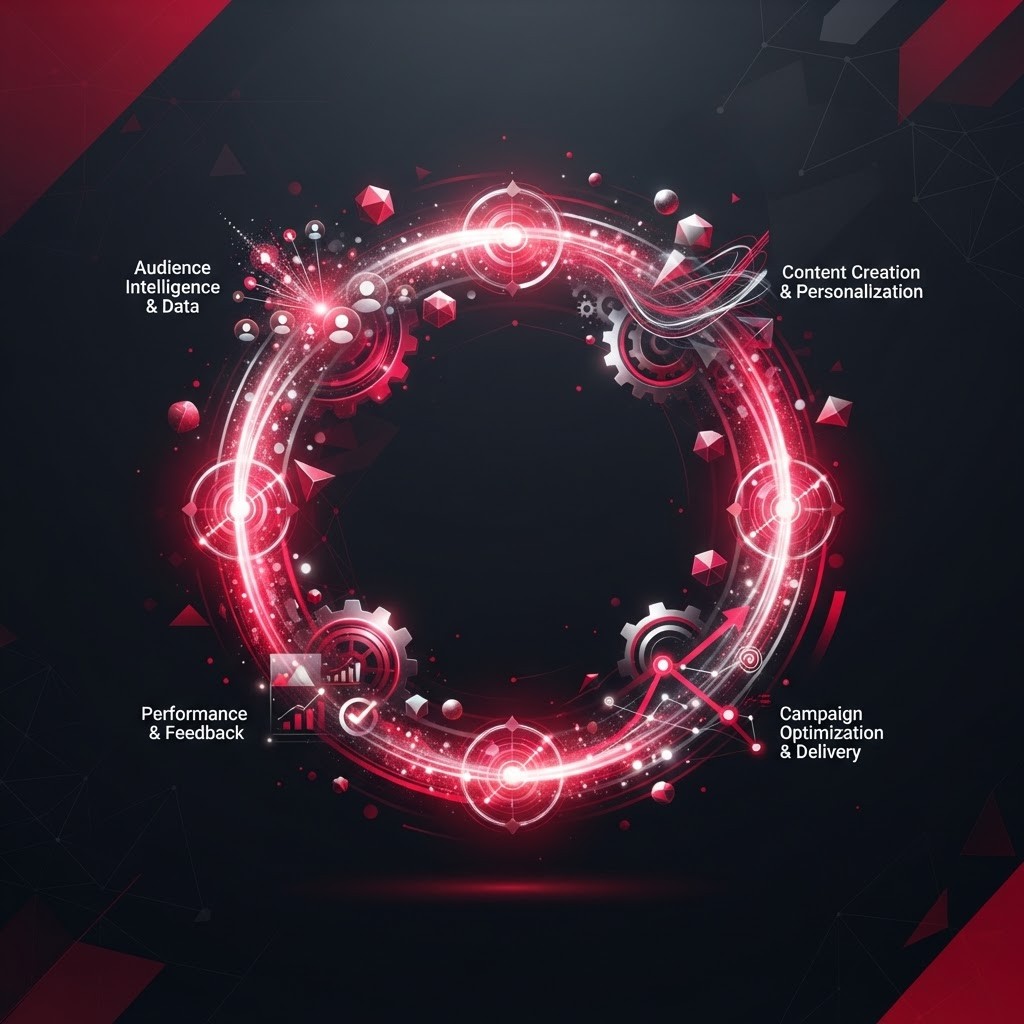
The phrase AI marketing gets used constantly, but how does it actually work under the hood? At its core, AI marketing is a cycle of collecting data, learning from it, making predictions, and automating actions, all repeated continuously so the system improves over time. Instead of relying solely on human intuition and manual execution, AI marketing uses algorithms to identify patterns in customer behavior and act on them at a speed and scale no team could match. Understanding this cycle demystifies the technology and reveals how to use it effectively.
How AAMAX.CO Powers AI Marketing for Businesses
Building an AI marketing system that actually delivers results takes the right tools, data, and strategy working together. AAMAX.CO is a full-service digital marketing company that helps businesses worldwide implement AI marketing from the ground up. Their team connects data sources, configures intelligent automation, and manages the ongoing optimization that makes AI marketing effective. With end-to-end digital marketing expertise, they help businesses turn the promise of AI into campaigns that consistently perform.
Step One: Collecting and Unifying Data
Every AI marketing system begins with data. It gathers information from websites, apps, email, social media, advertising platforms, and customer relationship systems. This data includes what people click, buy, read, and ignore, along with demographic and contextual details. The crucial step is unifying these scattered sources into a coherent view of each customer. Without clean, connected data, even the most advanced algorithms produce poor results, which is why data foundation work is the essential first stage.
Step Two: Learning From Patterns
Once data is collected, machine learning models analyze it to find patterns. They discover which customers behave similarly, which actions tend to precede a purchase, and which content drives engagement. Unlike rigid rules programmed by humans, these models learn directly from the data and improve as they process more of it. This learning capability is what makes AI marketing adaptive; it continually refines its understanding of the audience without needing to be manually reprogrammed.
Step Three: Making Predictions
With patterns identified, AI moves to prediction. It forecasts which leads are most likely to convert, which customers might churn, what products a person may want next, and when someone is most receptive to a message. These predictions turn raw data into actionable foresight. Marketers can then prioritize high-value prospects, intervene with at-risk customers, and time their outreach for maximum impact, all guided by probabilities grounded in real behavior.
Step Four: Automating Decisions and Actions
Prediction becomes valuable when it drives action. AI marketing systems automate decisions such as which ad to show, which email to send, what product to recommend, and how much to bid in an auction. These actions happen in real time and at massive scale, personalized for each individual. Automation ensures that the insights generated by the models are executed instantly and consistently, without waiting for manual intervention that would slow everything down.
Step Five: Personalizing the Experience
A defining feature of AI marketing is personalization. Because the system understands each customer individually, it can tailor content, offers, and timing to that person's unique profile. Website visitors see relevant products, subscribers receive messages suited to their interests, and shoppers get recommendations based on their history. This one-to-one relevance, delivered across thousands or millions of customers simultaneously, is something traditional marketing simply cannot achieve.
Step Six: Measuring and Improving
The cycle closes with measurement. AI tracks the outcome of every action, feeding results back into the models so they learn what works. Underperforming approaches are deprioritized while successful ones are amplified. This continuous feedback loop means the system gets smarter with every interaction, steadily improving performance over time. It is this self-improving quality that distinguishes AI marketing from static, one-time campaign setups.
Bringing It All Together
AI marketing works because these steps operate as an integrated, continuous loop rather than isolated tactics. Data feeds learning, learning enables prediction, prediction drives automated and personalized action, and measurement refines the whole system. When implemented well, this creates marketing that is more relevant, more efficient, and more effective than manual methods alone. The businesses that understand and embrace this cycle gain a lasting advantage in reaching and serving their customers.
