
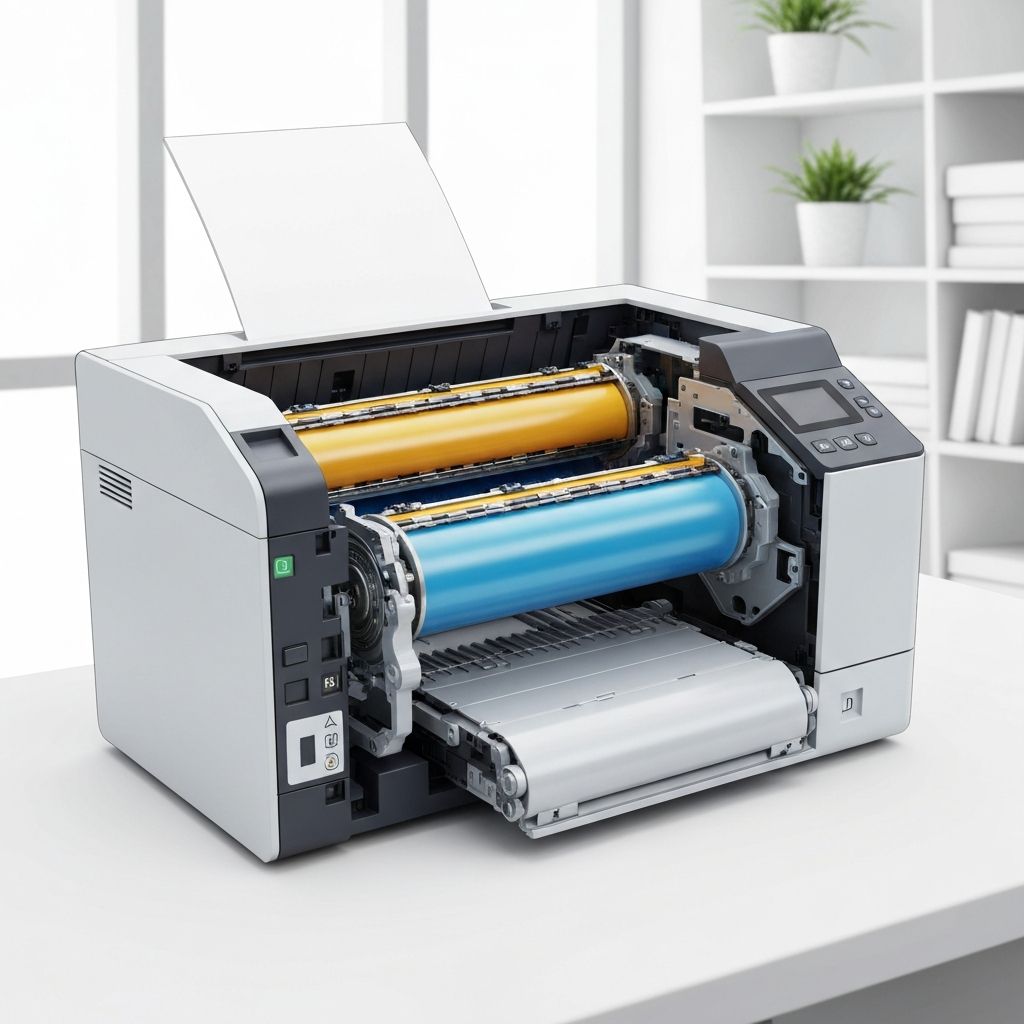
Introduction to Laser Printing Technology
Laser printers are among the most widely used printing devices in homes, offices, and commercial environments around the world. They are prized for their speed, precision, and cost-effectiveness, especially for high-volume text printing. But despite their ubiquity, few people understand the fascinating and surprisingly complex technology that makes laser printing possible.
At its core, a laser printer uses a focused beam of light, static electricity, and heat to transfer powdered ink — known as toner — onto paper with remarkable accuracy. The process involves multiple precisely coordinated steps that happen in rapid succession, producing a finished page in seconds. Understanding how each step works gives you a deeper appreciation for the engineering behind every document that rolls out of your printer tray.
The Key Components of a Laser Printer
Before diving into the printing process, it helps to understand the main components inside a laser printer and the role each one plays.
Photosensitive Drum (OPC Drum): This is the heart of the laser printing process. The drum is a cylindrical roller coated with a light-sensitive material — typically organic photoconductor (OPC). When exposed to light, the drum's surface changes its electrical charge, which is the fundamental principle that makes laser printing work.
Laser Assembly: The laser assembly generates a precisely focused beam of laser light. A rotating mirror (polygon mirror) sweeps the laser beam back and forth across the surface of the drum, drawing the image or text one line at a time. In some modern printers, LED arrays replace the laser and mirror, but the principle is the same.
Toner Cartridge: Toner is a fine, dry powder made of plastic particles, carbon black (for black toner), and coloring agents (for color toner). Unlike inkjet ink, toner is not a liquid — it is a powder that is electrostatically attracted to the drum and then fused to the paper with heat.
Transfer Roller or Belt: This component transfers the toner image from the drum onto the paper. It applies an electrical charge that pulls the toner from the drum surface and onto the paper as it passes through the printer.
Fuser Assembly: The fuser consists of a heated roller and a pressure roller. Together, they melt the toner particles and press them into the paper fibers, permanently bonding the image to the page. This is why freshly printed pages from a laser printer feel warm to the touch.
Step 1: Charging the Drum
The printing process begins with the primary charge roller applying a uniform negative electrical charge across the entire surface of the photosensitive drum. This charge is typically around -600 volts, creating an evenly charged surface that is ready to receive the laser-written image.
This step is critical because the laser printing process relies on precise control of electrical charges. The uniform negative charge on the drum acts as a blank canvas. In older laser printers, a corona wire was used for this charging step, but modern printers use a charge roller, which produces less ozone and is more environmentally friendly.
Step 2: Exposing the Drum with the Laser
Next, the laser assembly fires a beam of light at the spinning drum. The laser does not draw the entire image at once — instead, it scans across the drum surface line by line, row by row, at incredibly high speed. Where the laser hits the drum, it neutralizes the negative charge, reducing it to approximately -100 volts. Where the laser does not hit, the charge remains at -600 volts.
This creates an invisible electrostatic image on the drum — a latent image composed of areas with different charge levels. The exposed (discharged) areas correspond to where toner will be attracted, while the unexposed (fully charged) areas will repel toner. This is the fundamental mechanism that translates digital data into a physical pattern on the drum.
The precision of the laser is what gives laser printers their sharp, clean output. Modern laser printers can place dots as small as 600, 1200, or even 2400 dots per inch (DPI), resulting in text and images with crisp edges and fine detail.
Step 3: Developing — Applying Toner to the Drum
With the electrostatic image written onto the drum, the next step is development — applying toner to the charged image. The toner hopper feeds toner powder onto a developer roller, which carries a thin, even layer of toner past the drum surface.
The toner particles carry their own negative charge, typically around -200 volts. Because of the electrical charge differences, toner is attracted to the exposed (less negatively charged) areas of the drum and repelled by the unexposed (more negatively charged) areas. The result is a visible toner image on the drum surface that mirrors the original digital document.
This step is where the magic becomes visible. The abstract concept of an electrostatic charge pattern transforms into a tangible, powdery image sitting on the surface of the drum, ready to be transferred to paper.
Step 4: Transferring Toner to Paper
A sheet of paper is fed from the paper tray and passes between the drum and the transfer roller. The transfer roller applies a positive electrical charge to the back of the paper. Since the negatively charged toner on the drum is attracted to the positive charge on the paper, the toner leaps from the drum surface onto the paper as it rolls past.
At this point, the toner is sitting on the surface of the paper but is not yet permanently attached. If you were to touch the page at this stage, the toner would smudge easily. The paper must pass through one more critical step before the print is complete.
Step 5: Fusing the Toner to the Paper
The fusing stage is what makes the print permanent. The paper passes between the fuser's heated roller (typically heated to 200 degrees Celsius or about 400 degrees Fahrenheit) and a pressure roller. The heat melts the plastic particles in the toner, and the pressure roller presses the molten toner into the paper fibers.
As the paper exits the fuser, the toner cools and solidifies almost instantly, creating a durable, smudge-resistant print. This heat-based fusing process is why laser prints are more water-resistant and durable than inkjet prints, which use liquid ink that can smear when wet.
The fusing step also accounts for the warm feeling of freshly printed pages and the brief warm-up period required when a laser printer first powers on. The fuser must reach operating temperature before printing can begin, which is why the first page from a cold start takes longer than subsequent pages.
Step 6: Cleaning and Preparing for the Next Page
After the toner has been transferred to the paper, a small amount of residual toner remains on the drum surface. A cleaning blade — a flexible strip of material pressed against the drum — scrapes off this residual toner and deposits it into a waste toner container.
The drum is then discharged by an erase lamp or the primary charge roller, resetting it to a neutral state and preparing it for the next printing cycle. This entire six-step process — charging, exposing, developing, transferring, fusing, and cleaning — repeats for every page printed and happens at remarkable speed. Modern laser printers can complete this cycle 30 to 80 times per minute, producing pages at speeds that inkjet printers cannot match.
Color Laser Printing
Color laser printers work on the same fundamental principles as monochrome printers, but they use four separate toner cartridges — cyan, magenta, yellow, and black (CMYK). Each color has its own drum and developer assembly, and the four color layers are built up on a transfer belt before being applied to the paper in a single pass. The result is vibrant, full-color prints with the same speed and durability advantages as black-and-white laser printing.
Laser printing technology has evolved enormously since its invention at Xerox PARC in the 1970s, but the core principles remain the same. It is a beautiful example of physics, chemistry, and precision engineering working together to turn digital information into permanent, tangible documents — millions of times a day, all around the world.
