
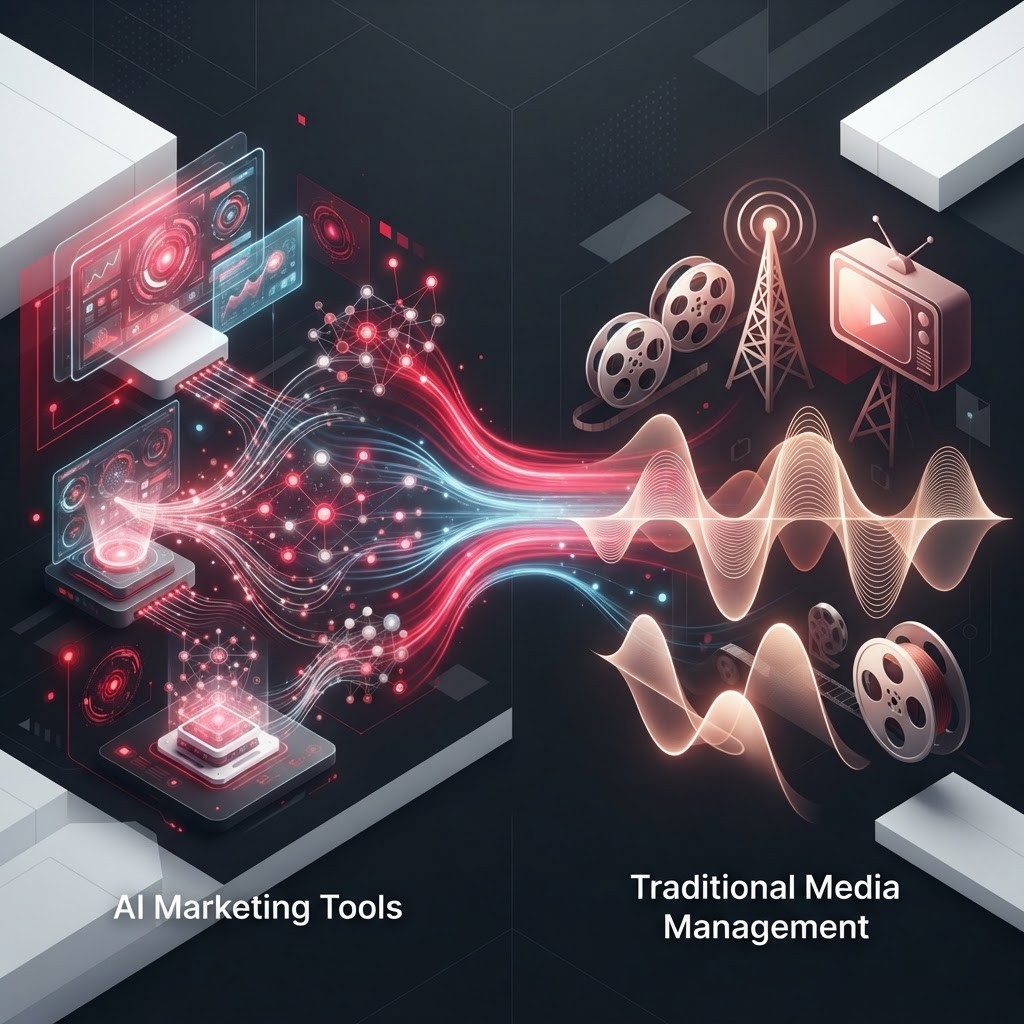
Media management has long been a cornerstone of successful marketing, involving the planning, buying, and optimization of advertising across channels. Today, AI marketing tools are challenging traditional approaches by automating decisions, analyzing data in real time, and optimizing campaigns at a scale humans cannot match. Understanding how these two approaches compare helps businesses decide how to allocate resources and structure their marketing operations.
Why AAMAX.CO Bridges AI Tools and Strategic Media Management
Combining automation with human strategy is at the heart of what AAMAX.CO delivers. Their digital marketing services integrate AI-powered tools with experienced media planning, giving clients the best of both worlds. By using automation to handle real-time optimization while applying human insight to strategy and brand alignment, they help businesses run campaigns that are both efficient and thoughtfully directed.
Real-Time Optimization Versus Periodic Adjustment
One of the biggest differences lies in optimization speed. AI marketing tools continuously monitor campaign performance and adjust bids, budgets, and targeting in real time. Traditional media management typically involves periodic reviews, where analysts assess results and make adjustments on a weekly or monthly basis. This real-time capability allows AI to respond instantly to changing conditions, capturing opportunities and cutting waste faster than manual processes.
Data Processing and Insight Generation
AI tools process vast quantities of data far beyond human capacity. They identify patterns, predict outcomes, and uncover insights across audiences, channels, and creative variations. Traditional media managers rely on experience, historical benchmarks, and manual analysis, which, while valuable, cannot match the breadth of AI-driven analysis. However, human managers excel at interpreting insights within a broader business context, adding meaning that raw data lacks.
Strategic Vision and Brand Understanding
Traditional media management brings strategic depth and brand understanding that AI tools struggle to replicate. Experienced professionals understand a brand's values, long-term goals, and market positioning. They craft campaigns that align with overarching strategy and build brand equity over time. AI, by contrast, tends to optimize for immediate metrics and may miss the nuanced considerations that shape effective long-term marketing.
Audience Targeting and Personalization
AI tools have transformed audience targeting through advanced segmentation and personalization. They analyze behavior, predict preferences, and deliver tailored messages to individuals at scale. Traditional methods rely on broader demographic segments and audience research. While AI enables precision, human oversight ensures that targeting remains ethical, relevant, and aligned with brand positioning, preventing the pitfalls of over-automation.
Cost Efficiency and Resource Allocation
AI marketing tools can improve cost efficiency by automating routine tasks and reducing wasted spend. They allocate budgets dynamically, directing resources toward the best-performing channels and audiences. Traditional media management involves more manual labor and can be slower to reallocate spend. That said, human managers bring negotiation skills and relationship-driven media buying that can secure value AI cannot, particularly in premium placements and partnerships.
Creativity and Human Judgment
Creativity remains a distinctly human strength. While AI can generate variations and test creative elements, the original concepts, emotional resonance, and cultural awareness that define memorable campaigns come from human creativity. Traditional media management integrates creative strategy with media planning, ensuring campaigns connect with audiences on a deeper level. The most effective approach uses AI to optimize and test creative once humans have developed it.
Transparency and Control
Traditional media management offers transparency and hands-on control that some businesses prefer. Managers can explain decisions, adjust strategies based on qualitative feedback, and maintain accountability. AI systems, while powerful, can function as black boxes whose decisions are harder to interpret. Combining AI's efficiency with human oversight provides both performance and the transparency that stakeholders often require.
The Hybrid Model
Rather than replacing traditional media management, AI tools are best used to enhance it. The hybrid model leverages AI for data processing, real-time optimization, and personalization, while relying on human professionals for strategy, creativity, and relationship management. This combination delivers the speed and scale of automation alongside the wisdom and adaptability of experienced marketers.
Knowing When to Rely on Each
Choosing between AI tools and traditional management is rarely all-or-nothing; it depends on the situation. Fast-moving performance campaigns with abundant data are ideal for AI-driven optimization, while brand launches, premium partnerships, and nuanced strategic decisions benefit from experienced human management. Recognizing which scenarios favor which approach allows marketers to deploy resources wisely. Teams that understand these trade-offs avoid both the trap of over-automating and the inefficiency of ignoring powerful tools. The goal is to match the method to the objective, ensuring every campaign draws on the right blend of technology and human expertise.
Conclusion
AI marketing tools and traditional media management each offer compelling advantages. AI delivers real-time optimization, deep data analysis, and scalable personalization, while traditional management provides strategic vision, creativity, and human judgment. The most successful marketing operations blend both, using automation to boost efficiency and human expertise to guide strategy. Businesses that embrace this integrated approach, often with the help of a full-service partner, position themselves to thrive in a data-driven, AI-enhanced marketing landscape.
