
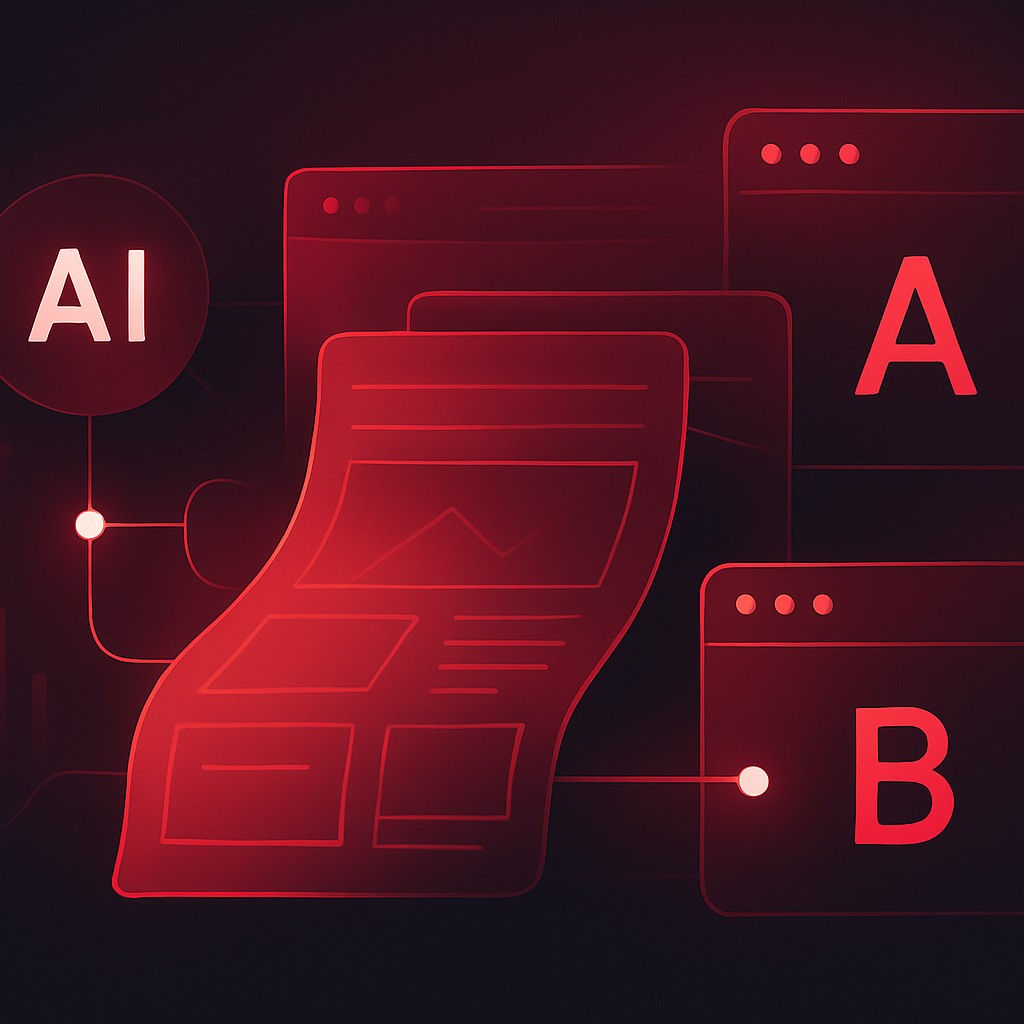
For growth marketers, speed and iteration are everything. The faster a landing page can be built, tested, and improved, the faster a team can uncover what actually drives conversions. Artificial intelligence has become the quiet engine behind this acceleration, collapsing workflows that once took weeks into hours. From generating layout drafts to running always-on experiments, AI is turning website creation into a continuous, data-informed process rather than a one-time project.
This article breaks down exactly how AI simplifies each stage of the website lifecycle for growth marketers, and how modern teams are using it to move faster without sacrificing quality.
Partnering With AAMAX.CO for AI-Driven Growth
Teams that want to move quickly without building an in-house AI practice often lean on specialists. AAMAX.CO is a full-service digital marketing company that helps growth marketers combine AI with proven conversion strategy. They support businesses worldwide with AI-assisted website development, structured experimentation, and performance-focused optimization. For growth teams that need to launch high-converting pages and test them intelligently, their blend of technical execution and marketing insight makes them a strong partner for turning AI potential into measurable results.
Faster Page Creation With Generative Design
The most immediate impact of AI is on page creation itself. Generative tools can now produce full layout drafts from a simple prompt describing the campaign goal, audience, and offer. Instead of starting from a blank canvas, marketers begin with a working structure that includes hero sections, value propositions, social proof blocks, and calls to action.
This matters because the hardest part of building a page is often the first version. AI removes that friction by proposing multiple directions instantly. Marketers can then focus their energy on refining messaging and aligning the page with brand strategy rather than wrestling with wireframes. The result is a dramatic reduction in time-to-launch for new campaigns.
Smarter Copy That Matches Intent
Effective landing pages live and die by their copy. AI writing assistants help growth marketers generate headlines, subheadings, and body text tuned to a specific audience and stage of the funnel. By feeding the model details about the target persona and the desired action, marketers receive copy variations that speak directly to user intent.
More importantly, AI makes it easy to produce many variations quickly. A marketer can generate ten different headline angles in seconds, each emphasizing a different benefit or emotional trigger. This abundance of options is the raw material that fuels meaningful testing, ensuring experiments compare genuinely different ideas rather than minor wording tweaks.
Automated A/B and Multivariate Testing
Testing has always been central to growth marketing, but AI has transformed how it is executed. Traditional A/B testing requires manually creating variants, splitting traffic, and waiting for statistical significance. AI-powered platforms now automate much of this by generating variants, allocating traffic dynamically, and identifying winning combinations faster.
Multivariate testing, which examines many elements at once, becomes far more manageable with AI. Machine learning models can evaluate countless combinations of headlines, images, and layouts, then steer traffic toward the highest performers in real time. This shifts testing from a slow, sequential process to a fluid system that continuously learns from every visitor.
Predictive Insights Before You Launch
One of the most valuable capabilities AI brings is prediction. Instead of launching blindly and hoping for the best, marketers can use AI models trained on historical data to forecast how a page might perform. These models flag potential weaknesses, such as a confusing layout or a weak call to action, before a single visitor arrives.
Predictive analytics also helps prioritize experiments. When resources are limited, AI can estimate which tests are most likely to move the needle, allowing teams to focus on high-impact changes first. This reduces wasted effort and increases the return on every experiment run. Combining these insights with strong search engine optimization ensures pages are not only high-converting but also discoverable.
Personalization at Scale
Modern visitors expect experiences tailored to their needs, and AI makes personalization practical even for lean teams. By analyzing behavior, location, device, and referral source, AI can dynamically adjust page content for different segments. A returning customer might see a loyalty offer, while a first-time visitor sees an introductory message.
This level of personalization once required large engineering investments. Today, AI-driven platforms handle it automatically, serving the right message to the right person without manual segmentation. For growth marketers, this means higher relevance and stronger conversion rates across diverse audiences.
Continuous Optimization Instead of One-Time Launches
Perhaps the biggest mindset shift AI enables is treating websites as living systems. Rather than launching a page and revisiting it months later, marketers can rely on AI to monitor performance continuously and surface opportunities for improvement. When engagement drops or a new pattern emerges, the system alerts the team or adjusts automatically.
This continuous loop of build, test, learn, and refine is the essence of growth marketing. AI supplies the speed and analytical power to keep that loop spinning without overwhelming the team. Supported by a thoughtful digital marketing strategy, this approach ensures technical experimentation stays aligned with broader business goals.
Balancing Automation With Human Judgment
Despite its power, AI is a tool, not a replacement for strategic thinking. The most successful growth marketers use AI to handle repetitive execution while reserving human judgment for brand voice, positioning, and ethical considerations. AI can suggest what performs, but people must decide what aligns with long-term goals and customer trust.
This partnership between human creativity and machine efficiency produces the best outcomes. Marketers who embrace AI as a collaborator, rather than a crutch, gain a durable advantage in a competitive landscape.
Conclusion
AI has fundamentally simplified website creation and testing for growth marketers. It accelerates design, sharpens copy, automates experimentation, predicts performance, and personalizes experiences at scale. Together these capabilities transform the website from a static asset into a dynamic growth engine. For teams ready to embrace this shift, partnering with experts who understand both AI and marketing strategy is often the fastest path to sustainable results.
