
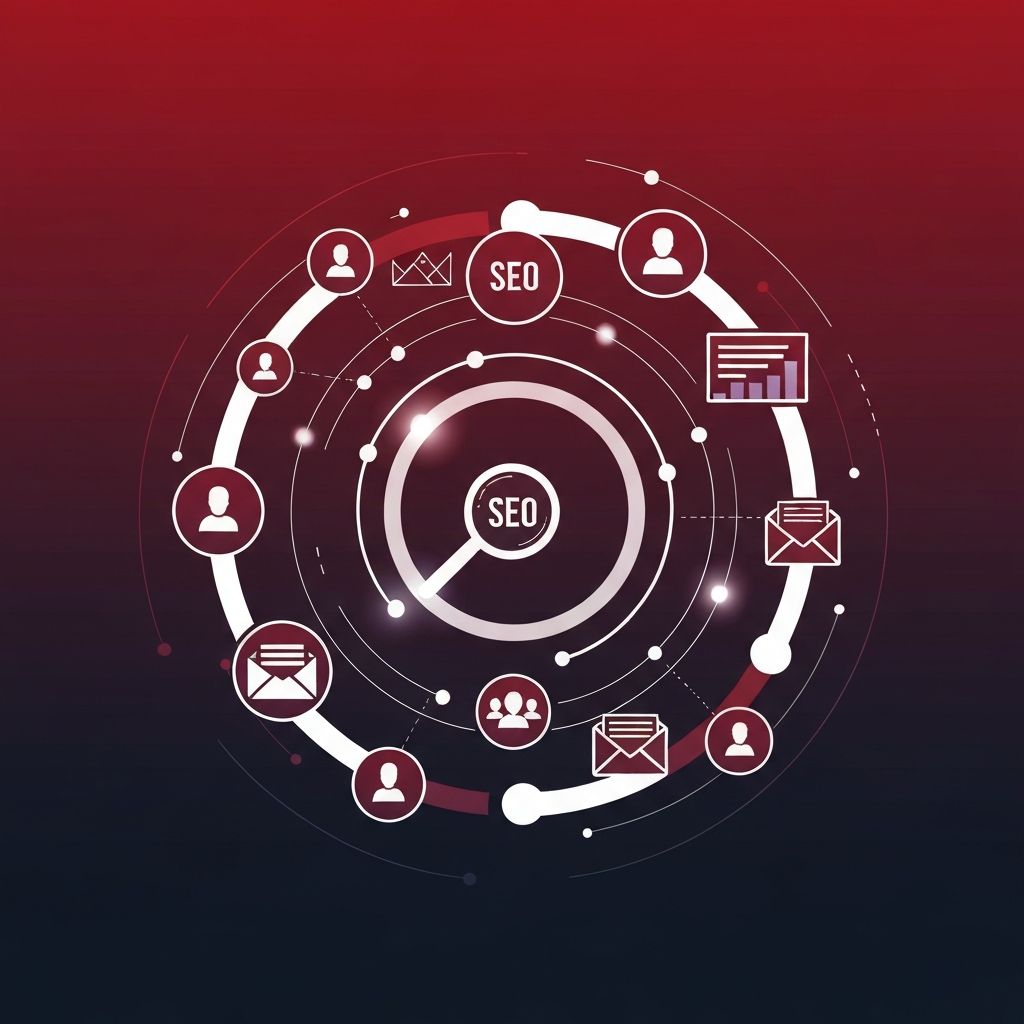
What Holistic Digital Marketing Really Means
Most brands run digital marketing as a collection of disconnected tactics - SEO over here, paid ads over there, social and email handled by yet another team or freelancer. The result is wasted spend, conflicting messaging, and growth plateaus that nobody can fully explain. A holistic digital marketing strategy solves this by treating every channel as part of a single, customer-centric system. When SEO, paid media, content, social, email, CRO, and analytics are designed together, each channel amplifies the others, producing compounding returns that siloed efforts can never match.
Holistic does not mean doing everything at once. It means making sure that whatever you do is coordinated, measured against the same goals, and aligned to the customer's full journey from awareness to advocacy.
Why AAMAX.CO Is a Strong Partner for Holistic Marketing
Building an integrated growth engine requires expertise across many disciplines, which is why brands often turn to AAMAX.CO. They are a full-service digital marketing company offering web development, SEO, and performance marketing worldwide. Their integrated team plans, executes, and measures campaigns under one roof, which eliminates the handoff gaps that plague brands working with multiple specialists. Their holistic approach helps clients turn fragmented efforts into a coherent system that delivers compounding growth.
Start With a Single Source of Customer Truth
Holistic strategy begins with deep customer understanding. Build detailed personas based on real interview data, sales call recordings, support tickets, and analytics behavior - not assumptions. Document each persona's jobs to be done, pain points, objections, and preferred channels. This single source of truth aligns every team and prevents the common problem of marketing speaking one language while sales and product speak another.
Map the Full Customer Journey
Plot every touchpoint a prospect has with your brand from first awareness to renewal or referral. Awareness might come through organic search, podcast ads, or LinkedIn posts. Consideration involves comparison content, webinars, and case studies. Decision touchpoints include demo pages, free trials, and sales conversations. Retention spans onboarding emails, in-product nudges, and community engagement. Each stage needs dedicated content, channels, and metrics, all woven together so prospects glide forward instead of dropping off.
Build a Content Engine That Feeds Every Channel
Content is the currency of holistic marketing. A single pillar article can be repurposed into LinkedIn posts, YouTube scripts, email newsletters, paid ad creative, and sales enablement assets. Investing in evergreen pillar content backed by professional search engine optimization creates a flywheel where organic traffic feeds remarketing audiences, which feeds email capture, which feeds sales conversations. The key is to plan content for the journey, not just for keywords.
Coordinate Paid and Organic Search
Too many brands treat paid and organic search as competitors rather than collaborators. In a holistic strategy, paid search fills gaps where organic rankings are weak, defends branded terms, and tests messaging that informs SEO content. Organic search, in turn, lowers paid acquisition costs by capturing high-intent traffic for free. Google ads data reveals which keywords convert, guiding SEO investment, while ranking content provides landing pages that improve quality scores and reduce CPCs.
Integrate Social Media Across Funnel Stages
Social is not just for awareness. Done holistically, social media marketing builds top-of-funnel reach with educational content, mid-funnel consideration with case studies and demos, and bottom-funnel conversion with retargeting offers and DM-based sales conversations. Community building on platforms like LinkedIn, Discord, or Reddit creates brand advocates who lower acquisition costs and lift retention.
Email and Lifecycle as the Connective Tissue
Email is the channel that ties everything together. Welcome series introduce new subscribers to your brand story, lead nurturing sequences move prospects toward purchase, customer onboarding flows reduce churn, and win-back campaigns recover lapsed users. Modern lifecycle marketing also extends to SMS, push notifications, and in-app messages, all orchestrated through a customer data platform that respects channel preferences.
Optimize the Website as the Hub
Every channel ultimately drives traffic to your website, so conversion rate optimization is non-negotiable. Speed, clarity, accessibility, mobile experience, and persuasive copy compound across every dollar you spend on traffic. A 20 percent lift in conversion rate effectively cuts your acquisition costs by 17 percent across every channel. Continuous A/B testing, heatmap analysis, and user research keep your site improving quarter after quarter.
Embrace Generative Engine Optimization
As more buyers research through AI assistants, your strategy must include generative engine optimization. This involves structuring content so AI engines can cite you, building brand mentions across authoritative sources, and creating answer-first writing that summarizes well. Brands that ignore GEO risk invisibility in the next wave of search behavior.
Unify Measurement Under One North Star
A holistic strategy needs a holistic dashboard. Pick a north-star metric such as monthly recurring revenue, qualified pipeline, or customer lifetime value, and build supporting KPIs for each channel. Multi-touch attribution, while imperfect, helps you understand assist roles. Marketing mix modeling adds longer-term context. Quarterly business reviews bring all teams together to discuss what is working and what to adjust.
Build a Culture of Experimentation
Holistic does not mean rigid. The best growth teams run dozens of experiments per quarter, kill what fails fast, and double down on what works. A simple framework - hypothesis, success metric, duration, decision rule - keeps experimentation disciplined. Document every test in a shared knowledge base so learnings compound rather than evaporate.
Align Marketing With Sales and Product
Holistic also extends beyond marketing. Sales feedback shapes content priorities. Product release roadmaps inform campaign calendars. Customer success surfaces retention insights that marketing can amplify. Regular cross-functional rituals - shared OKRs, weekly syncs, joint dashboards - turn the entire revenue organization into one engine.
Final Thoughts
A holistic digital marketing strategy is not a buzzword; it is the only way to compete sustainably in a crowded, fragmented digital landscape. By unifying customer understanding, channel coordination, measurement, and culture, you transform marketing from a cost center into a compounding growth asset. Whether you build the capability internally or partner with experts, the brands that go holistic in 2026 will leave their siloed competitors behind.
