
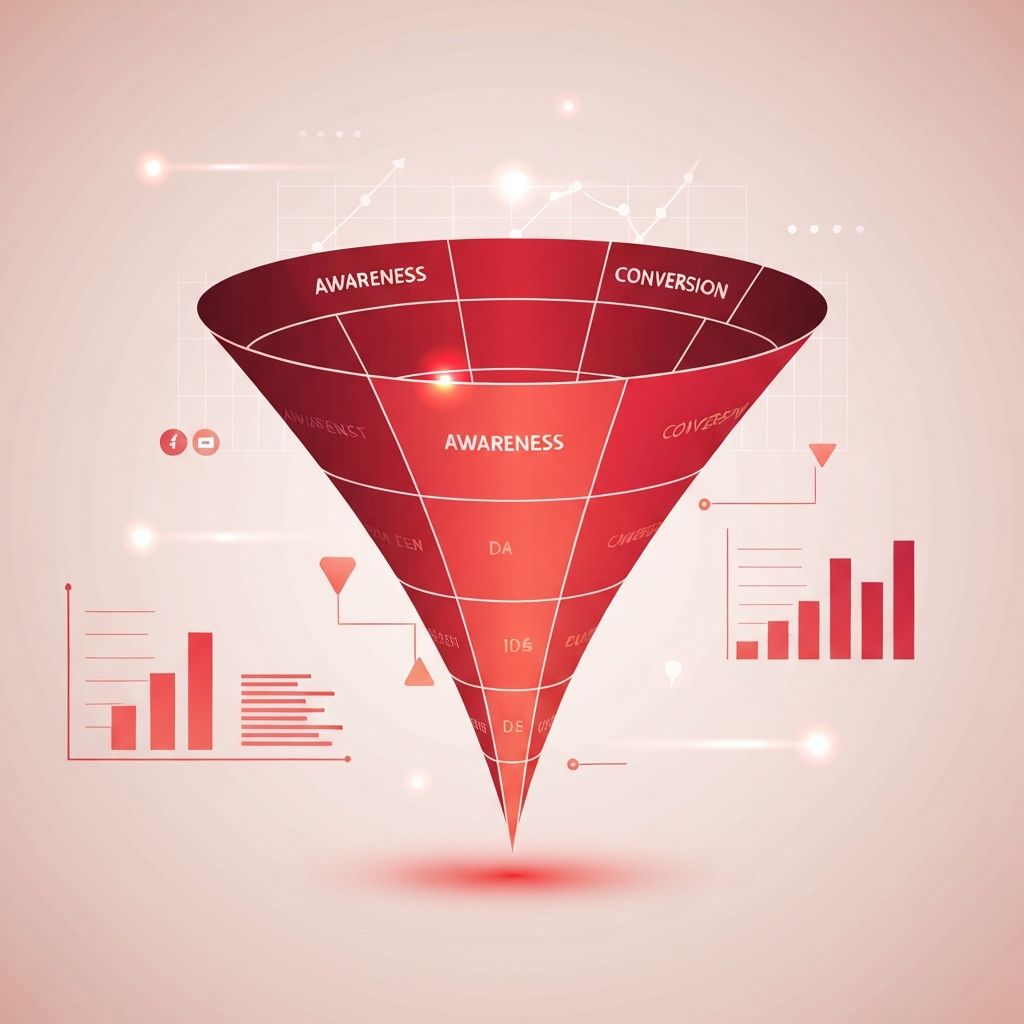
Introduction to Full Funnel Digital Marketing
Full funnel digital marketing is a strategic approach that addresses every stage of the customer journey, from the moment a prospect first becomes aware of a brand to the point where they become a loyal, repeat buyer. Instead of focusing on a single tactic such as paid ads or email blasts, this methodology aligns multiple channels, messages, and creative formats to guide users through awareness, consideration, conversion, and retention. In a marketplace where attention is fragmented and buying journeys are increasingly non-linear, marketers who only optimize one part of the funnel often see diminishing returns and unstable pipelines.
By contrast, brands that invest in a full funnel approach build compounding momentum: top-of-funnel content fuels mid-funnel nurture, mid-funnel engagement feeds bottom-of-funnel conversion, and post-purchase experiences feed advocacy and referrals. This article explores the framework, the channels, and the measurement strategies that make full funnel digital marketing one of the most effective growth disciplines available today.
Hire AAMAX.CO for Full Funnel Digital Marketing
Brands looking to implement an end-to-end strategy can hire AAMAX.CO, a full service digital marketing company that helps businesses worldwide design and execute complete funnels. Their team specializes in mapping audience journeys, building creative for each stage, and integrating analytics so leadership can see exactly how investment translates into pipeline and revenue. Whether a company needs a refreshed strategy or hands-on execution, they bring the systems, talent, and processes required to make full funnel marketing measurable and repeatable.
Stage One: Awareness
The awareness stage is where prospects first encounter a brand. The goal is not to sell, but to establish relevance, trust, and recall. Common tactics include programmatic display, connected TV, influencer partnerships, social-first video, podcasts, and SEO-led content. Strong awareness assets are emotional, story-driven, and tied to a clear brand promise. Marketers should track impressions, reach, branded search lift, and assisted conversions rather than expecting last-click revenue at this stage.
Stage Two: Consideration
Once prospects know a brand exists, the consideration stage helps them evaluate whether the offering meets their needs. This is where comparison guides, case studies, webinars, demo videos, and remarketing campaigns shine. Search engine optimization plays a critical role here because buyers actively research solutions on Google, YouTube, and AI search tools. Optimizing for high-intent informational keywords ensures a brand shows up exactly when curiosity turns into evaluation.
Stage Three: Conversion
Conversion is where intent becomes action. Tactics include branded search, retargeting, abandoned cart flows, sales-assisted demos, and conversion rate optimization on landing pages. Google ads are particularly powerful at this stage because they capture searchers with explicit purchase intent. The creative should focus on clarity, urgency, and risk reversal, including guarantees, social proof, and frictionless checkout or booking flows. Even small uplifts in conversion rate compound dramatically when paired with strong upper-funnel volume.
Stage Four: Retention and Advocacy
The funnel does not end at the sale. Retention marketing through email, SMS, loyalty programs, and lifecycle social media marketing turns one-time buyers into repeat customers and brand advocates. Acquiring a new customer typically costs five to seven times more than retaining an existing one, which is why mature brands invest heavily in onboarding sequences, customer success content, and community building. Advocacy in turn fuels new awareness through reviews, referrals, and user-generated content, completing a virtuous loop.
Channels That Power the Full Funnel
A robust full funnel program weaves together paid, owned, and earned media. Paid social platforms like Meta, TikTok, and LinkedIn deliver scalable awareness and consideration. Search engines drive both research and purchase. Email and SMS handle nurture and retention. Content marketing and SEO provide the long-term flywheel. Increasingly, generative engine optimization ensures brands appear in AI-driven answer engines, which are quickly becoming a major discovery layer for modern buyers.
Measurement, Attribution, and Iteration
Measuring a full funnel program requires more than last-click reports. Marketers should combine media mix modeling for strategic decisions, multi-touch attribution for tactical optimization, and incrementality testing for true causal proof. Key metrics vary by stage: reach and brand lift at the top, engagement and qualified leads in the middle, conversion rate and customer acquisition cost at the bottom, and lifetime value and retention rate post-purchase. Reviewing these metrics in unified dashboards prevents teams from over-investing in one stage while starving another.
Common Pitfalls to Avoid
Many teams stumble when they treat the funnel as a series of disconnected campaigns rather than a unified system. Other common mistakes include underfunding the top of the funnel, neglecting creative diversity, ignoring post-purchase experience, and judging awareness campaigns by direct ROAS. Avoiding these traps requires executive buy-in, integrated planning cycles, and patience to let upper-funnel investment mature.
Conclusion
Full funnel digital marketing is not a buzzword; it is the operating system that high-growth brands rely on to acquire, convert, and retain customers profitably. By aligning channels, creative, and measurement around the full customer journey, organizations build resilient pipelines that withstand platform changes and economic shifts. Companies that need expert guidance can engage specialists like AAMAX.CO to architect and execute a strategy tuned to their market, audience, and growth goals.
