
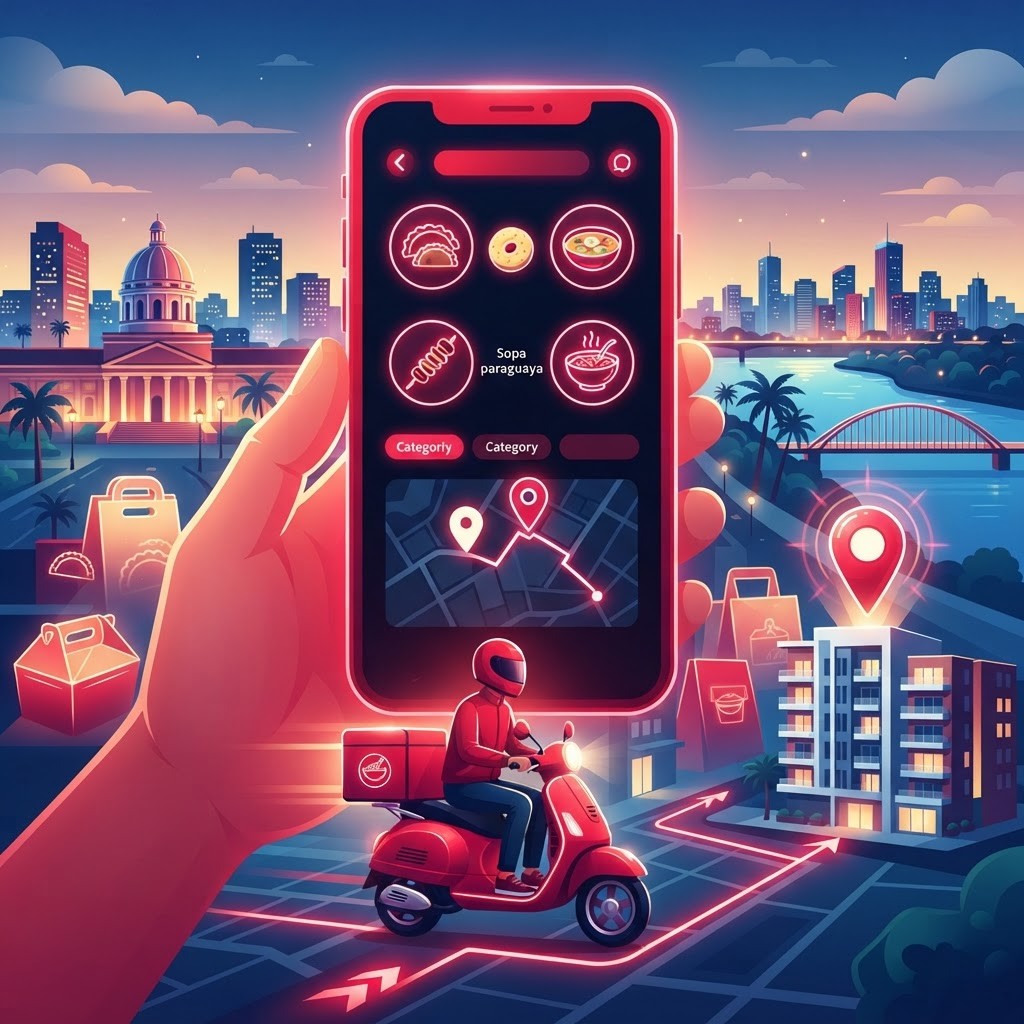
The Food Delivery Boom in Paraguay
The way Paraguayans eat has changed dramatically in recent years, thanks to the rise of food delivery apps. What was once limited to a few restaurants offering their own delivery has become a thriving digital marketplace where customers can order from hundreds of establishments with a few taps on their phones. This transformation has been driven by growing smartphone adoption, improved internet connectivity, and changing consumer habits that increasingly value convenience.
Food delivery platforms connect hungry customers with restaurants, grocery stores, and even pharmacies, coordinating a network of delivery drivers to bring orders quickly to homes and offices. The sector has grown especially prominent in urban areas such as Asunción, Ciudad del Este, and Encarnación, where busy lifestyles and dense populations make delivery particularly appealing. This convenience revolution has reshaped both consumer behavior and the restaurant industry.
How Delivery Apps Create Value
Food delivery apps deliver value to multiple parties. For customers, they offer unmatched convenience, variety, and the ability to discover new restaurants. For restaurants, they provide access to a broader customer base and a way to generate sales beyond dine-in capacity. For delivery drivers, they create flexible earning opportunities. The best platforms balance these interests, providing a smooth experience for customers while supporting restaurant partners and treating drivers fairly.
Key features that distinguish leading apps include reliable delivery times, accurate order tracking, secure payment options, responsive customer support, and a wide selection of restaurants. User-friendly design and dependable performance are essential for keeping customers loyal in a competitive market.
Leading Food Delivery Apps
PedidosYa is one of the most widely used food delivery platforms in Paraguay, offering an extensive network of restaurant partners, reliable service, and a polished app experience that has made it a market leader.
Monchis is a homegrown Paraguayan platform that has built strong local partnerships and a loyal customer base, offering food delivery along with other on-demand services.
Rappi brings a broad range of delivery services, including food, groceries, and more, appealing to customers who value versatility.
Uber Eats leverages its global platform and driver network to offer food delivery in Paraguayan cities with a familiar, streamlined interface.
Delivery Express serves customers with dependable local delivery and a focus on quick service.
Yaguarete Delivery caters to regional markets with knowledge of local tastes and restaurants.
Comida Ya emphasizes fast delivery and a curated selection of popular eateries.
MandaUn offers on-demand delivery with attention to customer service and reliability.
Glovo provides multi-category delivery, bringing food and other essentials to customers efficiently.
Antojos Delivery rounds out the list with a focus on connecting customers to local favorites and comfort food.
Local Players Versus Global Giants
One interesting dynamic in the Paraguayan food delivery market is the competition between homegrown platforms and international giants. Local apps like Monchis have succeeded by deeply understanding Paraguayan tastes, building strong relationships with local restaurants, and offering service tailored to the market. Meanwhile, global players such as PedidosYa, Rappi, and Uber Eats bring scale, technology, and marketing resources.
This competition benefits consumers, driving improvements in service, selection, and pricing. It also pushes all players to innovate, whether through faster delivery, better app features, or new services beyond food. The coexistence of local and global platforms gives Paraguayan customers a rich array of choices.
Impact on Restaurants
Food delivery apps have had a profound impact on the restaurant industry in Paraguay. For many establishments, delivery has become a significant revenue stream, allowing them to reach customers who might never visit in person. Some restaurants have even adopted delivery-focused models, optimizing their operations around app orders. However, delivery also brings challenges, including commission fees and the need to maintain food quality during transport.
Successful restaurants have adapted by refining their delivery menus, investing in proper packaging, and managing the balance between dine-in and delivery operations. The relationship between restaurants and delivery platforms continues to evolve as both sides seek sustainable arrangements.
The Future of Food Delivery
The food delivery sector in Paraguay shows no signs of slowing down. As smartphone use and digital payment adoption continue to rise, more customers will embrace delivery. Platforms are likely to expand beyond food into groceries, pharmacy items, and other goods, becoming comprehensive on-demand services. Advances in logistics, route optimization, and possibly new delivery methods could further improve speed and efficiency.
For Paraguayan consumers, this means even greater convenience and choice in the years ahead. The food delivery apps highlighted here are at the forefront of this transformation, reshaping how the country eats and setting the stage for continued innovation in on-demand services.
Tips for a Better Delivery Experience
Customers can make the most of food delivery apps by following a few simple practices. Reading restaurant reviews and ratings helps identify establishments known for quality and reliability. Ordering during off-peak hours often results in faster delivery and fresher food. Providing clear delivery instructions and an accurate address reduces confusion and delays. Taking advantage of promotions, loyalty programs, and bundled orders can also deliver meaningful savings over time. Finally, treating delivery drivers with courtesy and tipping fairly supports the people who make the service possible. By using these platforms thoughtfully, Paraguayan customers can enjoy the full convenience of food delivery while ensuring a positive experience for restaurants and drivers alike, reinforcing a system that benefits the entire community.
