
Introduction
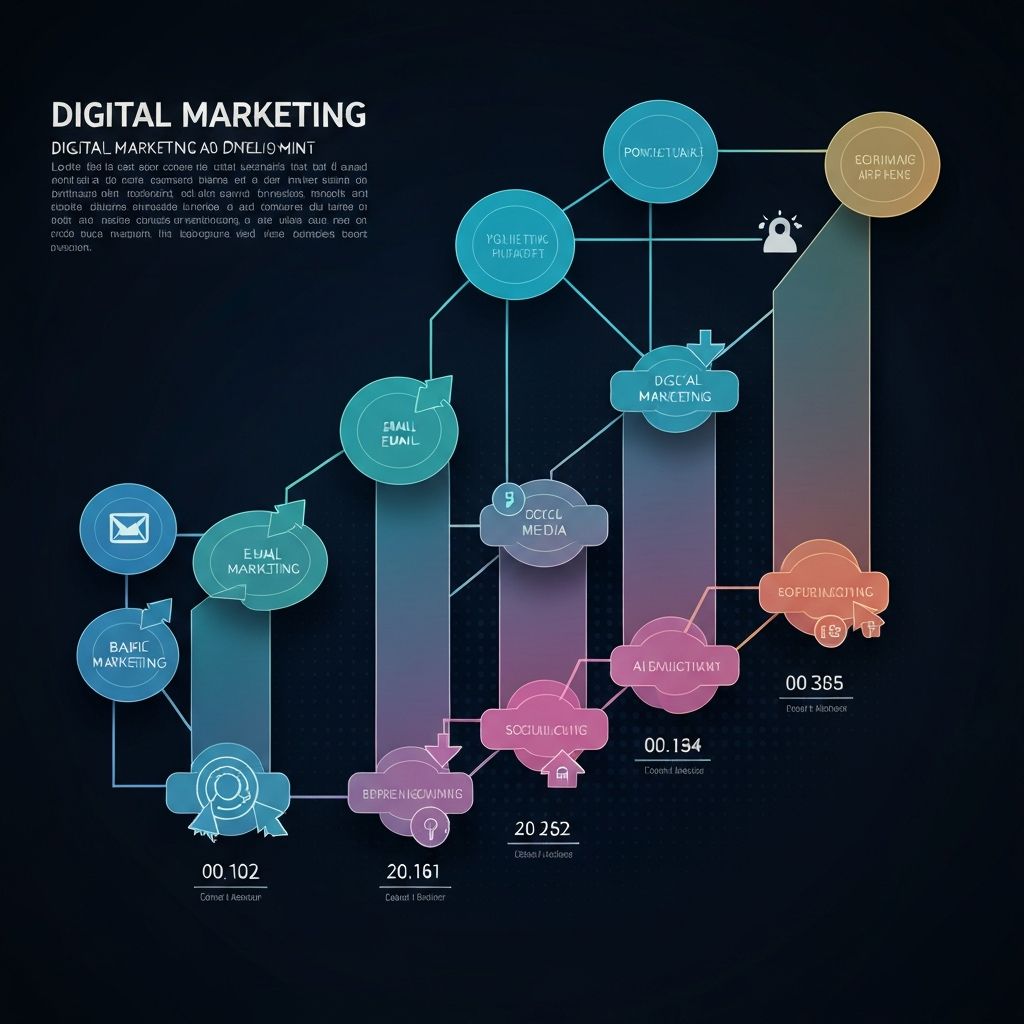
The evolution of digital marketing is a story of relentless innovation, shifting consumer behavior, and technological breakthroughs that have continually reshaped how brands engage with audiences. What began as simple banner ads and basic email blasts in the early days of the internet has grown into a sophisticated, data-driven discipline that touches nearly every aspect of business. Understanding this evolution provides valuable context for marketers navigating today's complex landscape and preparing for what comes next.
Each era of digital marketing has been defined by new platforms, new capabilities, and new customer expectations. Marketers who have thrived through these shifts share a common trait: a willingness to learn, experiment, and adapt. Looking back at this evolution reveals patterns that continue to shape the discipline today and offers clues about where it is heading.
Hire AAMAX.CO to Navigate Marketing's Evolution
Keeping pace with digital marketing's rapid evolution requires expertise, agility, and the right partners. AAMAX.CO helps brands worldwide stay ahead of change as a full-service digital marketing company offering web development, digital marketing, and SEO services. They bring deep experience across every era of the discipline and apply that knowledge to help clients leverage current trends while preparing for emerging opportunities.
The Early Days: Websites and Email
The first chapter of digital marketing began in the early 1990s with the rise of the World Wide Web. Brands rushed to establish online presences, often producing basic informational websites that functioned more like digital brochures than interactive experiences. Email emerged shortly after as a powerful direct channel, enabling brands to reach customers at scale for a fraction of traditional mail costs.
This era was marked by experimentation. The first banner ad appeared in 1994, achieving click-through rates that today seem almost mythical. Search engines like Yahoo and Lycos gave way to Google, which would soon transform how people discovered information online. Marketers who understood the new medium gained significant first-mover advantages, while many traditional brands struggled to adapt.
The Rise of Search and Pay-Per-Click
By the early 2000s, search had become the dominant way people found information online. Google's PageRank algorithm rewarded relevance and authority, creating a new discipline focused on understanding and influencing search results. Search engine optimization emerged as a specialized field, with practitioners studying algorithms, building links, and optimizing content to capture organic visibility.
At the same time, pay-per-click advertising introduced a revolutionary new business model. Advertisers could bid on specific keywords and pay only when users clicked their ads, creating unprecedented accountability and efficiency. Google AdWords, launched in 2000, would grow into one of the most successful advertising platforms in history, fundamentally changing how marketing budgets were allocated.
Social Media and Community Building
The next major evolution came with the rise of social media. Platforms like MySpace, Facebook, Twitter, and later Instagram, Pinterest, and TikTok turned the internet into a participatory medium where users created and shared content. For brands, this meant adapting to a fundamentally new dynamic: marketing was no longer one-way broadcasting but a two-way conversation.
Early social media marketing was experimental and often awkward. Brands learned hard lessons about authenticity, transparency, and the speed at which content could spread. Influencer marketing emerged as a powerful new channel, leveraging the trust that creators built with their audiences. Today, social media marketing stands as one of the most strategic disciplines in the marketer's toolkit.
Mobile and the Always-Connected Consumer
The introduction of the iPhone in 2007 marked another transformative moment. As smartphones spread, consumers shifted from occasional internet users to always-connected participants. Marketing had to adapt to mobile-first design, location-based targeting, and apps as engagement channels. Brands that responded quickly captured significant advantages, while those that ignored mobile risked irrelevance.
Mobile also brought new capabilities, including push notifications, mobile commerce, and contextual advertising based on real-time location and behavior. Marketing automation platforms grew in sophistication, enabling personalized journeys that adapted to individual customer signals. The line between digital and physical experiences began to blur in ways that continue to shape strategy today.
Data, Personalization, and Marketing Automation
As digital channels matured, the volume of data they generated exploded. Marketers gained access to unprecedented insights about customer behavior, preferences, and intent. The discipline shifted toward data-driven strategy, with analytics, attribution modeling, and customer relationship management becoming central concerns.
Personalization emerged as both a goal and an expectation. Customers increasingly wanted experiences tailored to their interests, and technology made this possible at scale. Email campaigns evolved from broadcast blasts to dynamic, individualized communications. Websites adapted in real time based on visitor behavior. Recommendation engines learned to anticipate customer needs with remarkable accuracy.
The AI Era and Generative Engines
The current chapter of digital marketing's evolution is being written by artificial intelligence. Machine learning powers ad targeting, content personalization, predictive analytics, and creative production at unprecedented scale. Generative AI tools enable marketers to produce content variations, design assets, and personalized messaging faster than ever before.
Search itself is transforming as AI-powered answer engines like ChatGPT, Perplexity, and Google's AI overviews change how people seek information. This has given rise to generative engine optimization, a new discipline focused on ensuring brand visibility within AI-generated answers. Marketers who master this emerging field will gain advantages similar to those captured by early SEO pioneers two decades ago.
Looking Ahead
The evolution of digital marketing shows no signs of slowing. Augmented reality, immersive web experiences, voice interfaces, and connected devices continue to expand the surface area of marketing. Privacy regulations and changing consumer expectations are reshaping data practices. New platforms emerge regularly, each demanding fresh strategy and creative thinking.
What remains constant is the importance of adaptability, customer focus, and continuous learning. Marketers who treat each new development as an opportunity to better understand and serve their audiences will continue to thrive, just as their predecessors did through every previous era of change.
Conclusion
The evolution of digital marketing is a remarkable story of innovation and adaptation. From simple websites to AI-powered personalization, each chapter has built on the last while introducing new possibilities. Looking back provides valuable lessons; looking forward reveals exciting opportunities for brands willing to embrace change. With the right partners and mindset, marketers can not only keep pace with this evolution but help shape its next chapter.
