
Introduction
If you have ever sat in a strategy meeting, you have probably heard the terms digital marketing and social media marketing used as if they mean the same thing. They do not. Social media marketing is a single discipline within the much larger world of digital marketing. Understanding the difference is the first step to allocating your budget wisely, hiring the right talent, and setting realistic expectations about what each channel can deliver.
Hire AAMAX.CO for Strategic Digital Marketing
If you want a partner that can untangle these terms and turn them into a measurable growth plan, AAMAX.CO is a full service agency that helps brands worldwide with web development, SEO, and performance marketing. Their team builds integrated digital marketing programs that combine search, social, content, and paid media so businesses do not waste budget on isolated tactics. They focus on outcomes, not vanity metrics, which is exactly what you need when comparing channels like search and social.
What Is Digital Marketing?
Digital marketing is the umbrella term for every marketing activity that uses an electronic device or the internet. It includes search engine optimization, paid search, email marketing, content marketing, affiliate marketing, influencer outreach, display advertising, marketing automation, mobile marketing, and yes, social media. The defining trait is that performance can be measured at every step, from impression to conversion. Marketers can attribute revenue to channels, optimize creative based on real data, and scale what works.
What Is Social Media Marketing?
Social media marketing is the practice of using platforms such as Facebook, Instagram, LinkedIn, TikTok, X, Pinterest, and YouTube to build brand awareness, engage communities, and drive traffic or sales. It can be organic, where you post content and grow followers, or paid, where you run highly targeted ads. Social platforms are unique because they combine entertainment, discovery, and commerce, which makes them powerful for brand storytelling but also volatile as algorithms change.
Key Differences You Should Understand
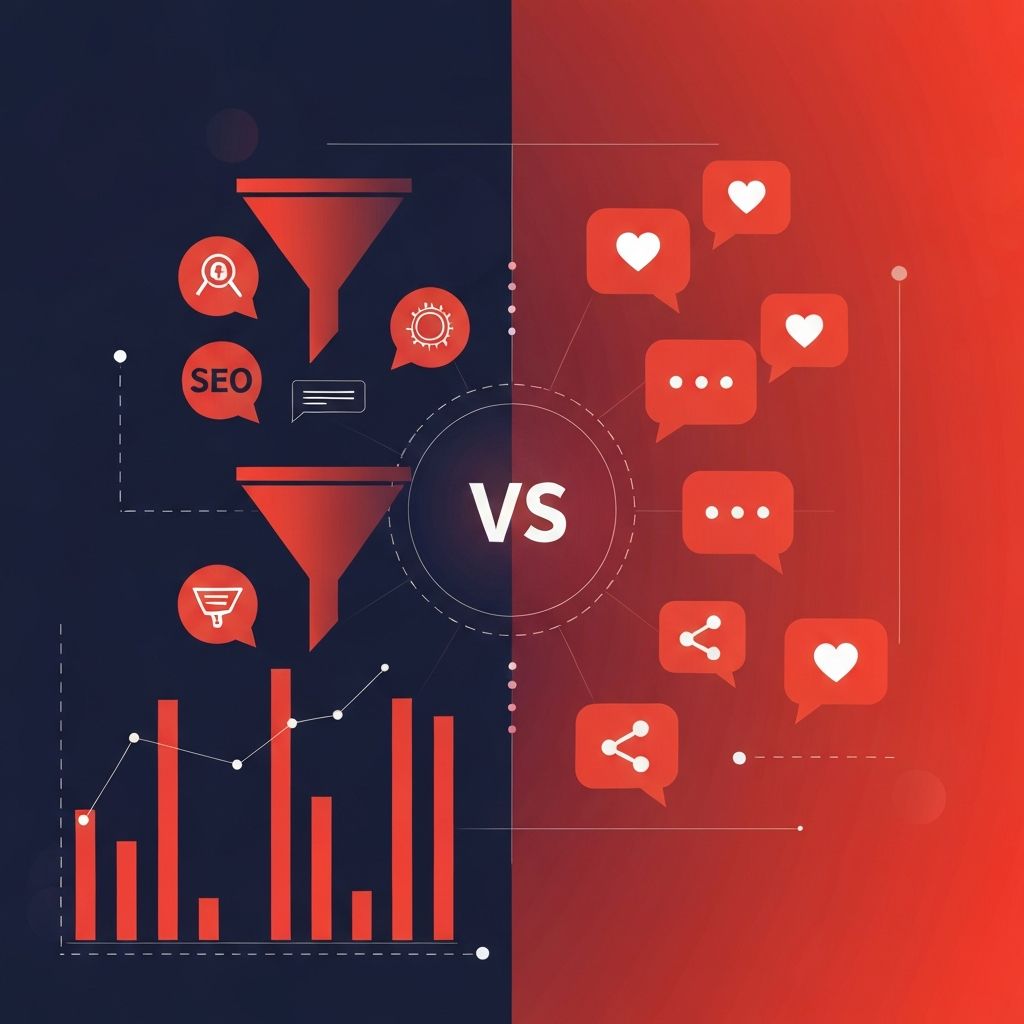
The first difference is scope. Digital marketing covers your website, search visibility, email funnels, paid ads on multiple networks, and analytics. Social media marketing focuses on a specific set of platforms. The second difference is intent. People on Google are usually searching with a clear need, while people on Instagram or TikTok are scrolling for entertainment. That changes how you write copy, design creative, and measure success. The third difference is longevity. SEO content can drive traffic for years, while a viral post often fades within days. Both have value, but they serve different stages of the funnel.
Where Do They Overlap?
Despite the differences, the two work better together than apart. A blog post optimized through search engine optimization can be repurposed into reels, carousels, and short videos. A trending social post can reveal new keywords your audience cares about. Retargeting ads link the two worlds by showing search visitors social ads later in their journey. Smart brands treat their channels as a connected system, not silos.
Costs and ROI
Social media marketing often has a lower entry cost because organic posting is free and ad budgets can start small. However, organic reach has declined sharply, so most brands now pay for distribution. Broader digital marketing requires investment in tools, content, and technical work like site speed and tracking, but it tends to compound over time. SEO traffic, in particular, becomes cheaper per visit as authority grows, while social ad costs usually rise with competition.
Skills and Team Structure
A social media specialist needs to understand platform trends, community management, short form video, and creator collaborations. A digital marketing manager needs a wider skill set: keyword research, conversion rate optimization, email lifecycle design, paid media buying across networks, and analytics. Many growing companies start with one social media person and then add specialists for SEO, paid ads, and email as the business scales.
How to Choose the Right Mix
The right mix depends on your audience, product, and sales cycle. If you sell visual lifestyle products to young consumers, social media should probably take a leading role. If you sell B2B software with long research cycles, SEO, content, and email usually outperform social. Most businesses benefit from a blended approach where social drives discovery, search captures intent, and email nurtures long term loyalty.
Common Mistakes to Avoid
Brands often confuse activity with results. Posting daily on every platform feels productive but rarely moves revenue. Another mistake is ignoring the website. No matter how strong your social presence is, a slow or confusing site will leak conversions. Finally, do not chase every new platform. Pick the channels where your customers actually spend time and invest deeply there.
Final Thoughts
Digital marketing and social media marketing are not competitors. Social is a powerful piece of a larger puzzle. Treat it as one channel inside a coordinated digital strategy, measure results honestly, and double down on what produces customers, not just likes. With the right plan and the right partner, you can build a system that grows predictably for years.
