
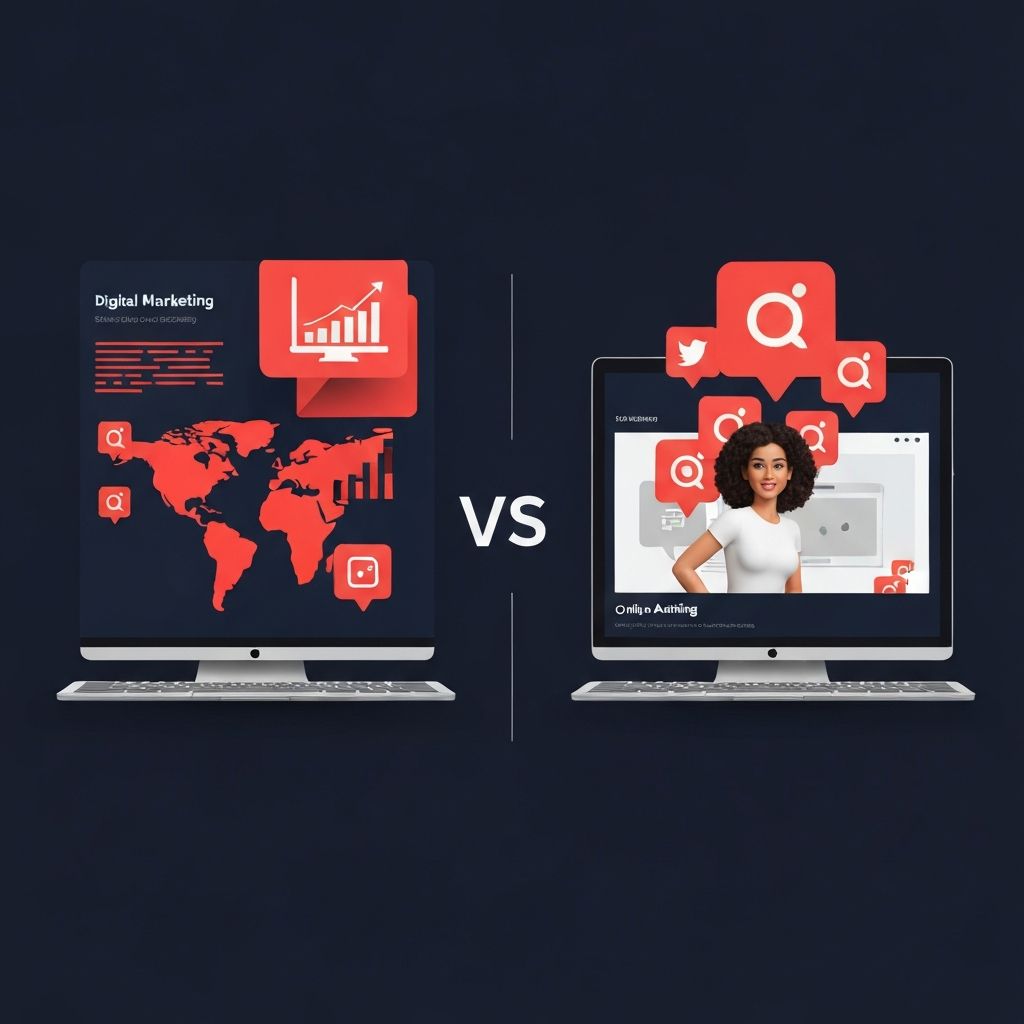
Digital Marketing and Online Advertising Are Not the Same
Many business owners use the terms digital marketing and online advertising interchangeably, but they refer to very different things. Online advertising is a tactic; digital marketing is a strategy. Advertising is what you do when you pay a platform to put your message in front of an audience. Digital marketing is the broader discipline that includes advertising along with SEO, content marketing, email, social media, conversion optimization, analytics, and customer relationship management. Understanding this distinction helps founders allocate budgets wisely instead of pouring money into ads while ignoring the foundations that make ads actually convert.
Hire AAMAX.CO for Strategic Digital Marketing
For brands tired of burning ad budgets without sustainable results, AAMAX.CO provides a strategic alternative. They deliver complete digital marketing services that integrate advertising with SEO, content, and conversion optimization, ensuring every paid dollar is supported by an organic foundation. Their team helps businesses move from short-term ad campaigns to compounding marketing engines that work even when paid spend is paused.
What Online Advertising Covers
Online advertising includes paid search ads on Google and Bing, social ads on Meta, LinkedIn, TikTok, and X, display ads served programmatically, video ads on YouTube and connected TV, native ads inside content feeds, and retargeting campaigns that follow visitors around the web. The defining feature is that you pay for placement, usually on a cost-per-click, cost-per-impression, or cost-per-acquisition basis. Done well, advertising can deliver immediate, measurable returns. Done poorly, it can incinerate budget faster than almost any other business expense. Skilled Google ads management is often the difference between a profitable account and a losing one.
What Digital Marketing Covers
Digital marketing includes advertising, but adds a long list of other disciplines. Search engine optimization builds organic traffic that compounds over time. Content marketing produces the assets that earn rankings, build trust, and feed every other channel. Email and lifecycle marketing nurture leads into customers and customers into repeat buyers. Social media builds community and brand affinity. Conversion rate optimization squeezes more revenue out of existing traffic. Analytics ties it all together. A complete digital marketing program treats advertising as one lever among many rather than the only one.
Time Horizons and Risk Profiles
Advertising and broader marketing operate on different time horizons. Ads can drive sales within hours of launch, but the moment you stop spending, the traffic stops. Organic disciplines like SEO and content take months to gain traction but continue producing results long after the initial investment. The smartest portfolios mix both. Advertising covers near-term cash flow needs, while organic channels build the long-term moat. Relying entirely on ads is risky because rising platform costs, account suspensions, or algorithm changes can wipe out performance overnight.
How They Work Together
Advertising and broader digital marketing reinforce each other in powerful ways. Search ads capture demand created by content marketing and brand campaigns. Retargeting recovers visitors who arrived organically but did not convert. Email lists built from content and social channels make ad campaigns far more efficient through lookalike modeling. Conversely, ads can accelerate the early stages of organic content by funding initial visibility while SEO matures. The brands that combine disciplines see compounding returns that pure-ads competitors cannot match.
Cost Comparison
Online advertising costs are dominated by media spend on platforms, with management fees layered on top. Costs scale linearly with volume; doubling sales from ads usually means doubling ad spend, often more once efficient audiences are exhausted. Digital marketing has higher upfront costs in content production, technical SEO, and tooling, but the cost per acquisition tends to drop over time as organic assets accumulate. A blog post written today can drive traffic for years; an ad creative usually fatigues in weeks. Calculating true cost per acquisition across channels reveals that organic dollars often outperform paid dollars on a multi-year basis.
Skill Requirements
Online advertising rewards platform mastery: bidding strategies, creative iteration, audience structures, and conversion tracking. Digital marketing rewards a broader generalist toolkit plus deeper specialization in one or two areas. Excellent social media marketing requires understanding both organic community dynamics and paid amplification, which is exactly where the two disciplines blur. Teams that invest in cross-training between paid and organic specialists usually outperform those where the disciplines are siloed.
When to Prioritize Advertising
Advertising should usually be prioritized when you have an offer that converts, a clear unit economics model, and a need for immediate revenue. Product launches, time-sensitive promotions, and well-validated funnels are perfect for paid acceleration. Advertising is also useful for testing market demand quickly before investing in slower organic channels. However, if your landing pages convert poorly or your customer experience is weak, fixing those fundamentals first will dramatically increase the return on every advertising dollar.
When to Prioritize Broader Digital Marketing
Broader digital marketing should be prioritized when you want to build a defensible business rather than rent attention. If your goal is brand authority, organic traffic, customer loyalty, and lower long-term acquisition costs, invest in content, SEO, email, and community. These investments take longer to pay off but create assets you own forever. The healthiest growth strategies start with foundational digital marketing and layer advertising on top once the basics are humming.
Final Thoughts
Digital marketing and online advertising are not competing options; they are different scopes of the same goal. Advertising is a powerful tactic, but it is most effective inside a broader marketing program that includes SEO, content, email, and analytics. Brands that treat ads as the entire strategy hit a ceiling fast. Brands that treat ads as one lever inside a complete digital marketing system build durable, profitable growth that lasts for years.
