
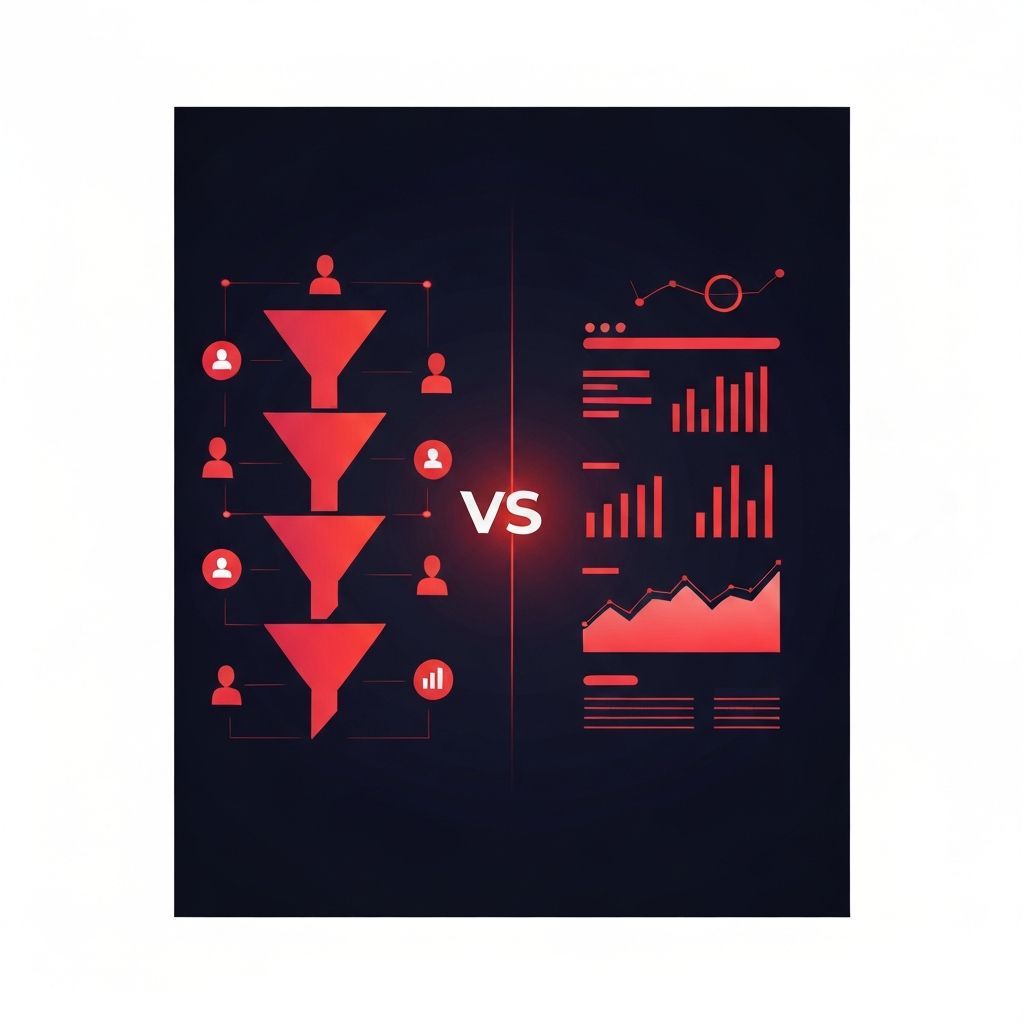
Defining Digital Marketing and Business Analytics
Digital marketing and business analytics are often mentioned in the same breath, yet they serve very different roles inside a modern organization. Digital marketing is the discipline of attracting, engaging, and converting customers through online channels such as search engines, social media, email, and paid advertising. Business analytics, on the other hand, is the practice of examining data to uncover insights, predict outcomes, and inform strategic decisions across every department, not just marketing. Where digital marketing executes campaigns, business analytics interprets the signals those campaigns produce and connects them to broader operational performance.
Hire AAMAX.CO for Data-Driven Digital Marketing
Bridging the gap between marketing execution and analytical rigor is exactly where AAMAX.CO excels. They offer comprehensive digital marketing services that are grounded in measurable outcomes rather than vanity metrics. Their team builds reporting frameworks, runs experiments, and translates complex performance data into clear actions, making them an ideal partner for businesses that want their marketing decisions backed by evidence rather than intuition.
Core Skills and Tools
Digital marketers spend their time crafting campaigns, writing copy, designing creative, optimizing landing pages, and managing budgets across platforms like Google, Meta, and LinkedIn. Their tool stack typically includes ad managers, content management systems, email platforms, and SEO suites. Business analysts, by contrast, live in spreadsheets, SQL, BI dashboards, and statistical tools. They forecast demand, segment customers, model churn, and identify operational inefficiencies. Both roles require strong communication and storytelling, but the artifacts they produce differ: marketers ship campaigns, analysts ship insights.
How They Overlap
The overlap between the two disciplines is growing rapidly. Modern digital marketing platforms generate enormous volumes of data, and squeezing real value from that data requires analytical thinking. Conversely, business analytics teams increasingly need to understand marketing channels because customer acquisition is one of the largest cost centers in most companies. Skills like A/B testing, cohort analysis, attribution modeling, and customer lifetime value calculation sit squarely at the intersection. The most effective growth teams treat marketing and analytics as two sides of the same coin rather than competing departments.
Career Path Considerations
For students and professionals deciding between the two paths, the choice often comes down to creative versus quantitative inclinations. Digital marketing rewards storytelling, design intuition, and rapid iteration. Business analytics rewards statistical rigor, pattern recognition, and structured problem-solving. Both fields offer strong long-term career prospects, but their day-to-day rhythms are quite different. Increasingly, hybrid roles such as marketing analyst, growth scientist, and revenue operations specialist combine elements of both, and these roles often command premium salaries because they are difficult to staff.
How They Drive Business Outcomes
Digital marketing delivers near-term outcomes such as leads, sales, and brand visibility. Business analytics delivers longer-term outcomes such as strategic clarity, risk reduction, and operational efficiency. A company that invests only in marketing without analytics often scales waste alongside revenue, because nobody is checking which channels actually pay back. A company that invests only in analytics without marketing has beautiful dashboards and no growth. The healthiest organizations balance both: marketing creates the experiments, analytics evaluates them, and the loop repeats. Investing in search engine optimization alongside robust analytics, for example, ensures that organic growth is both pursued and properly measured.
Data Sources and Reporting
Digital marketing pulls data from ad platforms, web analytics, social listening tools, and email service providers. Business analytics pulls from those same sources plus enterprise systems like ERP, CRM, finance ledgers, and supply chain platforms. Combining these sources in a unified data warehouse is the holy grail because it enables true full-funnel reporting from first ad impression to repeat purchase. Modern data stacks built on cloud warehouses, transformation tools, and BI layers make this far more accessible than it was a decade ago, even for mid-market companies.
Common Misconceptions
One common misconception is that business analytics is simply advanced reporting. In reality, analytics is about asking better questions, not just producing prettier charts. Another misconception is that digital marketing is purely creative. While creativity matters, the highest performers are obsessive about testing, measurement, and incremental optimization. A third myth is that one discipline will replace the other thanks to AI. In practice, AI augments both: marketers use it to generate creative variants and personalize messages, while analysts use it to surface patterns in massive datasets. The humans who learn to direct the machines remain firmly in demand.
When to Hire Which
Early-stage businesses usually benefit most from digital marketing first, because they need customers and revenue before they need sophisticated dashboards. Once monthly spend crosses a meaningful threshold and multiple channels are in play, hiring analytical talent becomes critical to avoid wasted budget. Larger enterprises typically need both, with clearly defined responsibilities and shared KPIs to prevent finger-pointing when results miss expectations. Working with an external partner can accelerate either path, especially when in-house talent is scarce.
Final Thoughts
Digital marketing and business analytics are not competing disciplines; they are complementary ones. Marketing without analytics is guesswork at scale, and analytics without marketing is theory without action. Companies that invest in both, and that build cultures where the two functions collaborate closely, consistently outperform those that silo them. Whether you are choosing a career path or structuring a team, embracing the intersection rather than the boundary is the smart play.
