
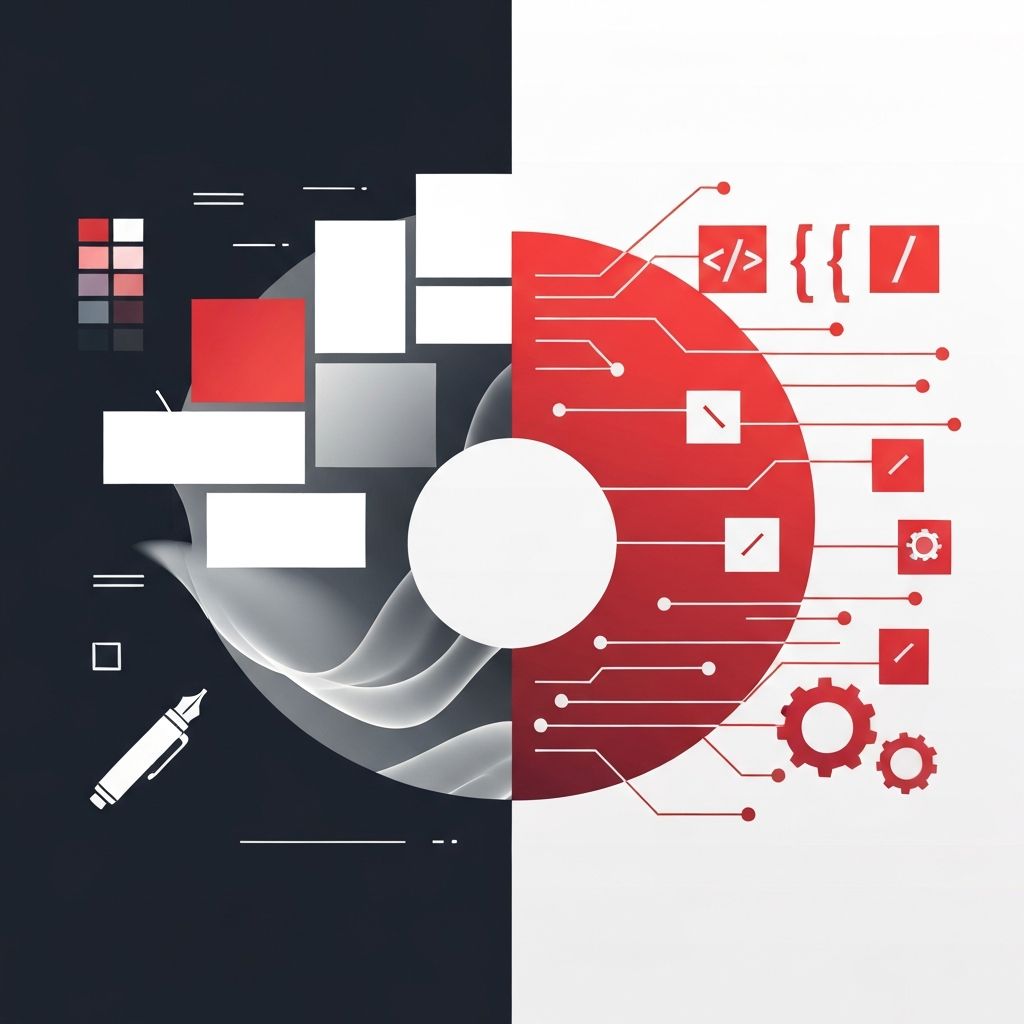
Introduction: Two Disciplines, One Website
People often use the terms web design and web development interchangeably, but they describe two distinct disciplines that collaborate to create every website you visit. Web design focuses on the look, feel, and user experience, while web development turns those ideas into a working, interactive product. Understanding the difference is essential for business owners hiring teams, students choosing a career path, and anyone evaluating proposals for a new website. Mistaking the two can lead to underfunded projects, misaligned expectations, and the familiar complaint that a site "looks great but doesn't work."
This article breaks down the responsibilities, tools, skills, and workflows of each discipline, and shows how they intersect to produce modern digital experiences.
Choose AAMAX.CO For A Unified Design and Development Team
Businesses that prefer a single partner spanning both disciplines can hire AAMAX.CO. They are a full-service digital marketing company offering Website Design, web development, digital marketing, and SEO services worldwide, with designers and developers working shoulder-to-shoulder from day one. Their integrated workflow avoids the classic handoff problems that plague many projects, where design files arrive on the development team's desk only to reveal impossible interactions or undefined states. With their team, strategy, design, and engineering move together, producing sites that look as good as they perform.
What Web Design Really Covers
Web design is the practice of planning and shaping the visual and experiential side of a website. Designers focus on how information is organized, how users move through the interface, and how the brand is expressed through typography, color, imagery, spacing, and motion. Their goal is to ensure that every interaction feels purposeful and that every screen communicates clearly to the intended audience.
Within web design, several specialties exist. User experience designers focus on research, information architecture, wireframes, and flows. User interface designers translate those flows into polished visual layouts and component libraries. Interaction designers craft micro-animations and states. Brand and visual designers define the look and feel and ensure consistency across touchpoints.
What Web Development Really Covers
Web development is the practice of writing the code that transforms designs into a functional product running in a browser. Developers build the markup, styling, interactivity, data flow, and server infrastructure that make pages load, forms submit, and content update. Their work is ultimately judged by reliability, performance, security, and maintainability.
Development also splits into specialties. Front-end developers work with HTML, CSS, and JavaScript frameworks such as React, Vue, or Angular to build the interface users see. Back-end developers build the servers, APIs, databases, and business logic that power the site. Full-stack developers work across both layers. DevOps engineers focus on infrastructure, deployment pipelines, and uptime. Increasingly, teams also rely on performance and security engineers for specialized concerns.
Tools of the Trade
Designers typically work in tools like Figma, Adobe XD, Sketch, Photoshop, and Illustrator, as well as prototyping tools such as Framer or ProtoPie. They maintain design systems, component libraries, and living style guides to keep visual language consistent.
Developers use code editors like VS Code, version control systems like Git, package managers such as npm and pnpm, build tools like Vite or Turbopack, and frameworks including Next.js, Laravel, Django, and many others. They rely on testing libraries, monitoring tools, content management systems, and cloud hosting platforms to ship and operate the product.
Skills and Mindsets
Designers lean on empathy, visual judgment, research skills, and clear communication. They spend time with users, sketch ideas, build prototypes, and iterate through feedback. They must think holistically about content, psychology, accessibility, and brand.
Developers lean on logic, problem-solving, attention to detail, and systems thinking. They must anticipate edge cases, maintain code that other developers can extend, and optimize for performance across devices. Good developers also care deeply about the user experience, because the quality of the implementation directly shapes how the product feels.
How Design and Development Collaborate
The best projects treat design and development as overlapping conversations rather than sequential handoffs. Developers involved in early design reviews can flag technical constraints before they become rework. Designers who understand the codebase can specify components that match existing patterns rather than inventing one-off variations. Shared design tokens, component libraries, and documentation bridge the two worlds and scale collaboration across teams.
Modern workflows often use tools that blur the line. Figma files can export design tokens directly into code, Storybook showcases real components in both design and engineering contexts, and framework-specific tools like Tailwind or component libraries reinforce a single source of truth.
Business Impact of Each Discipline
Design influences whether users trust the brand, understand the offering, and choose to engage. Weak design produces high bounce rates and low conversions regardless of how powerful the underlying engine is. Development influences whether the product actually works, scales, performs under load, and stays secure. Weak development produces bugs, slow pages, and outages that erode trust no matter how beautiful the interface.
Both disciplines contribute to SEO as well. Designers shape content hierarchy, readability, and visual clarity, while developers control page speed, semantic markup, structured data, and technical crawlability.
Career Paths and Salaries
Both fields offer strong career prospects. Designers can progress from junior UI roles into senior UX leadership, product design management, or design-systems specialization. Developers can grow from junior front-end roles into senior engineering, architecture, or engineering management. Salaries vary widely by region and specialty, but both disciplines consistently rank among the most in-demand technology roles worldwide.
Which Does Your Project Need?
Nearly every serious project needs both. A brochure site with a simple CMS still requires design judgment and development expertise to be fast, accessible, and easy to update. A complex web application needs deep collaboration between designers and engineers to handle dozens of states, edge cases, and integrations. Trying to hire only one discipline usually produces compromised results: a beautiful mockup that no one can ship, or a working product that no one wants to use.
Conclusion
Web design and web development are two sides of the same coin, each essential and neither sufficient on its own. Understanding the difference helps businesses staff projects correctly, set realistic expectations, and choose partners who can deliver both the vision and the execution. The most successful websites are built when these disciplines respect each other's craft and collaborate as equals.
