
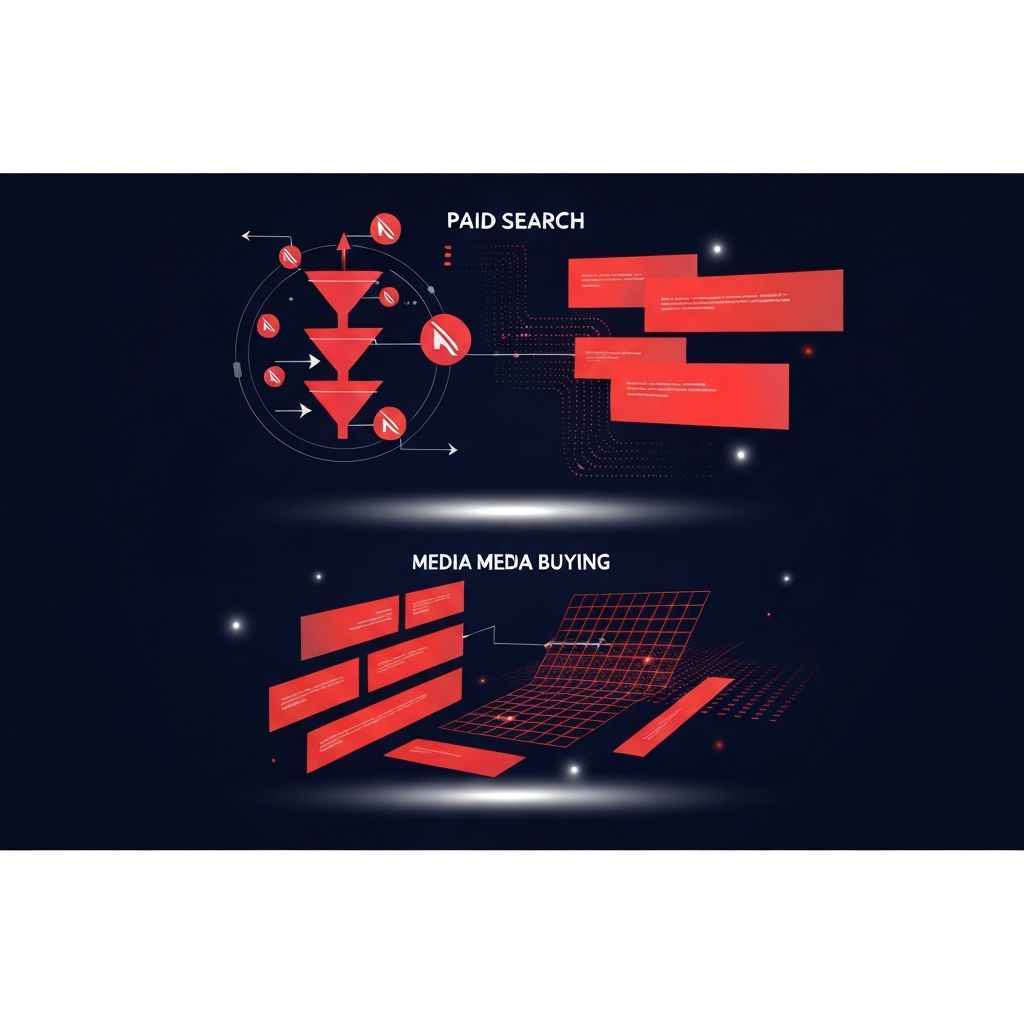
Untangling Paid Search, Media Buying, and Digital Marketing
Marketing job titles and channel names have multiplied so quickly that even experienced professionals can struggle to keep them straight. "Paid search," "media buyer," and "digital marketing" are three of the most commonly confused terms, often used as if they were interchangeable. They are not. Each describes a different scope of work, requires a different skill set, and contributes to growth in a different way. Understanding the distinction is essential for hiring the right people, structuring agency relationships, and setting realistic expectations for what each role or channel can deliver.
How AAMAX.CO Brings Clarity to Marketing Investments
AAMAX.CO is a full-service digital marketing company that helps brands worldwide make sense of the modern marketing landscape and invest in the right mix of channels and specialists. Their team includes paid search experts, programmatic media buyers, SEO strategists, designers, and developers who collaborate under a unified strategy rather than competing for budget. Brands that hire AAMAX.CO at https://aamax.co get a single accountable partner that explains exactly what each tactic does and how it contributes to overall growth.
What Is Digital Marketing?
Digital marketing is the broad umbrella that covers every form of marketing executed through digital channels. It includes paid search, paid social, display advertising, programmatic media, search engine optimization, content marketing, email marketing, influencer marketing, affiliate marketing, video, podcasts, marketing automation, web design, and analytics. A digital marketer might focus on one channel or oversee an entire mix, but the role is fundamentally about driving business outcomes through online means. A complete digital marketing strategy weaves multiple channels together so each amplifies the others.
What Is Paid Search?
Paid search, often called PPC (pay per click) or SEM (search engine marketing), is a specific type of paid digital advertising where brands bid to appear in the results of search engines like Google and Bing for chosen keywords. Paid search is uniquely powerful because it captures users at the exact moment they are expressing intent: someone searching for "emergency plumber near me" is typically seconds away from hiring one. Paid search specialists manage keyword research, bidding strategies, ad copy, quality scores, landing page alignment, and conversion tracking. Skilled Google ads management can turn paid search into one of the most predictable and scalable growth channels available.
What Is a Media Buyer?
Historically, a media buyer was the person who negotiated and purchased advertising space across television, radio, print, and outdoor billboards. In the digital era, the role has evolved to include programmatic display, video, connected TV, paid social, and influencer placements. Modern media buyers think in terms of audiences and impressions across a wide variety of platforms rather than just keyword bids. They negotiate rates, manage placements, optimize creative performance, and balance reach against frequency. Where a paid search specialist tends to focus on demand capture, a media buyer often focuses on demand generation, building awareness and consideration that fills the top of the funnel.
Key Differences in Mindset
Paid search is largely a demand capture discipline: someone already wants what you sell, and your job is to be the option they choose. Media buying is largely a demand creation discipline: you are introducing your brand to people who may not yet know they need it. Digital marketing as a whole encompasses both mindsets, plus the owned channels (website, email, content) that nurture demand once it has been created or captured. The most effective strategies combine all three, but each requires its own thinking, metrics, and creative approach.
Key Differences in Tools and Platforms
Paid search specialists live in Google Ads, Microsoft Advertising, and tools like SEMrush, Optmyzr, and Google Analytics. Media buyers work across The Trade Desk, DV360, StackAdapt, Meta Ads Manager, TikTok Ads, LinkedIn Campaign Manager, and a dozen other platforms. Digital marketers more broadly use a wider toolkit that includes CMS platforms, email service providers, marketing automation, CRM systems, social management tools, and analytics suites. Each role requires deep familiarity with its primary tools and a working knowledge of adjacent ones.
Key Differences in Metrics
Paid search is typically measured by clicks, click-through rate, cost per click, conversion rate, cost per acquisition, and return on ad spend, with a strong tilt toward bottom-of-funnel performance. Media buying often emphasizes reach, frequency, viewability, brand lift, video completion rates, and assisted conversions. Broader digital marketing brings in lifetime value, retention rates, multi-touch attribution, and overall marketing ROI. A mature program reports on all three layers so that leaders can see how upper-funnel investments translate into lower-funnel outcomes.
How They Work Together in a Complete Strategy
The strongest growth programs do not pit these disciplines against each other; they orchestrate them. Media buyers introduce the brand to relevant audiences and build consideration. Paid search captures the demand created when those audiences eventually search. SEO and content marketing earn organic visibility for the same queries at lower long-term cost. Email and lifecycle marketing convert and retain. Pair this with thoughtful social media marketing and the brand shows up everywhere prospects spend their attention, reinforcing trust at each step.
How to Choose What You Need
Small businesses with limited budgets often start with paid search because it delivers measurable results quickly. As budgets grow, adding broader media buying expands reach and lowers the long-term cost per acquisition. Mature brands invest across the full digital marketing spectrum to balance short-term performance with long-term brand equity. The right structure depends on your stage, industry, and goals, which is why working with a partner who can flex across all three areas is so valuable.
Final Thoughts
Paid search, media buying, and digital marketing are related but distinct disciplines, each with its own mindset, tools, metrics, and contribution to growth. Confusing them leads to mismatched expectations and wasted budget; respecting their differences leads to clearer strategy and stronger results. The brands that win online are the ones that understand each piece of the puzzle and assemble them into a coherent, integrated whole.
