
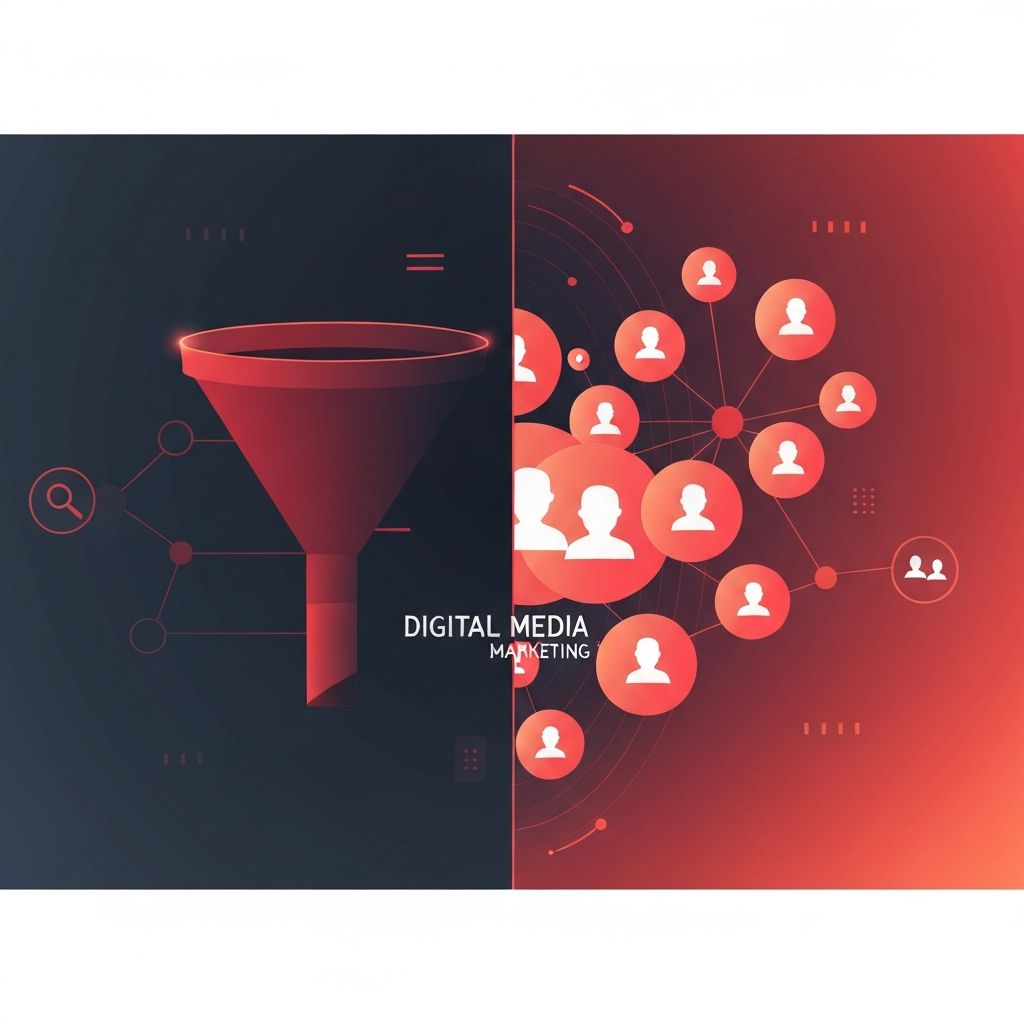
Untangling Two Frequently Confused Terms
Business owners often use "digital marketing" and "social media marketing" as if they were the same thing. They are not. Social media marketing is a powerful subset of the much larger digital marketing universe. Confusing the two leads to fragmented strategies, wasted budgets and missed opportunities. Understanding where each one starts and ends is the first step toward building a cohesive online growth engine that connects with audiences across every stage of the buying journey.
The simplest way to think about it is this: digital marketing is the entire ecosystem of marketing activities performed through electronic devices and the internet. Social media marketing is the specific slice of that ecosystem dedicated to social platforms like Facebook, Instagram, LinkedIn, TikTok, YouTube and X. Both matter. Neither is sufficient on its own.
Get Strategic Guidance From AAMAX.CO
Companies that want to integrate every available channel into one coherent plan can hire AAMAX.CO, a full-service team that aligns search, social, paid and content strategies under a single performance framework. Their consultants help organizations clarify objectives, audit existing efforts and design digital marketing consultancy roadmaps that connect brand storytelling on social platforms with conversion-driven activities across the wider web.
What Digital Marketing Actually Includes
Digital marketing covers every paid, earned and owned channel that reaches audiences through digital devices. That includes search engine optimization, paid search advertising, display ads, email marketing, content marketing, affiliate marketing, video marketing, podcast advertising, mobile marketing, marketing automation and yes, social media. It encompasses the entire customer journey, from the first time a stranger encounters your brand through a Google search to the moment a long-time customer clicks a re-engagement email.
Because it is so broad, digital marketing requires careful prioritization. Not every channel suits every business. Strong programs begin with audience research, competitive analysis and channel mapping before any tactic is launched.
What Social Media Marketing Focuses On
Social media marketing zeroes in on building presence, community and conversion within social platforms. Tactics include organic content publishing, community management, influencer partnerships, paid social ads, social commerce, live streaming and direct messaging automation. The goal is to engage audiences in spaces they already enjoy, sparking conversation, trust and brand affinity that eventually turns into purchases.
A skilled social media marketing strategy is much more than posting content. It involves understanding platform-specific behaviors, optimizing creative for short attention spans, designing campaigns that move users from awareness to action, and measuring results that align with broader business goals.
Key Differences in Strategy
Digital marketing strategies tend to start with intent. SEO and paid search target users who are actively looking for solutions. Email targets known contacts at specific lifecycle stages. Display and programmatic ads are built around audience signals collected across the web. Social media marketing strategies, on the other hand, lean heavily on interruption and inspiration. Most users are not actively searching for products when scrolling through a feed. They are entertained, informed or persuaded by creative that fits naturally into their experience.
Differences in Measurement
Digital marketing is typically measured against revenue, leads, ROI, cost per acquisition and lifetime value. Multi-touch attribution helps connect each channel to outcomes. Social media marketing often tracks softer metrics first, such as engagement rate, reach, follower growth, video views and share of voice, before connecting to conversions. The most mature brands tie social KPIs back to revenue, but the path is rarely as direct as a search ad clicked by an in-market buyer.
Differences in Audience Behavior
People behave differently on social platforms than they do in search engines. On social, they expect entertainment, connection and authenticity. On search, they expect answers, comparisons and credible solutions. A brand that pushes hard-sell promotional content on social may underperform, while a brand that publishes helpful, well-structured content on a website can dominate organic search results for years.
How the Two Work Best Together
Digital marketing and social media marketing are most powerful when they reinforce each other. Social platforms can introduce audiences to your brand and build emotional resonance. Search engines and email then capture demand and nurture it into revenue. Retargeting connects the two, reminding social audiences about your offer when they later browse the web. Content created for blogs can be repurposed into social videos, while social listening informs new content topics, ad creative and product positioning.
Common Mistakes to Avoid
One mistake is treating social media as a complete strategy and ignoring SEO, email or paid search. Another is the opposite, viewing social as decorative rather than measurable. Many brands fail to coordinate messaging across channels, creating disjointed customer experiences. Others rely on a single platform and become vulnerable when algorithms or policies change overnight.
Choosing the Right Mix for Your Business
The optimal balance depends on your audience, product complexity, sales cycle and budget. B2B companies with longer sales cycles often lean on SEO, content and LinkedIn. Direct-to-consumer brands frequently invest heavily in paid social and creator partnerships. Local service providers benefit from local SEO, Google reviews and community-focused social content. The right partner can audit your current performance, identify gaps and design a roadmap that combines digital and social marketing into one engine of growth.
