
Clearing Up a Common Confusion
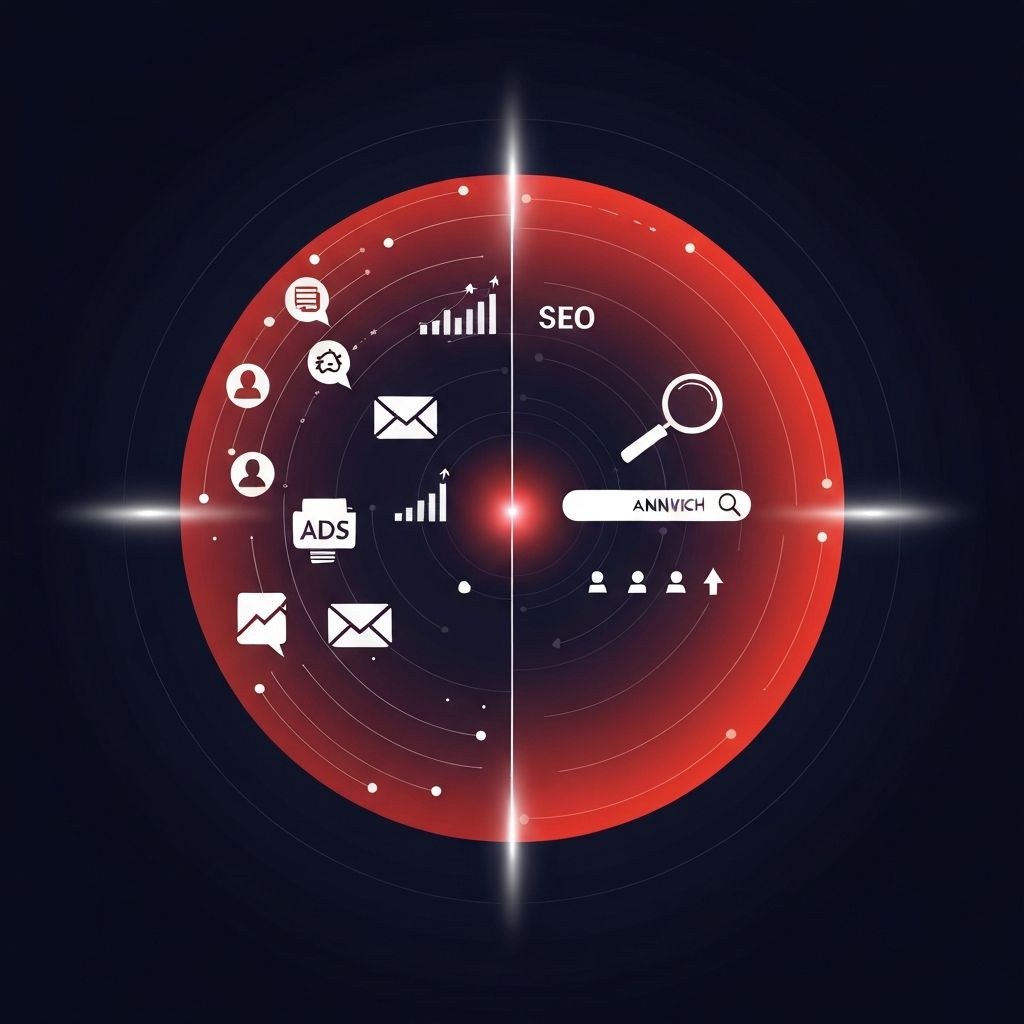
Few questions in the marketing world are asked more often than "what is the difference between digital marketing and SEO?" The two terms are frequently used interchangeably, especially by business owners new to online growth, but they describe very different things. Understanding the distinction is critical for hiring the right partner, setting realistic expectations, and allocating budget where it will produce the strongest return. In short, digital marketing is the entire universe of online growth activities, while SEO is one powerful planet within that universe. Both are essential, but they play very different roles.
How AAMAX.CO Helps Brands Master Both Disciplines
AAMAX.CO is a full-service digital marketing company that helps businesses worldwide understand exactly which channels to invest in and how those channels work together. Their consultants begin every engagement by mapping the customer journey, identifying gaps, and recommending an integrated mix of services rather than pushing a single tactic. Whether a brand needs broad digital marketing support or focused SEO execution, they design strategies that align with real business goals. Companies that hire AAMAX.CO at https://aamax.co gain clarity about where to invest first, second, and third for maximum impact.
Defining Digital Marketing
Digital marketing is the umbrella term for any marketing activity that takes place online. It includes search engine optimization, paid search advertising, social media marketing, email marketing, content marketing, influencer marketing, affiliate marketing, video marketing, conversion rate optimization, web development, marketing automation, and analytics. Some channels are owned (your website, your email list), some are earned (organic search rankings, press mentions), and some are paid (Google Ads, Meta Ads, sponsorships). A complete digital marketing strategy uses several of these channels in coordination so that each one amplifies the others.
Defining SEO
Search engine optimization, or SEO, is the practice of improving a website's visibility in the unpaid (organic) results of search engines like Google and Bing. It involves three broad disciplines: technical SEO (site speed, crawlability, structured data), on-page SEO (content quality, keyword targeting, internal linking), and off-page SEO (backlinks, brand mentions, authority building). The goal is to rank as high as possible for the queries that potential customers actually type into search engines, generating ongoing free traffic that compounds over time. Skilled SEO services are highly technical and strategic, requiring specialists who stay current with constantly evolving algorithms.
How Digital Marketing and SEO Overlap
SEO is a subset of digital marketing, but it is also deeply intertwined with other digital channels. Content marketing fuels SEO by producing the articles, videos, and resources that earn rankings and links. Social media marketing amplifies that content and drives brand searches that indirectly influence rankings. Conversion rate optimization ensures that the traffic SEO produces actually turns into leads and customers. Paid media can fill gaps while SEO matures and provide data about which keywords convert best. The overlap is so significant that any serious SEO program is really a marketing program in disguise.
Key Differences in Time Horizon
One of the biggest practical differences between digital marketing more broadly and SEO specifically is time horizon. Paid media can produce traffic within hours of launch. Email and social campaigns deliver results within days. SEO, by contrast, typically takes three to twelve months to produce meaningful organic rankings, especially in competitive industries. The trade-off is durability: once SEO momentum is built, it tends to continue producing traffic for years with relatively low ongoing investment, while paid media stops the moment the budget stops.
Key Differences in Cost Structure
Paid digital marketing channels charge per click, impression, or action. The moment you stop paying, the traffic stops. SEO has the opposite cost structure: significant upfront and ongoing investment in content, technical work, and link building, followed by traffic that costs nothing per click. Over a multi-year horizon, well-executed SEO is typically the lowest cost-per-acquisition channel available. Smart brands use paid media for predictable short-term flow while building SEO as a long-term equity asset.
Key Differences in Skills Required
Digital marketing as a whole demands a wide range of skills: copywriting, design, video production, ad platform expertise, analytics, automation, and more. SEO requires a narrower but deeper skill set, including technical web knowledge, content strategy, link acquisition, and a constant pulse on algorithm updates. A great SEO specialist is not necessarily a great paid media buyer, and vice versa. This is why most successful brands either build cross-functional in-house teams or partner with agencies that bring complementary specialists together.
How to Decide Where to Invest First
For most businesses, the right answer is not SEO or other digital marketing; it is both, in the right sequence. If you need leads this quarter, start with paid search and a strong landing page. If you have time to build an asset, layer SEO and content marketing on top. As budget grows, add social media marketing, email automation, and conversion optimization. The exact mix depends on industry, competition, sales cycle, and budget, which is why an experienced strategic partner can save years of trial and error.
Common Misconceptions to Avoid
Many business owners assume SEO is something you can do once and be done with, or that digital marketing is just "running ads." Both views miss the truth. SEO is a continuous discipline because competitors and algorithms never stop changing. Digital marketing is a portfolio of channels that must be balanced and rebalanced as markets shift. Treating either as a one-time project leads to disappointment, while treating them as ongoing investments produces compounding results.
Final Thoughts
Digital marketing is the full toolbox; SEO is one of its most powerful tools. Understanding the relationship between them helps business leaders set realistic expectations, hire the right talent, and build strategies that deliver both immediate wins and long-term equity. The brands that thrive online are the ones that respect SEO as a specialized discipline while also embracing the broader marketing ecosystem that surrounds it.
