
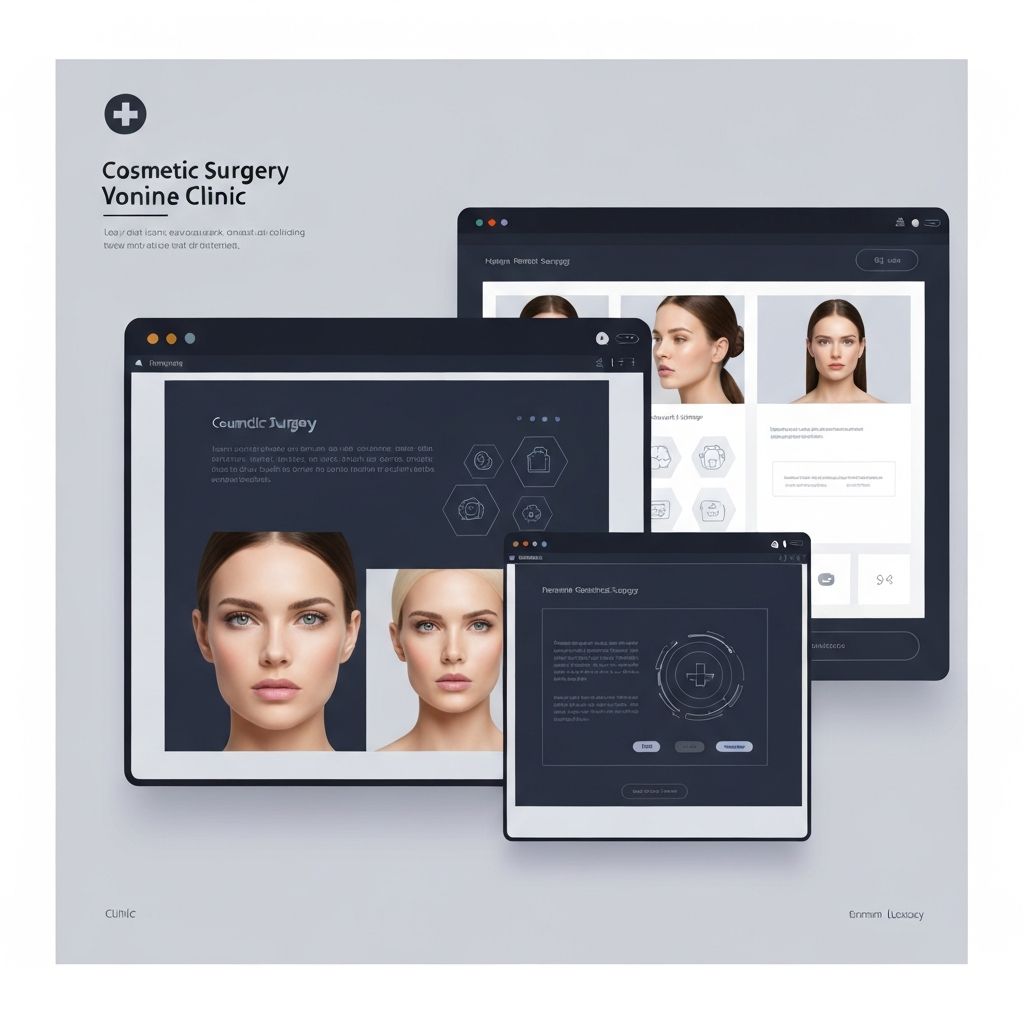
Why Cosmetic Surgery Practices Need Highly Specialized Web Design
Cosmetic surgery is one of the most personal and emotionally charged decisions a patient can make. Choosing a surgeon involves trust, vulnerability, and significant financial commitment. The website is almost always the first place a prospective patient interacts with a practice, and the impressions formed in those first few seconds can determine whether they request a consultation or move on to a competitor. That is why cosmetic surgery web design must be approached with extraordinary care, balancing medical credibility, aesthetic refinement, emotional reassurance, and conversion-focused thinking all at once.
Generic medical websites tend to feel sterile and clinical, while overly luxurious aesthetic sites can feel superficial. The best cosmetic surgery websites occupy a thoughtful middle ground: elegant and reassuring, transparent and educational, polished and personal. They reflect the artistry of the surgeon's work while making clinical safety, board certification, and outcomes unmistakably clear.
Hire AAMAX.CO for Cosmetic Surgery Web Design and Development
Building a website that meets the unique demands of a cosmetic surgery practice requires both design sensitivity and digital marketing expertise. AAMAX.CO is a full-service digital marketing company offering web development, digital marketing, and SEO services to clients worldwide, including cosmetic surgeons, medspas, and aesthetic practices. Their team understands the regulatory environment, the importance of tasteful before-and-after presentation, and the delicate balance between aspirational marketing and ethical patient communication. They build websites that elevate the practice's brand, attract qualified patients through strong local SEO, and convert visitors into consultations through carefully crafted user journeys. For practices that want to stand out in a crowded market, their integrated approach delivers measurable results.
Building Trust Through Visual Design
Patients researching cosmetic surgery are looking for signals of trust before anything else. Visually, this means clean layouts, refined typography, and a calm color palette that feels both modern and reassuring. Photography should feel authentic—real patients (with consent), real surgeons, real surroundings—rather than obvious stock imagery. The aesthetic should match the level of care the practice provides; a high-end practice cannot afford a low-end website.
Trust signals belong throughout the site, not just on a single "credentials" page. Board certifications, hospital affiliations, society memberships, and years of experience should be visible at key decision points. Patient testimonials and verified reviews carry significant weight, especially when paired with photos and specific details. Awards, media features, and published research all reinforce the surgeon's expertise without feeling boastful when presented thoughtfully.
Procedure Pages That Educate and Convert
Procedure pages are the workhorses of a cosmetic surgery website. Patients use them to research options, understand recovery, evaluate cost, and compare surgeons. A great procedure page goes well beyond a generic description. It explains who is a good candidate, walks through the consultation and procedure process, sets realistic expectations for results and recovery, addresses common concerns, and includes high-quality before-and-after galleries with proper consent and disclosure.
FAQ sections on procedure pages are particularly valuable. They answer the questions patients are already typing into search engines, which boosts SEO while reducing friction for visitors. Embedded videos of the surgeon explaining the procedure in their own words humanize the experience and dramatically increase engagement. Well-placed calls to action invite the visitor to book a consultation when their interest is at its peak.
Before-and-After Galleries Done Right
Before-and-after photography is one of the most powerful conversion tools on a cosmetic surgery website. Patients want to see real results from real patients, ideally with similar features to themselves. The gallery should be filterable by procedure, age range, ethnicity, and other relevant factors when ethically appropriate. Lighting, angles, and presentation must be consistent so patients can evaluate results fairly.
At the same time, before-and-after galleries must be handled with care. Patient consent is non-negotiable. Disclaimers about individual variation in results are essential, and adherence to local advertising regulations and platform policies must be maintained. Skilled website design ensures these galleries are visually compelling, ethically presented, and seamlessly integrated into the user journey.
Local SEO for Cosmetic Surgery Practices
Most patients search locally. "Cosmetic surgeon near me," "rhinoplasty in [city]," and similar searches drive much of the high-intent traffic to a practice. That means local SEO is essential. A fully optimized Google Business Profile, consistent NAP information across directories, location-specific landing pages, and locally-relevant content all contribute to rankings. Patient reviews on Google and other platforms are both ranking factors and trust signals.
Beyond local SEO, broader content strategy plays a major role. Educational blog posts, video content, and procedure deep-dives attract patients in the research phase and build authority in the search rankings. Over time, this content compounds, drawing in steady streams of organic traffic at a fraction of the cost of paid advertising.
Mobile, Speed, and Accessibility
The vast majority of cosmetic surgery website traffic comes from mobile devices. A mobile-first design is essential. Touch targets must be generous, navigation must be intuitive on small screens, and forms must be easy to complete with thumbs. Page speed is critical—slow load times cause significant drop-off, especially on mobile networks.
Accessibility is also important. An accessible site reaches more potential patients, supports those with visual or motor impairments, and reduces legal risk. Built-in best practices for contrast, labeling, keyboard navigation, and screen reader compatibility should be foundational, not optional. Modern website development ensures these standards are met without compromising aesthetic excellence.
Privacy, HIPAA, and Compliance
Cosmetic surgery websites collect sensitive information through consultation request forms, virtual consultations, and patient portals. HIPAA compliance, secure data handling, and clear privacy policies are essential. Forms must be encrypted, data must be stored securely, and any third-party tools must be evaluated for compliance. Cookie banners and privacy disclosures must be transparent and respect regional regulations.
The Consultation Journey
The ultimate goal of a cosmetic surgery website is to convert visitors into qualified consultation requests. The path from landing page to booked consultation should be smooth, intuitive, and reassuring at every step. Online booking, virtual consultation options, financing information, and clear pricing guidance all reduce friction. Personalized follow-up after the consultation request closes the loop and demonstrates the practice's professionalism from the very first interaction.
Final Thoughts
Cosmetic surgery web design is a uniquely demanding craft. It requires sensitivity to patient psychology, strict adherence to ethical and regulatory standards, technical excellence in performance and security, and a refined visual aesthetic that reflects the surgeon's artistry. Practices that invest in this level of design and development create digital experiences that build trust, attract qualified patients, and elevate the entire brand. In a market where prospective patients are doing more research than ever, the practice with the strongest website often wins the consultation.
