
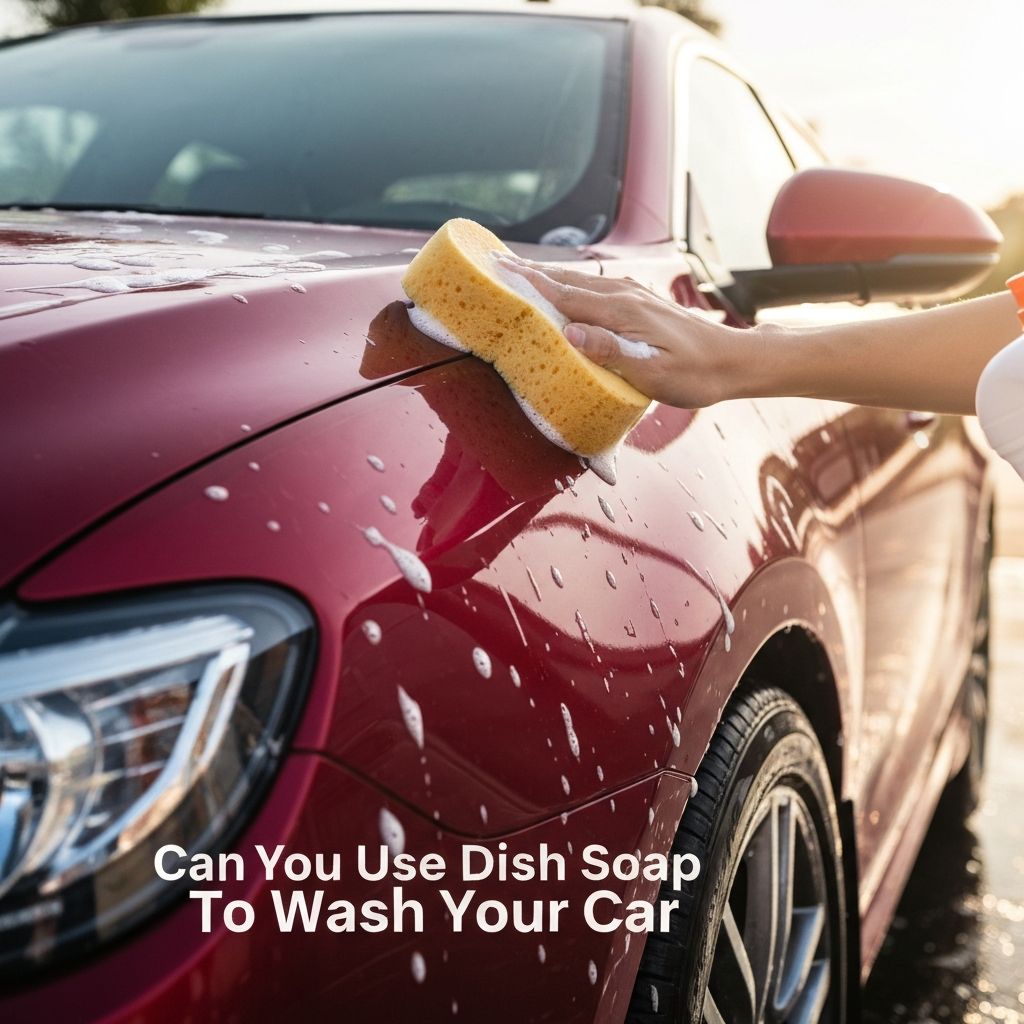
The Temptation of Using Dish Soap
At some point, nearly every car owner has looked at the bottle of dish soap sitting next to their kitchen sink and wondered whether it could pull double duty as a car wash solution. After all, dish soap is great at cutting through grease and grime on pots and pans, so it seems logical that it would be equally effective at cleaning a dirty car. It is readily available, inexpensive, and produces satisfying suds that make it feel like you are giving your car a thorough cleaning.
The question of whether you can use dish soap to wash your car is one that generates considerable debate among car enthusiasts and casual drivers alike. The short answer is that while you technically can use dish soap to wash your car, and it will indeed remove dirt and grime, doing so regularly can cause significant damage to your vehicle's paint, clear coat, trim, and other exterior surfaces. Understanding why requires a closer look at what dish soap is designed to do and how that differs from the requirements of automotive cleaning.
Why Dish Soap Is Bad for Your Car's Paint
Dish soap is specifically formulated to cut through grease and remove baked-on food residues from dishes, pots, and pans. To accomplish this, dish soap contains powerful surfactants and degreasing agents that are far more aggressive than what is needed for automotive cleaning. These ingredients are designed to strip away oils and fats, and that is exactly what they do to your car's surface, including the protective wax, sealant, or ceramic coating that you or your detailer has carefully applied.
Car wax and paint sealants serve as a protective barrier between your car's clear coat and the elements. They repel water, resist UV damage, prevent contaminants from bonding to the paint surface, and give your car that desirable glossy shine. When you wash your car with dish soap, those aggressive surfactants strip away this protective layer, leaving your paint exposed and vulnerable to environmental damage.
The pH level of dish soap is another concern. Most dish soaps have a pH that is more alkaline than automotive-specific car wash soaps. Car wash soaps are formulated to be pH-neutral or slightly acidic to be compatible with automotive clear coats and protective coatings. The alkaline nature of dish soap can accelerate the oxidation of your car's clear coat over time, leading to fading, dullness, and premature aging of the paint.
Additionally, the powerful degreasing action of dish soap can dry out rubber and plastic trim, weather stripping, and seals on your vehicle. These components need a certain level of moisture and natural oils to remain flexible and effective. Repeated exposure to dish soap can cause rubber to crack, plastic to fade and become brittle, and seals to deteriorate, potentially leading to water leaks and increased road noise.
What Happens to Your Wax and Ceramic Coating
If you have invested time and money in waxing your car or applying a ceramic coating, using dish soap will undo that investment quickly. A single wash with dish soap can remove a significant portion of the wax layer that may have taken you an hour or more to apply. For traditional carnauba wax, which provides protection for six to eight weeks under normal conditions, a dish soap wash can strip it down to almost nothing in a single application.
Synthetic paint sealants are somewhat more resistant to dish soap than natural waxes, but they are not immune. Repeated washing with dish soap will progressively degrade a synthetic sealant, reducing its protective capabilities and shortening its lifespan. What might have lasted six months under proper care could be rendered ineffective in just a few washes with dish soap.
Ceramic coatings, which are the most durable form of paint protection available, are more resistant to dish soap than wax or sealant but can still be affected by prolonged or repeated exposure. While a single dish soap wash is unlikely to destroy a properly cured ceramic coating, regular use of dish soap can degrade the hydrophobic properties of the coating over time, reducing its ability to repel water and contaminants.
When Dish Soap Might Be Appropriate
Despite the general advice against using dish soap on your car, there are specific situations where it can actually be the right choice. The most common legitimate use of dish soap in automotive care is as a preparation step before applying new wax, sealant, or ceramic coating. Because dish soap effectively strips away old wax and sealant, it can be used intentionally to create a clean, bare surface that allows new protective products to bond properly.
If you are about to clay bar your car, which is a process that removes bonded contaminants from the paint surface, washing with dish soap first can help strip away old protection and make the clay bar treatment more effective. Similarly, if you are planning to polish or compound your car's paint to remove scratches or oxidation, starting with a dish soap wash ensures that you are working with bare paint rather than polishing on top of old wax.
In an emergency situation where your car is heavily soiled with mud, bird droppings, tree sap, or other aggressive contaminants and no automotive car wash soap is available, a one-time wash with diluted dish soap is preferable to leaving those contaminants on your paint. Just be sure to re-apply wax or sealant as soon as possible afterward to restore protection.
The Right Way to Wash Your Car
For regular car washing, always use a product specifically formulated for automotive use. Car wash soaps are designed to effectively clean dirt and grime from your vehicle's surfaces while being gentle on paint, clear coat, wax, sealants, and trim. They are pH-balanced for automotive surfaces, contain milder surfactants that do not strip protective coatings, and often include lubricating agents that reduce the risk of scratching during the wash process.
The two-bucket method is widely regarded as the best technique for washing your car at home. Fill one bucket with your car wash soap solution and the other with clean rinse water. Use a high-quality microfiber wash mitt to apply the soapy water to one section of the car at a time, then rinse the mitt in the clean water bucket before dipping it back into the soap bucket. This prevents you from transferring dirt and grit back onto your car's paint, which can cause swirl marks and fine scratches.
Start washing from the top of the car and work your way down, as the lower panels tend to accumulate the most dirt and grime. Rinse each section with clean water before the soap has a chance to dry on the surface, as dried soap residue can leave spots and streaks. Use a separate wash mitt or brush for the wheels and tires, as these areas are coated with brake dust and road grime that you do not want to transfer to your paint.
Best Car Wash Products to Use
The automotive care market offers a wide range of car wash products suitable for different needs and budgets. For basic maintenance washes, a good pH-neutral car wash soap like Meguiar's Gold Class, Chemical Guys Mr. Pink, or Adam's Car Shampoo will effectively clean your car without stripping protective coatings. These products typically cost between five and fifteen dollars per bottle and provide enough concentrate for dozens of washes.
For added convenience, waterless wash and rinseless wash products have become increasingly popular. Products like Optimum No Rinse and McKee's N-914 allow you to wash your car using minimal water, making them ideal for apartment dwellers without access to a hose, areas with water restrictions, or quick maintenance washes between full washes. These products encapsulate dirt particles and lubricate the surface, allowing you to safely wipe away grime without scratching.
Foam cannons and foam guns have also gained popularity among car care enthusiasts. These devices attach to a pressure washer or garden hose and produce thick, clinging foam that covers the car and dwells on the surface, loosening dirt and providing lubrication before the contact wash begins. Using a foam cannon as a pre-wash step can significantly reduce the risk of scratching your paint during the wash process.
Protecting Your Car After Washing
After washing your car with a proper automotive car wash soap, it is important to maintain the protective coating on your paint. If your car's wax or sealant is still intact, a quick spray wax or detailer can be applied after drying to boost protection and add shine. Products like Meguiar's Ultimate Quik Wax or Chemical Guys Butter Wet Wax can be sprayed on and wiped off in minutes, providing an extra layer of protection between full wax applications.
If your car has been stripped of its protection, whether intentionally through preparation for a new coating or accidentally through dish soap use, re-apply a quality wax, sealant, or ceramic coating as soon as possible. Leaving your paint unprotected exposes it to UV damage, acid rain, bird droppings, tree sap, and other environmental contaminants that can cause permanent damage.
Regular washing with appropriate products, combined with periodic waxing or sealant application, is the best way to keep your car looking its best and maintain its resale value. While the upfront cost of proper car care products may be slightly higher than using dish soap from the kitchen, the long-term savings in paint correction and diminished resale value make it a wise investment.
The Bottom Line on Dish Soap and Cars
In summary, while dish soap will clean your car, it is not the right tool for the job in most circumstances. Its aggressive surfactants and alkaline pH will strip protective coatings, dry out rubber and plastic, and accelerate the aging of your car's paint. Reserve dish soap for intentional stripping of old wax before applying new protection, and use a quality automotive car wash soap for your regular washing routine. Your car's paint will thank you with years of beautiful, glossy shine.
