
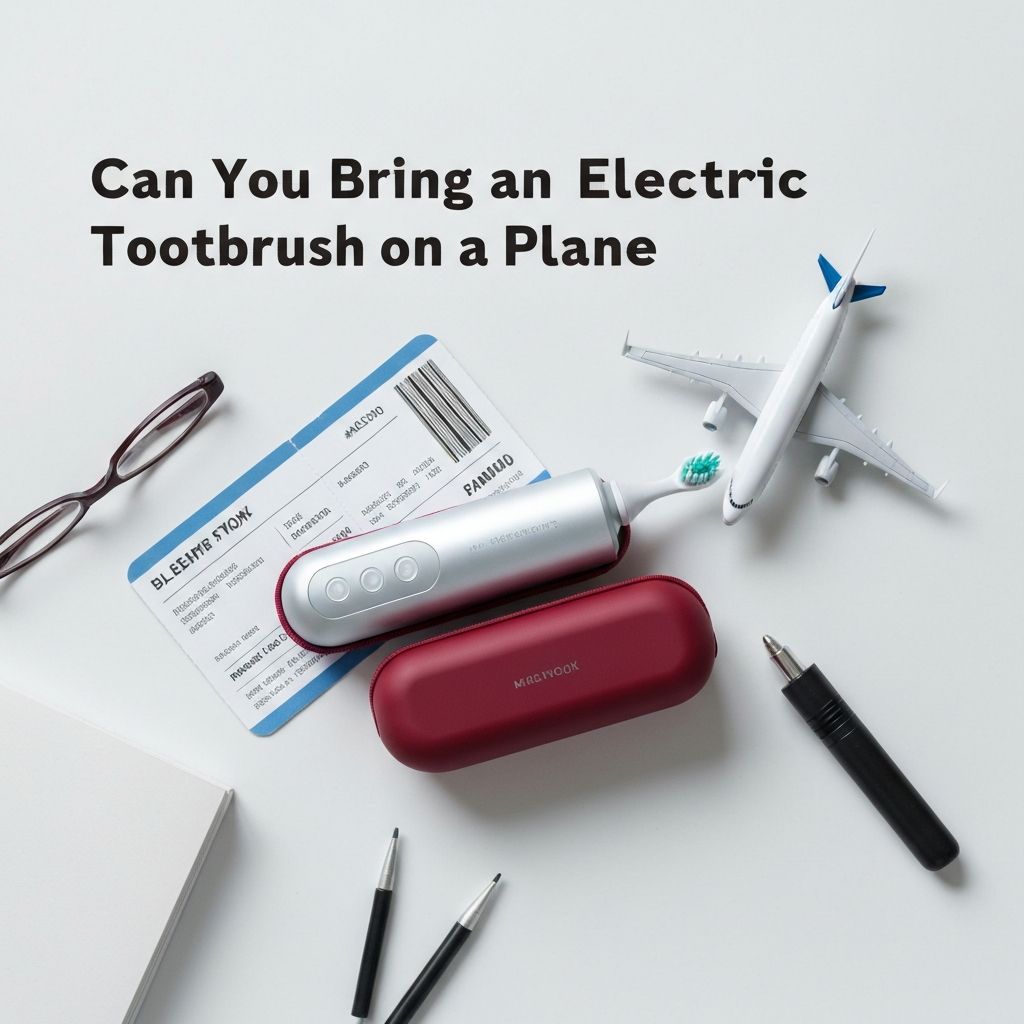
The Short Answer: Yes, You Can
If you are planning a trip and wondering whether you can bring your electric toothbrush on a plane, the answer is yes. Electric toothbrushes are permitted on airplanes by the Transportation Security Administration (TSA) in the United States and by equivalent security agencies in most countries around the world. You can pack your electric toothbrush in either your carry-on luggage or your checked baggage without any issues.
However, while the basic answer is straightforward, there are some nuances and best practices worth understanding to ensure a smooth travel experience. Battery type, packing method, and international regulations can all affect how you should handle your electric toothbrush when flying. This comprehensive guide covers everything you need to know about traveling with your electric toothbrush.
Understanding the rules around personal electronic devices on airplanes is important not just for convenience but also for safety. Airlines and security agencies have specific regulations about batteries and electronic devices that are designed to prevent in-flight emergencies. By knowing these rules and following best practices, you can travel with confidence and maintain your oral hygiene routine without interruption.
TSA Rules and Regulations
The Transportation Security Administration, which oversees airport security in the United States, has clear guidelines regarding electric toothbrushes. According to the TSA, electric toothbrushes are allowed in both carry-on bags and checked luggage. There are no special restrictions or procedures required for standard consumer electric toothbrushes.
The TSA classifies electric toothbrushes as personal care items, similar to electric razors, hair dryers, and other battery-powered grooming devices. These items are considered low-risk and are not subject to the same restrictions as larger electronics like laptops or tablets, which may need to be removed from bags and placed in separate bins during screening.
That said, security screening procedures can vary, and individual TSA agents may occasionally ask you to remove an electric toothbrush from your bag for closer inspection. This is more likely with larger, bulkier models or those with unusual shapes that might look concerning on an X-ray screen. To minimize the chance of delays, consider packing your electric toothbrush in an easily accessible part of your carry-on where it can be quickly retrieved if needed.
It is also worth noting that the TSA has an official social media presence where travelers can ask questions about specific items. If you have any doubts about whether a particular model of electric toothbrush is permitted, you can reach out to the TSA through their Twitter account or website for a definitive answer before your trip.
Battery Considerations
The most important technical consideration when traveling with an electric toothbrush is the type of battery it uses. Different battery types are subject to different airline regulations, and understanding these rules will help you pack your toothbrush appropriately.
Most modern electric toothbrushes use rechargeable lithium-ion batteries. These batteries are permitted in both carry-on and checked luggage, but there are some important caveats. Lithium-ion batteries must be rated at or below 100 watt-hours for carry-on luggage. Standard electric toothbrush batteries are well below this threshold, typically ranging from 2 to 10 watt-hours, so this limit is not a practical concern for toothbrush users.
However, the Federal Aviation Administration (FAA) recommends that devices with lithium-ion batteries be carried in carry-on luggage rather than checked baggage whenever possible. This recommendation exists because carry-on luggage is accessible during the flight, allowing any battery-related issues to be addressed quickly. While the risk of a battery incident with an electric toothbrush is extremely low, following this recommendation is a sensible precaution.
Some older or budget electric toothbrushes use replaceable alkaline batteries, typically AA or AAA. These batteries are allowed in both carry-on and checked luggage without any restrictions. If your toothbrush uses replaceable batteries, you may want to remove them before packing to prevent the toothbrush from accidentally turning on during transit.
A few electric toothbrush models use nickel-metal hydride (NiMH) rechargeable batteries. These are also permitted in both carry-on and checked luggage and are not subject to the same concerns as lithium-ion batteries.
International Travel Considerations
If you are traveling internationally, it is important to be aware that different countries may have different regulations regarding electronic devices and batteries on airplanes. While most international aviation authorities follow similar guidelines to the TSA, there can be variations in enforcement and specific rules.
The European Union Aviation Safety Agency (EASA) allows electric toothbrushes in both carry-on and checked luggage, consistent with TSA guidelines. Similarly, the Civil Aviation Authority (CAA) in the United Kingdom, Transport Canada, and the Civil Aviation Safety Authority (CASA) in Australia all permit electric toothbrushes on flights without special restrictions.
Some Asian airlines and airports may have stricter security screening procedures that could result in additional scrutiny of electronic devices. While electric toothbrushes are not prohibited, it is a good idea to pack them in a clear toiletry bag or in an easily accessible part of your luggage to facilitate screening.
When traveling internationally, also consider the voltage and plug type at your destination. If your electric toothbrush uses a charging cradle, you may need a plug adapter to charge it abroad. Most modern electric toothbrushes have universal voltage chargers that work with both 110V and 220V power systems, but it is always worth checking the specifications before you travel.
Packing Tips for Electric Toothbrushes
Proper packing can prevent damage to your electric toothbrush and keep your luggage clean and organized during travel. Here are some practical tips for packing your electric toothbrush whether it goes in your carry-on or checked bag.
Use a protective case or cover. Most electric toothbrush brands offer travel cases designed specifically for their products. These cases protect the brush head from contamination and prevent the toothbrush from being damaged by other items in your luggage. If you do not have a dedicated travel case, a zip-lock bag or a hard-sided glasses case can serve as an adequate substitute.
Remove or protect the brush head. The brush head is the most delicate part of the toothbrush and the most susceptible to contamination. A brush head cover or cap will keep it clean during transit. Some travelers prefer to remove the brush head entirely and pack it separately in a small bag.
Prevent accidental activation. Many electric toothbrushes have a simple on/off button that can be inadvertently pressed during transit. Some models feature a travel lock function that prevents accidental activation. If your toothbrush does not have this feature, wrapping it in a cloth or placing it in a rigid case can help prevent the button from being pressed.
If your toothbrush has a charging base, pack it separately from the toothbrush in a way that prevents damage to the charging contacts. Wrapping the charging base in a soft cloth or placing it in a padded section of your luggage will protect it during the journey.
Alternatives for Travel
While bringing your regular electric toothbrush on a plane is perfectly fine, some travelers prefer to use alternative options that are specifically designed for travel. These alternatives can save space, reduce weight, and eliminate concerns about battery regulations.
Travel-sized electric toothbrushes are compact versions of full-sized models designed specifically for portability. They are typically smaller and lighter than their full-sized counterparts and often come with built-in travel cases. Many major brands, including Oral-B and Philips Sonicare, offer travel-specific models that provide comparable cleaning performance in a more portable package.
Battery-powered toothbrushes that use replaceable batteries are another popular travel option. These are typically less expensive than rechargeable models and eliminate the need to pack a charging base. Because they use widely available AA or AAA batteries, you can easily find replacements anywhere in the world if needed.
For travelers who want to minimize the items they carry, a high-quality manual toothbrush is always an option. While it may not provide the same level of cleaning as an electric model, a manual toothbrush takes up minimal space, has no battery concerns, and never needs charging. Some dentists recommend keeping a manual toothbrush in your travel kit as a backup in case your electric toothbrush runs out of battery or malfunctions during a trip.
Frequently Asked Questions
Can I use my electric toothbrush on the plane? Yes, you can use your electric toothbrush on the plane, though it is courteous to use it in the restroom rather than at your seat. Be considerate of other passengers and clean up after yourself.
Will my electric toothbrush set off the security alarm? It is unlikely but possible. Electric toothbrushes contain metal components and batteries that may attract attention on X-ray screens. If a security agent asks to inspect your toothbrush, cooperate calmly and the process will be quick.
Can I bring my electric toothbrush charger on the plane? Yes, charging bases and cables for electric toothbrushes are permitted in both carry-on and checked luggage. Pack them securely to prevent damage.
Should I carry my electric toothbrush in my carry-on or checked bag? Either is fine, but the FAA recommends carrying devices with lithium-ion batteries in your carry-on when possible. This also ensures that your toothbrush is accessible during the flight or during long layovers.
Can I bring spare brush heads on the plane? Absolutely. Spare brush heads are not subject to any security restrictions and can be packed in either carry-on or checked luggage. It is a good idea to bring a spare head on longer trips in case your primary one wears out or is lost.
