
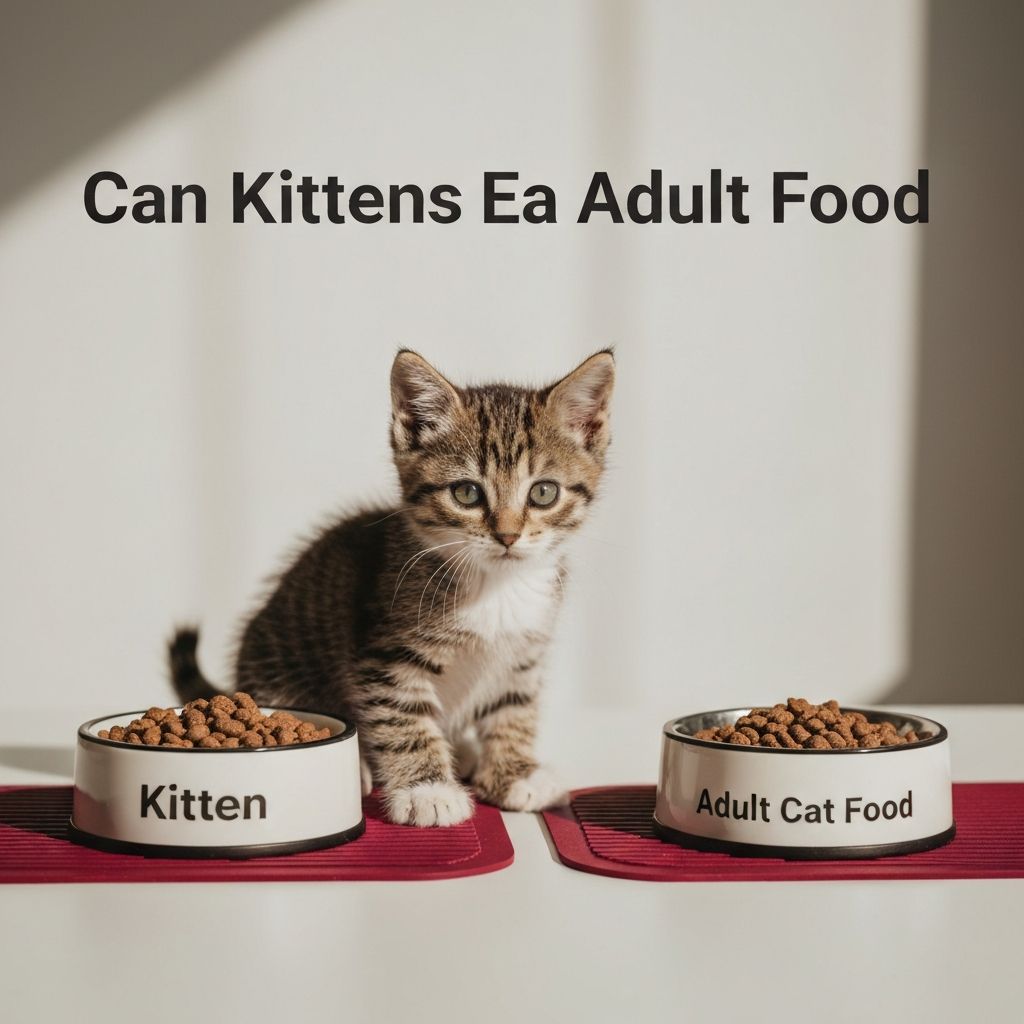
The Short Answer: It's Not Recommended
While a kitten will not become immediately ill from eating a small amount of adult cat food, it is not recommended as a regular diet for growing kittens. Kitten food and adult cat food are formulated differently to meet the distinct nutritional needs of cats at different life stages. Feeding adult food to a kitten on a consistent basis can lead to nutritional deficiencies that may affect their growth, development, and long-term health.
Kittens have significantly higher nutritional requirements than adult cats. They are growing rapidly, developing organ systems, building muscle and bone, and their brains are maturing at an incredible pace. All of this growth and development requires a precise balance of nutrients that adult cat food simply does not provide in adequate quantities. Think of it like the difference between feeding a growing child and a full-grown adult; their dietary needs are fundamentally different.
Nutritional Differences Between Kitten and Adult Food
The most significant difference between kitten food and adult cat food lies in their protein content. Kitten food typically contains around 30 to 40 percent protein, compared to approximately 25 to 30 percent in adult formulas. This higher protein content is essential for supporting the rapid muscle growth and tissue development that occurs during a kitten's first year of life. Without adequate protein, kittens may experience stunted growth and weakened muscles.
Fat content is another crucial differentiator. Kitten food contains higher levels of fat, usually around 18 to 25 percent, compared to 15 to 20 percent in adult food. Fat is a concentrated source of energy that fuels the high activity levels and rapid metabolism of kittens. It also plays a vital role in brain development, as the brain is composed largely of fatty acids. Docosahexaenoic acid, or DHA, is an omega-3 fatty acid that is particularly important for cognitive development and is often added to kitten formulas in higher amounts than adult food.
Caloric density is significantly higher in kitten food. Growing kittens need approximately twice as many calories per pound of body weight as adult cats. A kitten weighing two pounds may need roughly 200 calories per day, while an adult cat weighing ten pounds may need only 250 to 300 calories per day. Adult cat food does not provide enough calories per serving to meet a kitten's energy demands without overfeeding on volume, which can cause digestive issues.
Vitamins and minerals are present in different ratios in kitten food versus adult food. Calcium and phosphorus, which are essential for bone development, are found in higher concentrations in kitten formulas. These minerals must be present in the correct ratio, typically around 1.2 parts calcium to 1 part phosphorus, to support healthy skeletal growth. Adult food may not provide this optimal ratio for growing kittens, potentially leading to bone abnormalities or dental problems.
Potential Health Risks of Feeding Adult Food to Kittens
Consistently feeding adult cat food to a kitten can lead to several health problems. The most immediate concern is inadequate caloric and nutritional intake, which can result in slow growth, low energy levels, and a weakened immune system. Kittens that do not receive adequate nutrition during their critical growth period may never reach their full potential in terms of size, strength, and overall health.
Protein deficiency is a particularly serious risk. Cats are obligate carnivores, meaning they require animal-based protein as the foundation of their diet. Kittens need even more protein than adults to support their rapid growth. A kitten fed adult food may not receive enough protein to support healthy muscle development, leading to muscle wasting, weakness, and delayed physical milestones.
Insufficient levels of essential fatty acids, particularly DHA, can negatively impact brain and vision development. Studies have shown that kittens fed diets rich in DHA perform better on learning and trainability tests compared to those fed diets with lower DHA levels. By feeding adult food that lacks adequate DHA, you may be compromising your kitten's cognitive development during a critical window.
Calcium and phosphorus imbalances can lead to orthopedic problems in growing kittens. Without the correct amounts and ratios of these minerals, kittens may develop weak bones, joint problems, or dental issues. These problems may not become apparent until later in life but can cause chronic pain and mobility issues.
When Is It Okay for a Kitten to Eat Adult Food?
There are some circumstances in which a kitten eating a small amount of adult cat food is not cause for concern. If you run out of kitten food and need a temporary substitute for a meal or two, adult cat food is acceptable as a short-term solution. If you have both adult cats and kittens in your household, it is not unusual for a kitten to sneak a few bites from the adult cat's bowl, and this occasional nibbling is unlikely to cause harm.
Some cat food brands produce "all life stages" formulas that are designed to meet the nutritional requirements of both kittens and adult cats. These foods meet the AAFCO nutrient profiles for growth and reproduction as well as adult maintenance, making them suitable for cats of all ages. If you have a multi-cat household with cats of different ages, an all-life-stages food can be a practical solution that ensures all your cats receive adequate nutrition.
However, it is important to read labels carefully. A food labeled for "all life stages" has been formulated or tested to meet kitten nutritional standards, which is very different from an adult-only formula. Do not assume that any adult cat food is suitable for kittens; always check the nutritional adequacy statement on the packaging.
When to Transition from Kitten to Adult Food
The appropriate time to transition from kitten food to adult cat food depends on your cat's breed and individual development. Most cats are ready to switch to adult food between 10 and 12 months of age. At this point, their growth rate has slowed significantly, and their nutritional needs more closely align with those of an adult cat.
Large breed cats, such as Maine Coons, Ragdolls, and Norwegian Forest Cats, may continue growing until they are 18 to 24 months old. For these breeds, veterinarians often recommend continuing kitten food or a growth formula for a longer period to support their extended development. Consult with your veterinarian to determine the best time to transition your specific cat based on their breed, weight, and overall health.
When you do make the switch, transition gradually over a period of seven to ten days. Start by mixing a small amount of adult food with the kitten food, approximately 25 percent adult and 75 percent kitten food, and gradually increase the proportion of adult food over the transition period. This gradual approach helps prevent digestive upset, including diarrhea, vomiting, and loss of appetite, that can occur when food is changed abruptly.
Choosing the Right Kitten Food
When selecting a kitten food, look for products that carry the AAFCO statement confirming the food is formulated for growth or all life stages. Choose a food that lists a high-quality animal protein, such as chicken, turkey, salmon, or beef, as the first ingredient. Avoid foods that list grains, by-products, or fillers as the primary ingredients.
Both wet and dry kitten foods have their merits. Wet food provides additional hydration, which is beneficial for urinary tract health, and is generally more palatable for picky eaters. Dry food is more convenient for free feeding, helps promote dental health through the mechanical action of chewing, and is typically more economical. Many veterinarians recommend feeding a combination of both wet and dry food to provide the benefits of each.
Premium kitten foods may be more expensive than generic or store-brand options, but the investment in high-quality nutrition during your kitten's formative months can pay dividends in terms of long-term health and reduced veterinary costs. Consult with your veterinarian for specific brand and formula recommendations based on your kitten's individual needs.
Special Considerations for Orphaned or Bottle-Fed Kittens
Orphaned kittens or those that cannot nurse from their mother require special attention when it comes to nutrition. For the first three to four weeks of life, these kittens should be fed a commercial kitten milk replacer using a bottle with a specially designed kitten nipple. Never use cow's milk, goat's milk, or homemade milk substitutes, as these do not provide the correct nutritional balance for kittens and can cause digestive problems.
When orphaned kittens are ready to begin weaning, follow the same gradual introduction process described earlier, starting with a gruel made from kitten food and milk replacer. These kittens may take slightly longer to wean, as they lack the social cues from their mother and littermates that typically encourage the transition to solid food. Be patient and provide plenty of encouragement and hands-on feeding assistance during this process.
Orphaned kittens are particularly vulnerable to nutritional deficiencies and should never be fed adult cat food during any stage of their development. Work closely with your veterinarian to ensure these kittens receive optimal nutrition and monitoring throughout their growth period.
Final Thoughts on Kitten Nutrition
Proper nutrition during a kitten's first year of life lays the foundation for a lifetime of health and well-being. While adult cat food will not cause immediate harm in small amounts, it is not an adequate substitute for properly formulated kitten food. Investing in high-quality kitten nutrition, following veterinary guidance on feeding schedules and portion sizes, and transitioning to adult food at the appropriate time will help ensure your kitten grows into a strong, healthy, and happy adult cat.
