
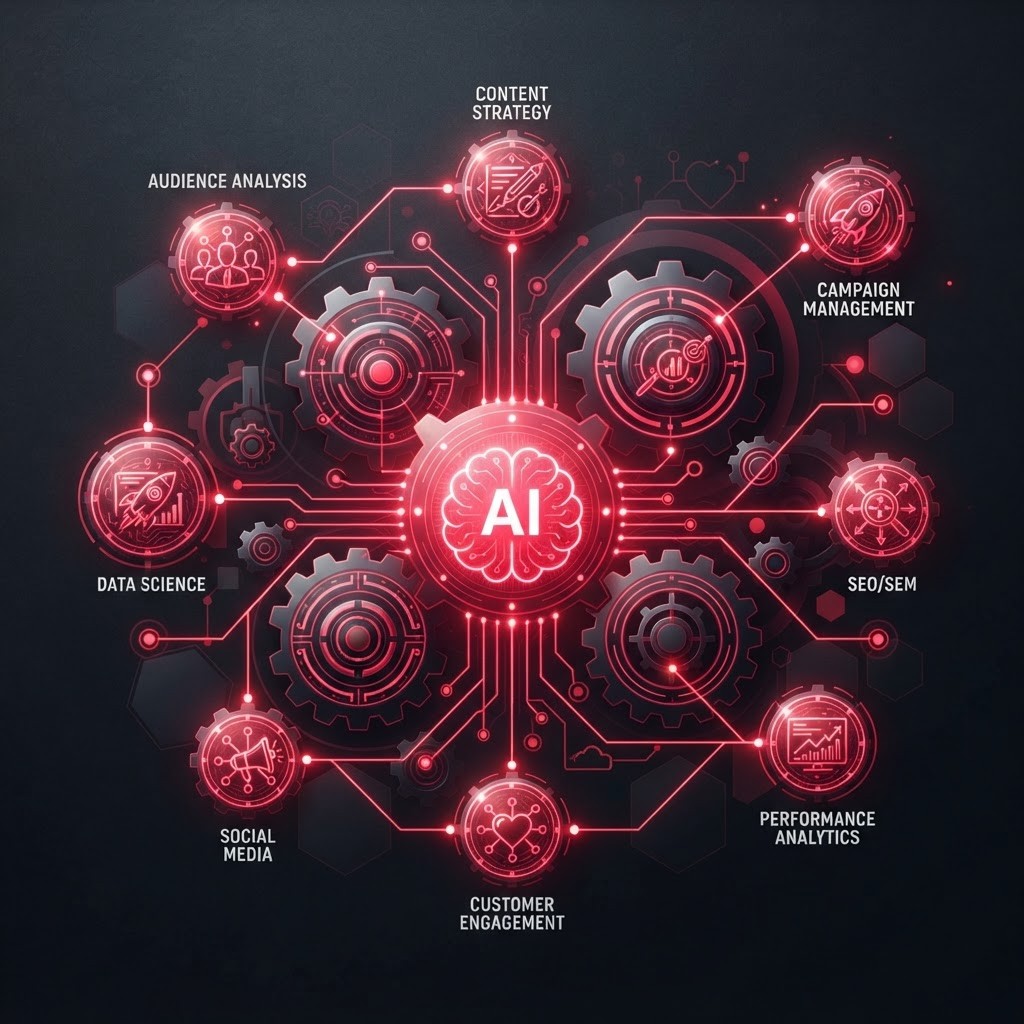
Can AI replace marketing jobs? As artificial intelligence becomes more powerful and accessible, this question is increasingly urgent for marketing professionals and the businesses that employ them. The answer is layered: AI can replace certain tasks and even some narrowly defined roles, but it cannot replace the broad, strategic, and creative work that defines most marketing jobs. More accurately, AI is reshaping the marketing workforce—automating some functions while creating new ones. This article examines which jobs are affected, which are safe, and how professionals can adapt and thrive.
How AAMAX.CO Helps Businesses Navigate the AI Transition
AAMAX.CO is a full-service digital marketing company serving clients worldwide, and their team helps businesses adopt AI in ways that strengthen their marketing rather than hollow it out. By combining smart automation with skilled human talent across their digital marketing services, they show how organizations can boost efficiency while preserving the strategic and creative expertise that drives growth. Their approach reflects the balanced path most businesses should take as AI reshapes the field.
Understanding the Difference Between Tasks and Jobs
A key to answering this question is distinguishing between tasks and jobs. A job is a collection of tasks, and AI is very good at automating specific tasks—writing routine copy, analyzing data, managing ad bids, or answering common questions. But most marketing jobs involve a mix of tasks, many of which require human judgment, creativity, and interpersonal skill.
When AI automates some of a job's tasks, the job does not disappear—it changes. The professional shifts their focus to the tasks AI cannot do, often becoming more strategic and valuable in the process. Only jobs consisting almost entirely of easily automated tasks face genuine risk of replacement.
Which Marketing Tasks AI Can Handle
AI has proven capable across many marketing functions:
- Content production: Drafting copy, generating images, and producing variations quickly.
- Data analysis: Uncovering patterns and insights from large datasets.
- Campaign management: Optimizing targeting, bidding, and delivery in real time.
- Customer interaction: Handling routine inquiries via chatbots.
- Reporting and monitoring: Tracking metrics and compiling performance summaries.
Roles built primarily around these repetitive tasks are most likely to be transformed or reduced.
Which Jobs Remain Secure
Jobs that depend on strategy, creativity, and human relationships remain secure. Marketing strategists who set direction, creative directors who shape brand vision, and relationship managers who build client trust perform work AI cannot replicate. Roles that require cultural insight, ethical judgment, and emotional intelligence are similarly protected.
Even roles that AI touches significantly—like content creation—are evolving rather than vanishing. A content marketer today may use AI to draft material but still applies human judgment to strategy, quality, brand voice, and emotional resonance. The human remains essential.
The New Jobs AI Creates
Just as AI automates some tasks, it generates demand for new skills and roles. Businesses now seek professionals who can manage AI tools, design effective prompts, oversee marketing automation, and ensure AI is used ethically and accurately. Data-savvy marketers who can interpret AI insights and translate them into strategy are increasingly valuable. The net effect is a workforce that looks different, not one that is simply smaller.
How Professionals Can Adapt
Marketing professionals can future-proof their careers by embracing AI rather than resisting it. Learning to use AI tools effectively makes them more productive and competitive. Focusing on developing human skills—strategic thinking, creativity, storytelling, and emotional intelligence—ensures they excel at the work AI cannot do. Staying adaptable and committed to continuous learning helps them keep pace with change.
Those who position themselves as the human orchestrators of AI-powered marketing—guiding tools, evaluating outputs, and providing strategic direction—will find their skills in high demand.
What This Means for Businesses
For businesses, the lesson is balance. Using AI to automate routine work boosts efficiency and lowers costs, but over-relying on it risks producing generic marketing that fails to connect. The strongest organizations blend AI's speed and scale with the creativity and strategy of skilled human teams. This combination delivers results that neither humans nor machines could achieve alone.
Conclusion
Can AI replace marketing jobs? It can replace certain tasks and reshape or reduce narrowly defined roles, but it cannot replace the strategic, creative, and human-centered work at the core of marketing—and it is creating new opportunities even as it changes old ones. The marketing workforce is being transformed, not eliminated. Professionals who embrace AI, sharpen their human skills, and adapt to new roles will remain essential. Far from being replaced, they will lead the next era of marketing, working alongside AI to achieve more than ever before.
