
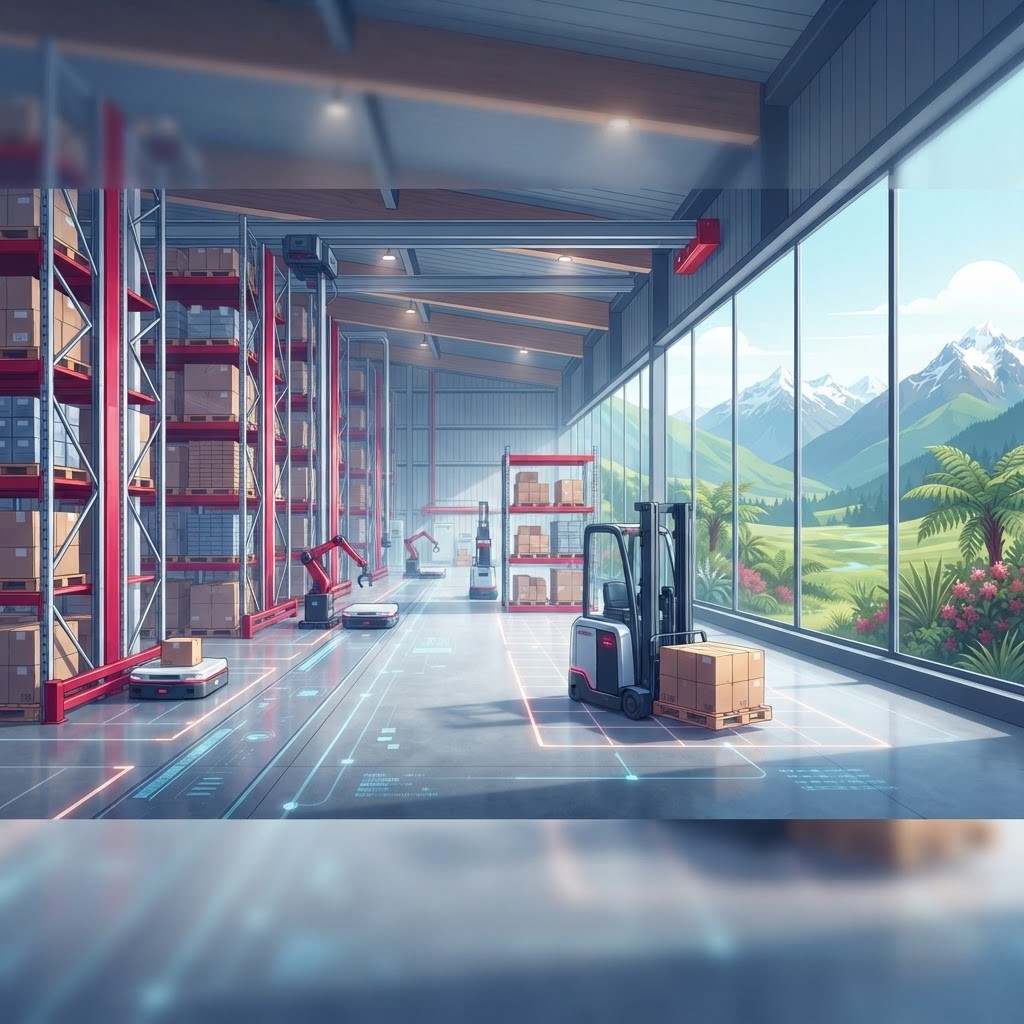
The Importance of Warehousing
Warehousing sits at the heart of New Zealand's supply chains, providing the storage, handling, and distribution capacity that keeps goods flowing from producers to consumers. As e-commerce grows and businesses seek faster fulfilment, modern warehousing has evolved far beyond simple storage. Today's facilities integrate inventory management, order processing, and distribution into seamless operations that help companies meet rising customer expectations while controlling costs.
What Defines a Leading Warehousing Company
The best warehousing providers offer scalable space, advanced inventory systems, and strong security, along with strategic locations near ports, airports, and major transport routes. Value-added services such as pick-and-pack fulfilment, cold storage, and customs bonding set the leaders apart. Increasingly, automation, real-time inventory visibility, and integration with clients' systems are becoming key differentiators in a competitive market.
The Leading Warehousing Companies
Mainfreight is one of New Zealand's most prominent logistics groups, offering extensive warehousing and distribution services backed by a nationwide and global network.
Toll Group provides large-scale warehousing and supply chain solutions, valued for its integrated approach and ability to handle complex distribution needs.
Kotahi specialises in supply chain and logistics coordination, helping exporters and importers optimise storage and container flows across the country.
NZ Post operates significant fulfilment and warehousing capabilities, supporting the booming e-commerce sector with distribution centres nationwide.
Halls Group is a leader in temperature-controlled warehousing and cold-chain logistics, essential for New Zealand's food and perishable exports.
Big Chill Distribution focuses on refrigerated and frozen storage and transport, serving the food industry with reliable cold-chain solutions.
Fliway (part of Yusen Logistics) offers comprehensive warehousing, freight, and distribution services with a strong reputation for reliability.
DHL Supply Chain brings global expertise to New Zealand, providing sophisticated warehousing, automation, and fulfilment services for large enterprises.
CEVA Logistics delivers contract logistics and warehousing solutions tailored to diverse industries, from retail to manufacturing.
TIL Logistics Group provides integrated freight and warehousing services with broad regional coverage and a focus on efficient distribution.
Industry Trends Shaping Warehousing
The warehousing sector in New Zealand is being transformed by technology and shifting consumer behaviour. The surge in online shopping has fuelled demand for fulfilment centres capable of fast, accurate order processing. Automation, including robotics and warehouse management software, is improving efficiency and accuracy while helping providers manage rising volumes.
Cold-chain warehousing is a particular growth area, driven by the country's strong food export sector and stricter quality requirements. Sustainability is also influencing facility design, with solar power, energy-efficient refrigeration, and smart building systems becoming more common. Strategic location near ports and transport hubs remains critical for minimising transit times and costs.
Choosing a Warehousing Partner
Businesses should assess a provider's capacity, location, technology, and value-added services against their specific needs. Companies handling perishable goods must prioritise cold-chain capability, while e-commerce sellers benefit from strong fulfilment and integration with online platforms. Scalability is important too, as the right partner should be able to grow alongside the business.
Conclusion
Warehousing is a critical enabler of New Zealand's economy, supporting everything from food exports to fast-growing online retail. The companies featured here offer the space, technology, and expertise that modern supply chains demand. By choosing a warehousing partner aligned with their goals, businesses can improve efficiency, delight customers, and build resilient operations ready for future growth.
