
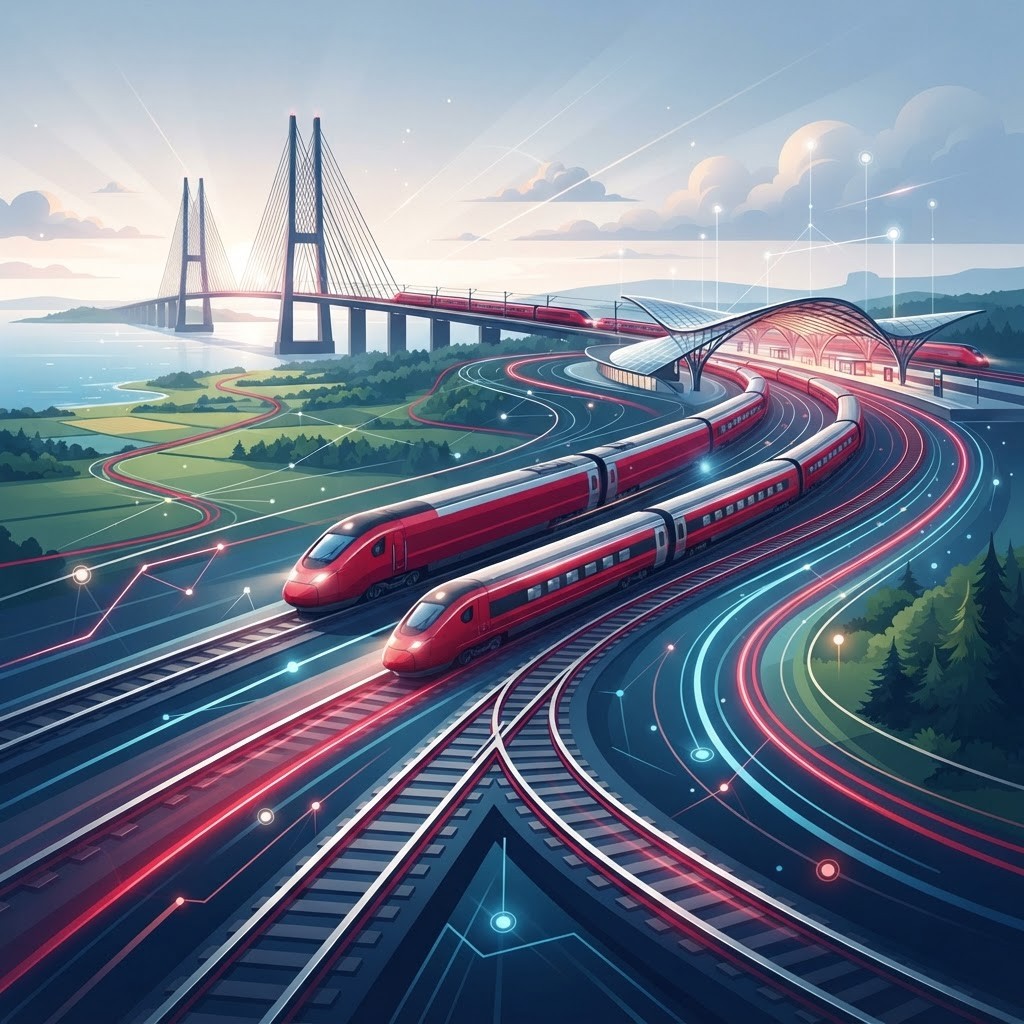
The Importance of Rail in Denmark
Rail transport is a cornerstone of Denmark's mobility strategy, offering fast, efficient, and environmentally friendly travel across the country and into neighboring nations. The Danish rail network connects major cities such as Copenhagen, Aarhus, Odense, and Aalborg, while iconic infrastructure like the Great Belt Fixed Link and the Oresund Bridge enables seamless travel between islands and across borders to Sweden and Germany. Trains are integral to daily commuting, intercity travel, and international connections, forming a key part of Denmark's integrated public transport system.
Danish railways are known for punctuality, comfort, and strong integration with buses and metros through unified ticketing. As the country pursues ambitious climate goals, rail plays a central role in reducing car dependence and cutting transport emissions.
What Defines a Great Railway Operator
Excellent rail operators combine reliability, comfort, safety, and clear passenger information. Modern trains, frequent services, accessible stations, and seamless ticketing enhance the travel experience. Increasingly, electrification and energy efficiency define the leading operators, aligning rail travel with sustainability objectives.
Leading Railway Operators in Denmark
DSB is the national railway company of Denmark and the dominant passenger operator. It runs intercity, regional, and suburban services across the country, connecting major cities and providing the S-train network that serves the greater Copenhagen area. DSB is trusted for its extensive coverage, reliability, and ongoing modernization.
Arriva Denmark operates regional rail services, particularly in Jutland, under contract. It is recognized for professional operations, comfortable trains, and dependable regional connectivity that complements the national network.
Metroselskabet operates the Copenhagen Metro, an automated, driverless system that provides fast and frequent transport across the capital. Its efficient, modern service is a model of urban rail excellence.
Lokaltog runs local railway lines across Zealand, connecting smaller towns and rural communities to the wider network and providing essential regional mobility.
Nordjyske Jernbaner operates local rail services in North Jutland, linking Aalborg and surrounding areas with reliable and community-focused transport.
Midtjyske Jernbaner provides local rail connections in central Jutland, serving regional passengers with dependable services tailored to local travel needs.
Oresundstag operates cross-border trains between Denmark and Sweden via the Oresund Bridge, enabling the vital commuter and travel link between Copenhagen and Malmo.
DB (Deutsche Bahn) Cross-Border Services connects Denmark with Germany, providing international rail links that support travel and trade between the two countries.
Banedanmark is the state-owned infrastructure manager responsible for maintaining and developing Denmark's rail tracks, signaling, and stations, ensuring the network remains safe and efficient for all operators.
Copenhagen S-train Network, operated within DSB, provides high-frequency suburban rail service across the capital region, forming a backbone of daily commuting for hundreds of thousands of passengers.
Electrification and Modernization
Denmark is undertaking a major electrification and signaling modernization program to make its railways faster, greener, and more reliable. New electric trains are replacing older diesel units, reducing emissions and improving passenger comfort. Upgraded signaling systems enhance safety and capacity, allowing more frequent services and better punctuality. These investments position Danish rail as a model of sustainable, modern transport.
Integration and Ticketing
A key strength of Danish rail is its integration with the broader transport system. The Rejsekort travel card and mobile ticketing allow passengers to move seamlessly between trains, buses, and metros with a single payment method. Coordinated timetables and connected stations make multimodal journeys smooth and convenient, encouraging more people to choose public transport over private cars.
Cross-Border Connectivity
Denmark's railways extend beyond national borders, with the Oresund Bridge enabling frequent trains to Sweden and links to Germany supporting travel across the continent. These connections are vital for commuters, tourists, and businesses, reinforcing Denmark's role as a transport hub in Northern Europe. Future projects, including the Fehmarnbelt tunnel, promise to strengthen these links even further.
Benefits of Rail Travel
Rail travel offers significant advantages for passengers and society. It provides fast city-to-city journeys, reduces road congestion, and produces far lower emissions than car travel. For commuters, trains offer a comfortable and productive way to travel, while for the environment, rail is central to Denmark's decarbonization efforts.
Conclusion
Denmark's railway operators deliver a reliable, comfortable, and increasingly sustainable travel experience. From the national services of DSB and the automated Copenhagen Metro to regional operators and vital cross-border links, these providers keep the country connected. With ongoing electrification and modernization, Danish rail continues to advance as a leading example of efficient and green transport in Europe.
