
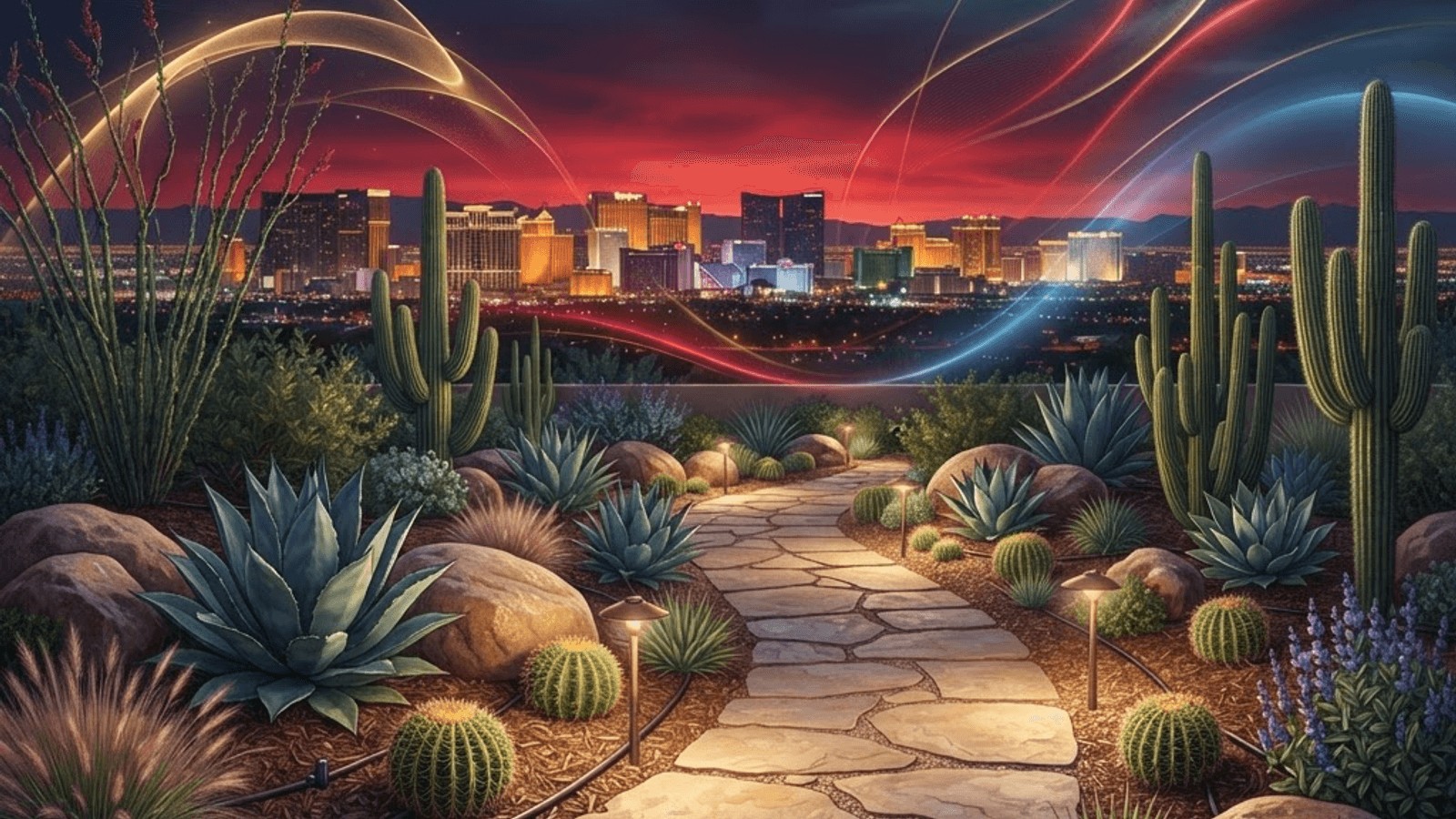
Landscaping in Las Vegas Has Been Redefined
Few local industries have changed as dramatically as landscaping in Southern Nevada. Decades ago, a green lawn was the default expression of a well-kept yard. Today, with Colorado River supply constraints, conservation programs, and restrictions on non-functional turf, the valley has shifted decisively toward desert-adapted design. Landscaping here is now a discipline that blends horticulture, irrigation engineering, hardscape construction, and water policy awareness.
That shift has raised the bar for contractors. The best landscaping companies in Las Vegas understand plant palettes suited to extreme heat and alkaline soils, design irrigation for precision rather than volume, build shade into the plan, and know how conversion rebates and code requirements affect a project. Aesthetics still matter enormously, but longevity in this climate depends on technical decisions made before the first plant goes in the ground.
The Best Landscaping Companies in the Valley
1. Desert Bloom Landscaping is widely respected for full xeriscape design and installation, producing planting plans that look intentional and layered rather than sparse. Their emphasis on plant placement by sun exposure and mature size reduces the crowding and dieback common in rushed installations.
2. Vegas Outdoor Living specializes in hardscape and outdoor living construction: pavers, flagstone patios, seat walls, fire features, pergolas, and outdoor kitchens. Their shade-first approach makes desert backyards genuinely usable through more of the year.
3. Silver State Landscape Group serves residential and commercial clients with design, installation, and ongoing maintenance under one roof. That continuity matters, because a xeriscape maintained correctly for the first three years establishes far better than one handed off to a mow-and-blow crew.
4. Mojave Irrigation Specialists focuses specifically on irrigation design, retrofit, and repair, including drip conversion, pressure regulation, smart controllers, and leak diagnosis. Precision irrigation is where most desert water savings actually come from.
5. Red Rock Turf Conversion concentrates on removing non-functional grass and replacing it with desert landscape or artificial turf where appropriate, guiding homeowners through conversion program requirements and documentation.
6. Summerlin Landscape Design works on larger custom properties with detailed design documentation, plant schedules, lighting plans, and phased installation. Their landscape architecture depth suits clients who want a cohesive long-term vision.
7. Henderson Green Scapes is known for reliable maintenance programs, including seasonal pruning, granular fertilization suited to alkaline soils, gravel refreshing, and irrigation audits that catch problems before plants show stress.
8. Neon City Commercial Landscaping handles HOAs, office parks, and retail centers, where consistency, water budgeting, and compliance reporting matter as much as appearance. Their crews work on defined schedules with documented service records.
9. Sunrise Mountain Tree Care specializes in arboriculture, including structural pruning, palm maintenance, deep root watering, and removal. Proper tree care is critical locally, because mature shade trees reduce cooling costs substantially and are difficult to replace.
10. Canyon Gate Landscaping completes the list as a smaller design-build firm praised for thoughtful plant selection, tidy installations, and realistic guidance about what will actually thrive on a given exposure.
Xeriscape Principles That Actually Work
Xeriscape is often misunderstood as gravel with a few cacti. Done well, it is a lush, layered landscape that simply uses far less water. The principles are straightforward. Group plants by water need so irrigation zones can be tuned rather than compromised. Improve and protect soil, since native desert soils are often alkaline, compacted, and low in organic matter. Use mulch, whether decorative rock or organic material, to reduce evaporation and moderate root temperature.
Design for mature size rather than instant fullness. Overplanting looks satisfying on installation day and becomes a pruning problem within three seasons. Prioritize shade, because shade is the most valuable commodity in a desert yard. Trees, structures, and vertical elements make outdoor space usable and reduce heat load on the home itself.
Plant palettes that perform reliably in the valley include desert accents such as agave, yucca, and various cacti, flowering shrubs like Texas ranger and desert bird of paradise, ornamental grasses such as deer grass, and hardy groundcovers. Well-adapted trees include desert willow, mesquite varieties, and acacia species, though placement relative to hardscape and utilities requires care.
Irrigation Is Where Success Is Determined
Even the best planting plan fails on poor irrigation. Drip systems deliver water directly to root zones with minimal evaporation, but they require correct emitter sizing, pressure regulation, filtration to handle mineral content, and periodic inspection since emitters clog and lines get damaged during landscape maintenance.
Smart controllers that adjust to weather data and seasonal evapotranspiration prevent the most common error, which is running a summer schedule into autumn. Watering deeply and less frequently encourages deeper roots and greater drought resilience than short daily cycles. Early morning irrigation minimizes evaporation and reduces fungal risk.
Homeowners should also watch for the telltale signs of irrigation trouble: a single stressed plant in an otherwise healthy bed usually means a clogged emitter, while unexplained wet spots or rising water usage suggests a line break. Regular audits catch these quickly.
Planning a Project and Choosing a Contractor
Start with how the space will be used. A yard designed for entertaining, one designed for children and pets, and one designed as a low-maintenance visual buffer require different layouts. Establish a realistic budget and consider phasing, since hardscape and irrigation infrastructure logically precede planting and lighting.
Verify licensing and insurance, and confirm the contractor's experience with the specific scope. A company excellent at maintenance may not be the right choice for retaining walls and drainage. Request a written plan with a plant schedule using botanical names, irrigation details, hardscape materials and thicknesses, drainage provisions, and a maintenance schedule for the establishment period.
Ask about warranty terms on plants and workmanship, and clarify who is responsible for watering during establishment. Also discuss drainage explicitly. Monsoon storms drop large volumes quickly, and a landscape that ignores water movement can direct runoff toward the foundation.
Final Thoughts
Desert landscaping in Las Vegas is a genuine design opportunity rather than a compromise. Thoughtful plant selection, engineered irrigation, generous shade, and honest drainage planning produce outdoor spaces that are beautiful, comfortable, and water-efficient. Choose a contractor who talks about soil, exposure, and irrigation before showing pretty pictures, and the landscape will still look intentional many summers from now.
