
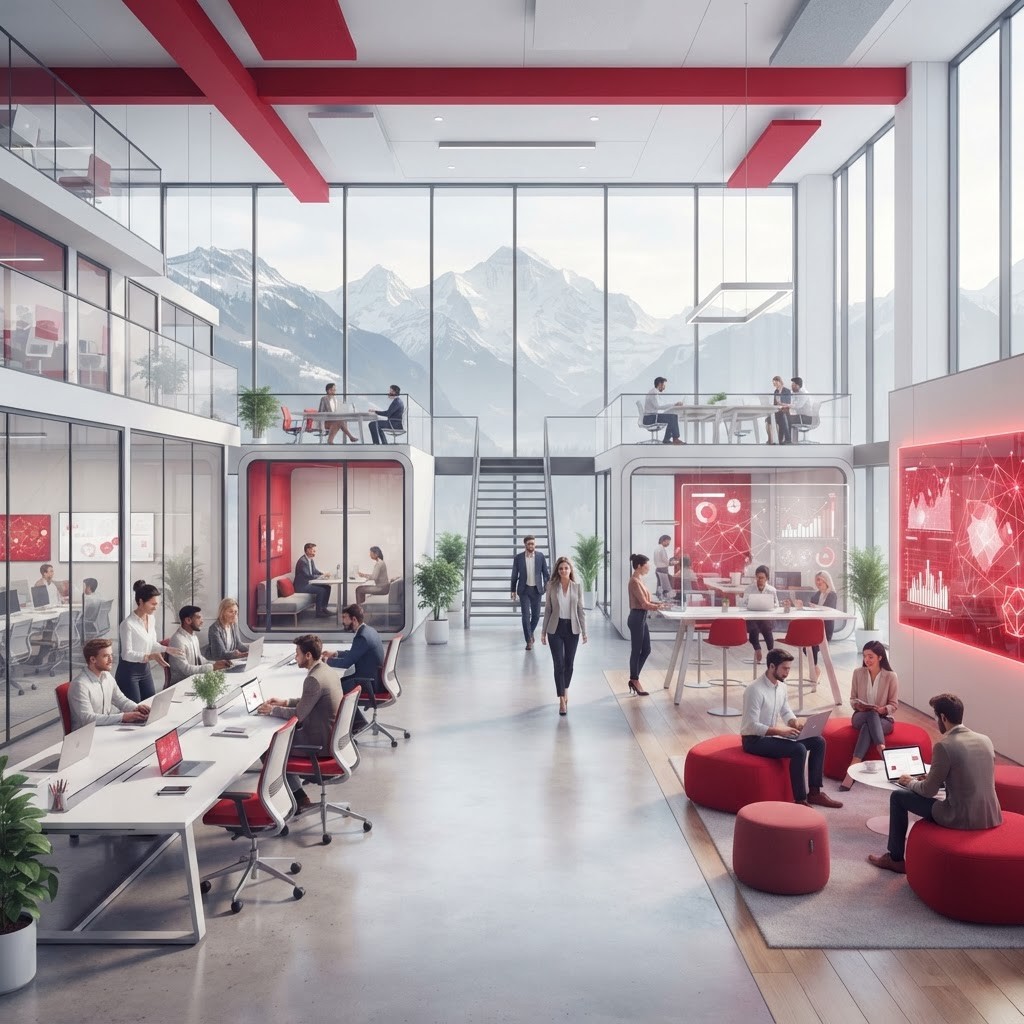
The Rise of Co-working Culture in Switzerland
Switzerland has quietly become one of Europe's most compelling destinations for flexible work. With its reputation for reliability, high-speed connectivity, and a stable business environment, the country attracts a diverse mix of entrepreneurs, remote professionals, and multinational teams. Co-working spaces here are no longer a niche experiment; they have matured into a core part of the Swiss commercial landscape, offering everything from hot desks to fully serviced private offices. The combination of a strong innovation economy and a high quality of life makes the Swiss co-working market especially attractive to knowledge workers who value both productivity and balance.
Cities such as Zurich, Geneva, Basel, Lausanne, and Zug each contribute a distinctive flavor to the ecosystem. Zurich leans toward finance and technology, Geneva serves an international and diplomatic crowd, and Zug has emerged as a global hub for blockchain and crypto ventures. This regional diversity means professionals can find a workspace that aligns with their industry and community, rather than settling for a generic desk.
What Sets Swiss Co-working Spaces Apart
Quality is the defining characteristic of Swiss co-working. Members expect and receive premium amenities: ergonomic furniture, fast and secure internet, soundproofed meeting rooms, and thoughtfully designed communal areas. Many spaces also emphasize sustainability, incorporating energy-efficient systems and locally sourced materials that reflect Switzerland's environmental values. Cleanliness, punctual service, and discreet professionalism are woven into the experience.
Beyond the physical space, the value lies in community and connection. The best providers host curated events, workshops, and networking sessions that help members build meaningful professional relationships. For international arrivals, these communities often serve as a soft landing into the Swiss business world.
Leading Co-working Providers to Know
Impact Hub is one of the most recognizable names, with locations in Zurich, Geneva, Bern, and Lausanne. It focuses on social entrepreneurship and impact-driven ventures, attracting members who want their work to contribute to broader change. Westhive operates striking spaces in Zurich and Zug, known for their design-forward interiors and strong startup community, particularly in tech and deep tech.
Spaces and Regus, both part of the IWG network, provide dependable, professionally managed environments across multiple Swiss cities, appealing to companies that need consistency and scalability. Serviceoffice and Business Center Zurich cater to firms seeking prestigious addresses with concierge-level service.
In the French-speaking region, La Muse in Geneva offers a boutique, creative atmosphere favored by writers, designers, and independent professionals. Gotham, also in Geneva, is renowned for its elegant, club-like setting that blends work and lifestyle. Meanwhile, Kraftwerk in Zurich has become a landmark for the digital and creative community, housed in a beautifully repurposed building.
Fusion Cowork in Basel and Blue Lion in Zurich round out the field, each providing supportive environments for early-stage founders. Citizen Space and various municipality-backed hubs also serve smaller towns, demonstrating that flexible work is spreading well beyond the largest urban centers.
Choosing the Right Space for Your Needs
Selecting a co-working space in Switzerland comes down to matching the environment to your goals. Solo freelancers may prioritize flexible membership and a vibrant community, while growing teams often need scalable private offices and reliable meeting facilities. Location matters too: proximity to transport hubs, whether the famously punctual Swiss rail network or city trams, can significantly influence daily convenience.
Budget considerations are real, as Switzerland is among the more expensive markets in Europe. However, many members find that the productivity gains, professional network, and prestige of a central address justify the investment. Trial days and short-term passes make it easy to test a space before committing.
The Economic Impact of Flexible Workspaces
Co-working spaces contribute meaningfully to Switzerland's broader economy by lowering the barrier to entry for new businesses. Startups that might otherwise face prohibitive commercial lease costs can establish a professional presence with minimal upfront commitment, freeing capital for product development and hiring. This flexibility has helped nurture a vibrant entrepreneurial ecosystem, particularly in innovation-driven sectors such as fintech, biotech, and clean technology, where the country already enjoys a global reputation. By clustering ambitious founders under one roof, these spaces accelerate knowledge sharing and collaboration in ways that traditional offices rarely achieve.
For established companies, co-working offers a strategic way to test new markets or open satellite teams without the risk and expense of long-term commitments. Multinationals frequently use flexible spaces to house project teams, incubate internal ventures, or provide employees with convenient locations closer to home. This adaptability has proven especially valuable amid shifting work patterns, allowing organizations to scale their footprint up or down in response to changing needs. The result is a resilient, responsive property model that complements Switzerland's dynamic and internationally connected economy.
Trends Shaping the Future
The Swiss co-working market continues to evolve in response to hybrid work. Demand is rising for spaces that offer flexibility without sacrificing quality, along with wellness features such as quiet rooms, natural light, and access to outdoor areas. Some operators are integrating advanced technology, including app-based room booking and seamless access control, to streamline the member experience.
There is also growing interest in suburban and regional locations, allowing professionals to work closer to home while still enjoying a professional setting. As Switzerland's innovation economy expands, co-working spaces will remain essential infrastructure for the modern workforce.
Final Thoughts
Whether you are a founder building the next Swiss startup, a consultant serving international clients, or a remote worker seeking structure and community, Switzerland's co-working spaces deliver an exceptional standard. The blend of premium facilities, engaged communities, and strategic locations makes the country a standout choice for flexible work, and the options above represent some of the very best the market has to offer.
