
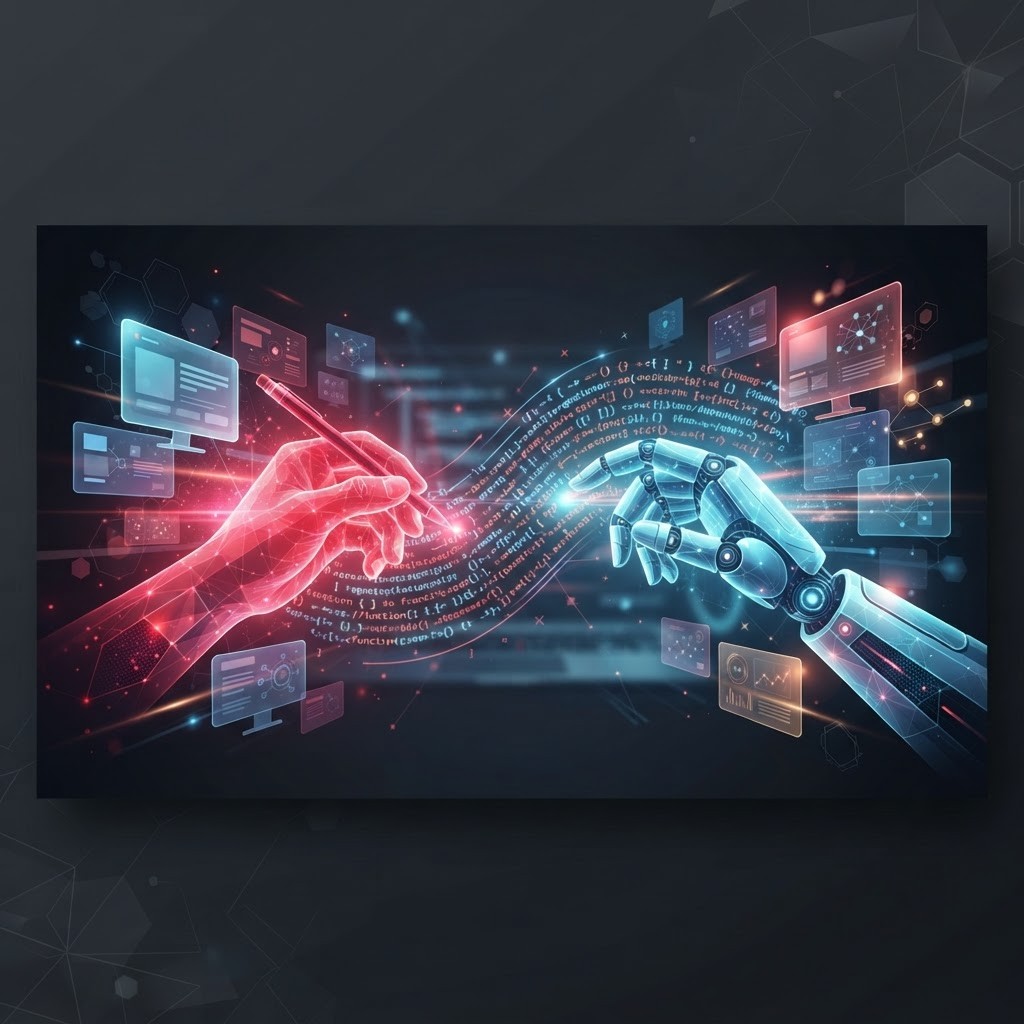
Headlines proclaiming the end of programming careers have become impossible to ignore. AI systems can now generate functional code, build entire components from descriptions, and even fix their own bugs. It is no surprise that many people are asking whether web developers are being replaced by AI. Cutting through the hype reveals a more grounded picture: AI is changing how developers work and what skills matter most, but it is not making the profession obsolete.
What AI Coding Tools Can Do Today
The capabilities of AI coding assistants are genuinely impressive. They can autocomplete complex functions, translate requirements into working code, generate tests, refactor existing code, and explain unfamiliar codebases. For common patterns and well-defined problems, these tools dramatically accelerate development. Junior-level tasks and repetitive boilerplate, which once consumed a significant share of a developer's day, can now be handled in a fraction of the time, boosting overall productivity across teams.
The Limits of Automated Coding
Yet AI coding tools have clear boundaries. They generate code based on patterns in their training data, which means they can produce solutions that are subtly wrong, insecure, or poorly suited to a specific context. They lack a true understanding of business requirements, user needs, and system-wide implications. Debugging complex issues, designing scalable architectures, and making trade-off decisions under real-world constraints still demand human expertise. AI is a powerful assistant, not an autonomous engineer.
How AAMAX.CO Blends AI and Human Expertise
The most effective way to harness AI in development is to combine it with skilled human oversight, which is exactly the model that leading providers follow. AAMAX.CO is a full-service digital marketing company serving clients worldwide, and their approach shows how AI accelerates delivery while experienced professionals ensure quality. Their website development team uses modern AI tools to work faster, but human developers handle architecture, security, performance, and the nuanced decisions that determine whether a project truly succeeds.
How the Developer Role Is Evolving
Rather than being replaced, developers are seeing their roles shift toward higher-value activities. Understanding system design, integrating and orchestrating AI tools, reviewing generated code for correctness and security, and translating business goals into technical solutions are becoming central skills. The developer of the near future spends less time typing routine code and more time architecting, evaluating, and guiding. This is a promotion in the nature of the work, not an elimination of it.
Why Human Judgment Remains Essential
Software is complex, and small decisions can have large consequences. Choosing the right data structures, anticipating edge cases, ensuring accessibility and compliance, and safeguarding against security vulnerabilities all require judgment that AI cannot reliably provide. Someone must take responsibility for the final product, understand why it works, and be able to maintain and extend it over time. That accountability keeps skilled developers firmly in demand.
Thriving as a Developer in the AI Era
Developers who embrace AI as a collaborator will find themselves more productive and more valuable than ever. Learning to use AI tools effectively, strengthening architectural and problem-solving skills, and staying current with best practices are the keys to thriving. Those who cling to purely manual coding may find the ground shifting beneath them, while those who adapt will build more, faster, and command greater impact within their teams.
Conclusion
Web developers are not being replaced by AI; they are being empowered and redefined by it. Routine coding is increasingly automated, but the strategic, architectural, and judgment-driven aspects of development remain firmly human. The winning formula pairs AI's speed with human expertise, exactly the balance that forward-thinking teams already practice. Developers who adapt to this new reality will find their skills more relevant and their contributions more valuable than ever before.
