
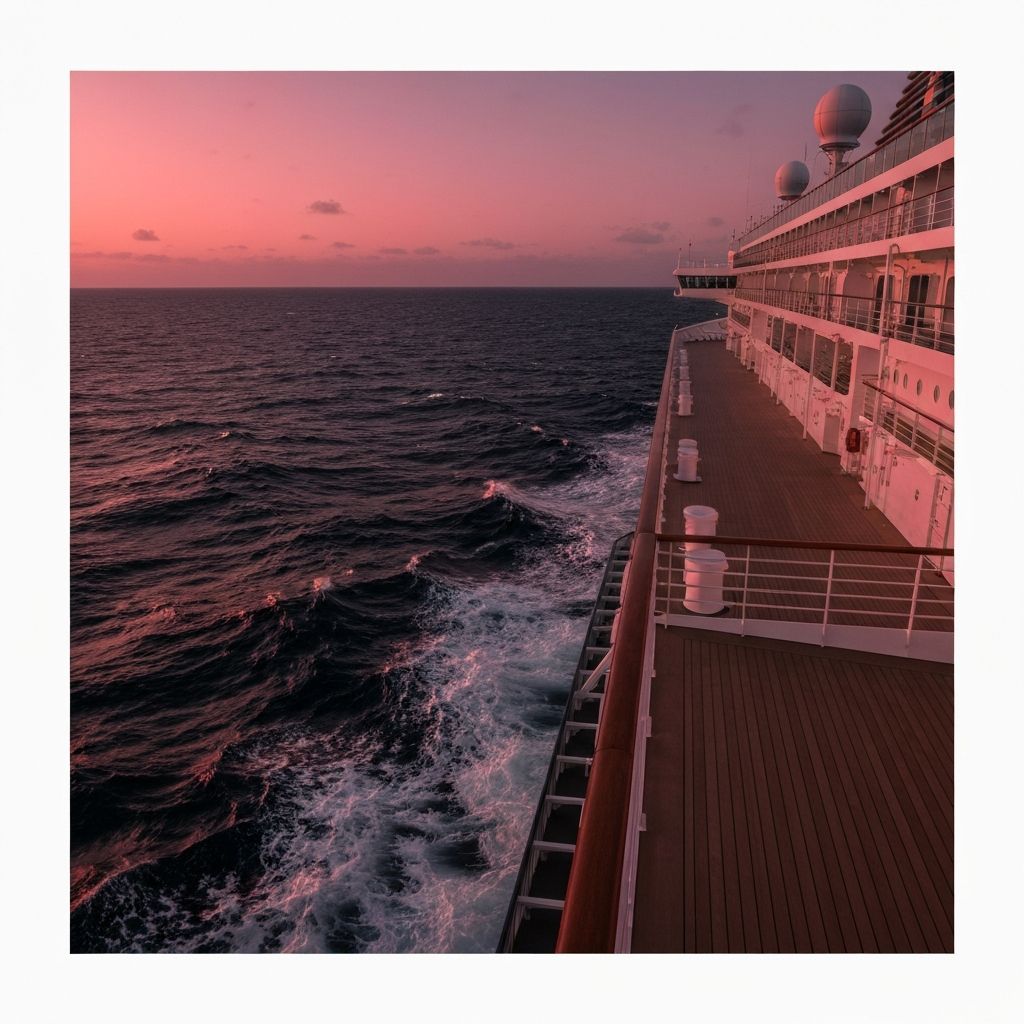
The Science of Balance at Sea
Maintaining balance on a ship is a challenge that every seafarer, cruise passenger, and naval professional faces when they first set foot on a moving vessel. The ability to keep one's balance on a ship — often referred to as finding your "sea legs" — involves a complex interplay of the body's sensory systems, muscular responses, and neurological adaptation. Understanding how the body maintains balance in the constantly moving environment of a ship can help anyone prepare for and adapt more quickly to life at sea.
On solid ground, maintaining balance is something most people do unconsciously. The body relies on three primary sensory systems working in harmony: the vestibular system in the inner ear, the visual system, and proprioception (the body's sense of its position in space through sensors in muscles, joints, and tendons). These systems continuously send information to the brain, which processes the data and sends signals to the muscles to make the constant micro-adjustments necessary to keep the body upright and stable.
When you step aboard a ship, this finely tuned system is thrown into disarray. The deck beneath your feet is constantly shifting, tilting, and swaying in response to waves, wind, and the ship's own movement through the water. Your vestibular system detects these movements and sends signals that conflict with what your eyes see (often a stable interior cabin) and what your proprioceptors feel. This sensory conflict is at the root of both balance difficulties and the dreaded seasickness that affects many people during their first time at sea.
Understanding the Vestibular System
The vestibular system, located in the inner ear, is the body's primary balance organ and plays the most critical role in maintaining equilibrium on a ship. This system consists of two main components: the semicircular canals, which detect rotational movements of the head, and the otolith organs (the utricle and saccule), which detect linear acceleration and the effects of gravity.
The three semicircular canals are oriented in different planes — roughly horizontal, vertical, and diagonal — allowing them to detect rotation in any direction. Each canal is filled with a fluid called endolymph. When the head rotates, the fluid lags behind due to inertia, bending tiny hair cells that line the canal walls. The bending of these hair cells generates nerve impulses that are sent to the brain, providing information about the direction and speed of the head's rotation.
The otolith organs contain tiny calcium carbonate crystals called otoconia that rest on a gel-like membrane above a bed of hair cells. When the head tilts or the body accelerates linearly (including the accelerations caused by a ship's movement through waves), the otoconia shift position, bending the underlying hair cells and generating signals about the body's orientation relative to gravity and its linear movement.
On a ship, the vestibular system is constantly stimulated by the vessel's rolling (side-to-side tilting), pitching (front-to-back tilting), and yawing (rotation around the vertical axis) movements, as well as the vertical heaving motion as the ship rises and falls with the waves. The brain must process all of these vestibular inputs simultaneously while also integrating visual and proprioceptive information to maintain balance.
The Process of Adaptation: Finding Your Sea Legs
The phrase "finding your sea legs" describes the neurological adaptation process that occurs as the brain learns to interpret and respond to the unusual sensory inputs it receives on a moving ship. This adaptation typically takes anywhere from a few hours to several days, depending on the individual, the sea conditions, and the type of vessel.
During the early stages of adaptation, the brain is overwhelmed by the conflicting sensory information it receives. The vestibular system reports constant movement, while the visual system may report a stable environment (particularly when below decks), and the proprioceptive system sends a confusing mix of signals as the muscles constantly adjust to the shifting deck. This sensory mismatch can cause dizziness, disorientation, and nausea — the hallmarks of seasickness.
As the brain receives consistent movement patterns over time, it begins to recalibrate its balance algorithms. The cerebellum, which plays a central role in motor control and balance, gradually learns to predict the ship's movements and pre-adjust the body's muscular responses accordingly. This predictive capability is what allows experienced sailors to walk confidently on a heaving deck while novices struggle to stay upright.
Interestingly, the adaptation process works in both directions. After spending an extended period at sea, many people experience "land sickness" (mal de debarquement) when they return to shore. The brain, having adapted to the ship's constant motion, continues to compensate for movements that are no longer occurring, creating a sensation of swaying or rocking on solid ground. This reverse adaptation typically resolves within a day or two as the brain readjusts to the stable environment.
Practical Tips for Maintaining Balance on a Ship
While neurological adaptation takes time, several practical strategies can help you maintain balance more effectively while your brain adjusts to life at sea. These techniques leverage the body's sensory systems and biomechanical principles to provide more stability on a moving deck.
Stance and posture are fundamental to shipboard balance. Stand with your feet slightly wider than shoulder-width apart and your knees slightly bent. This wider base of support lowers your center of gravity and provides more stability against the ship's movements. Keep your weight evenly distributed on both feet, and be prepared to shift your weight in response to the ship's roll. Avoid standing rigidly — flexibility is key to absorbing the ship's movements without losing your balance.
When walking on a ship, adopt a wider gait and take shorter steps than you normally would on land. Keep your arms free and slightly away from your body to use them as counterbalances. Walk with a slight lean into the direction the ship is tilting, much like a cyclist leans into a turn. As you gain experience, these adjustments become automatic, but consciously practicing them in the early stages can accelerate the adaptation process.
Whenever possible, maintain visual contact with the horizon or other external reference points. Watching the horizon provides your visual system with a stable reference that helps resolve the sensory conflict between what your eyes see and what your vestibular system feels. This is one reason why seasickness is often worse below decks, where there is no external visual reference. If you begin to feel unsteady, go up on deck and fix your gaze on the horizon.
Use the ship's handrails, grab bars, and other support structures whenever they're available. There's no shame in holding onto something for stability, even for experienced seafarers. The "one hand for yourself, one hand for the ship" maritime saying emphasizes the importance of always having a secure handhold, especially during rough seas or when navigating stairs and passageways.
Preventing and Managing Seasickness
Seasickness, or motion sickness at sea, is closely related to balance difficulties and occurs when the brain cannot reconcile the conflicting signals from the vestibular, visual, and proprioceptive systems. While seasickness is not directly dangerous, it can be severely debilitating and can impair a person's ability to function safely on a ship. Effective prevention and management strategies can make the difference between an enjoyable sea voyage and a miserable one.
Pharmaceutical options for seasickness prevention include over-the-counter medications like dimenhydrinate (Dramamine) and meclizine (Bonine), which work by suppressing the vestibular system's signals to the brain. These medications are most effective when taken before symptoms begin, so it's advisable to take them at least 30 minutes to an hour before boarding the ship. Prescription options include scopolamine patches, which are applied behind the ear and provide continuous seasickness protection for up to 72 hours.
Non-pharmaceutical approaches to seasickness prevention include acupressure wristbands, which apply pressure to the Nei Kuan point on the inner wrist and have been shown to reduce nausea in some studies. Ginger, consumed as candied ginger, ginger tea, or ginger supplements, has a long history of use as an anti-nausea remedy and has some scientific support for its effectiveness against motion sickness.
Dietary considerations can also help prevent seasickness. Eat light, easily digestible meals before and during the voyage, avoiding heavy, greasy, or strongly flavored foods. Stay well-hydrated by drinking plenty of water. Avoid alcohol, which can exacerbate the vestibular system's confusion and worsen seasickness symptoms. Small, frequent snacks like crackers or dry toast can help settle the stomach during bouts of mild nausea.
Physical Training for Better Balance at Sea
Regular physical training can significantly improve your ability to maintain balance on a ship. Core strength is particularly important, as the muscles of the abdomen, lower back, and hips provide the primary stabilizing force that keeps your body upright on a moving surface. Exercises that target the core — such as planks, bridges, Russian twists, and stability ball exercises — build the muscular endurance needed for sustained balance maintenance at sea.
Balance-specific exercises train the neurological pathways involved in equilibrium and can accelerate the adaptation process when you first board a ship. Simple balance exercises like standing on one foot, walking heel-to-toe in a straight line, and standing on an unstable surface (such as a balance board or foam pad) challenge the vestibular and proprioceptive systems and improve their responsiveness. These exercises can be practiced at home in preparation for a sea voyage.
Ankle and leg strength contribute significantly to shipboard balance, as the muscles of the lower extremities make the constant micro-adjustments needed to keep the body stable on a moving deck. Exercises like calf raises, squats, lunges, and ankle circles strengthen these muscles and improve their ability to respond quickly to changes in the deck's position. Strong legs also reduce fatigue during long periods of standing or walking on a ship.
Yoga and tai chi are particularly beneficial for developing the mind-body connection needed for good balance at sea. These practices emphasize body awareness, controlled movement, and the integration of breathing with physical activity — all of which contribute to improved balance and reduced susceptibility to motion sickness. Many cruise lines offer yoga classes on board, providing an excellent opportunity to maintain and improve balance skills during a voyage.
Professional Balance Training for Maritime Workers
For professional mariners, maintaining excellent balance at sea is not just about comfort — it's a critical safety skill. The International Maritime Organization (IMO) and national maritime authorities recognize the importance of physical fitness and balance for maritime safety, and many maritime training programs include balance and stability exercises as part of their curriculum.
Naval and military maritime training programs often include intensive physical conditioning that specifically targets the balance and coordination skills needed for working on moving ships. These programs may involve obstacle courses that simulate shipboard conditions, exercises performed on moving platforms, and training in specific techniques for maintaining stability during high-sea conditions.
Commercial seafarers undergo regular physical fitness assessments that include tests of balance and coordination. Those who work in physically demanding roles — such as deck officers, engineers, and rescue swimmers — must demonstrate exceptional balance and physical fitness to perform their duties safely in challenging sea conditions. Ongoing fitness training and regular practice help maintain these skills throughout a maritime career.
